Amazon Logo History: Meaning, Symbolism & Brand Heritage
Few logos in modern commerce are as instantly recognizable—or as universally trusted—as Amazon’s smiling arrow. What began in the mid-1990s as a bold experiment in online bookselling has transformed into a global empire whose visual identity feels just as essential to the brand as its vast product catalog, delivery network, and culture-defining innovations.
The Amazon logo is one of the greatest examples of contemporary logo heritage: a design that has evolved just enough to modernize, yet stayed consistent enough to build deep emotional recognition. Its journey reflects the company itself—ambitious, efficient, and relentlessly forward-moving.
The Origins of Amazon: From Cadabra to a Global Marketplace
Amazon’s story began in 1994 when Jeff Bezos launched the company under the name Cadabra. Realizing the name sounded too similar to “cadaver,” Bezos quickly opted for something more distinctive, memorable, and symbolically powerful. “Amazon”—the largest river in the world—captured the scale of his ambition.
In 1995, the company introduced its earliest logo, a bold experiment that set the tone for Amazon’s visual evolution. Minimalism, clarity, and symbolism became the foundation of its logo history, long before the brand achieved global dominance.
Amazon Logo Evolution: A Timeline of Simplicity and Meaning
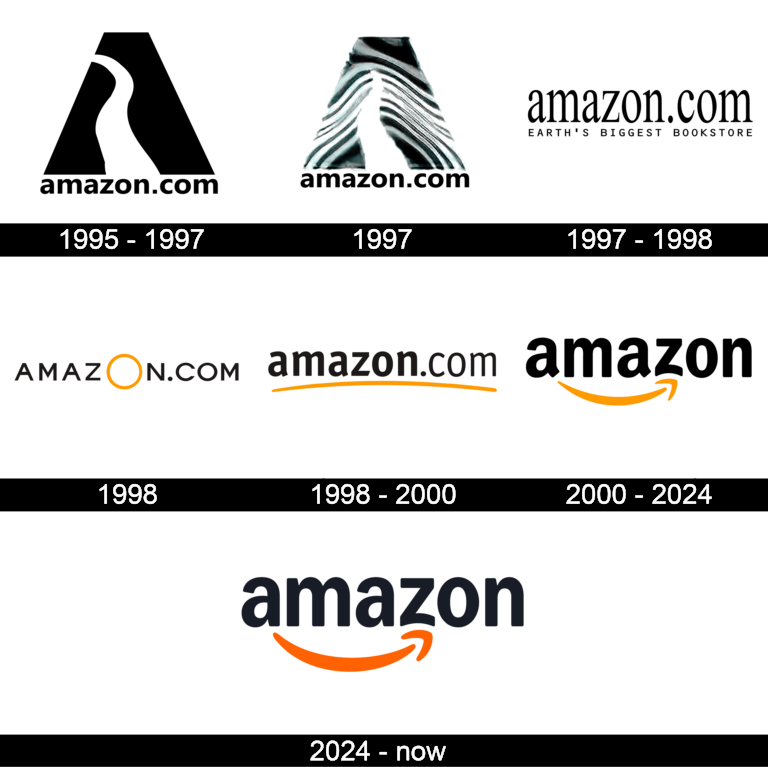
1995–1997: The River Begins
The first Amazon logo featured a bold, stylized “A” sliced vertically by a flowing white line—a direct representation of the Amazon River. Beneath it sat “amazon.com” in clean lowercase lettering. It was simple, symbolic, and economical by design.

1997: A Refined but Short-Lived Update
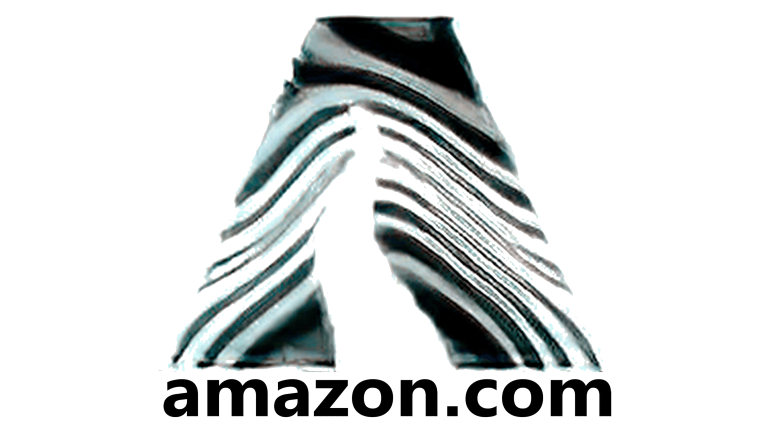
Two years later, the logo grew more detailed. Horizontal white lines extended outward from the river path, creating a graphic that resembled both a branching tree and an abstract zebra pattern. The wordmark gained weight, though the overall palette remained black and white.
1997–1998: “Earth’s Biggest Bookstore”
Amazon briefly shifted to a serif wordmark accompanied by the tagline “Earth’s Biggest Bookstore.” This variation was elegant but transitional, lasting only a short time.

Later that same year, Amazon experimented with a new black-and-yellow identity. The yellow “O” became an oversized visual magnet, introducing the brand’s now-iconic color palette.
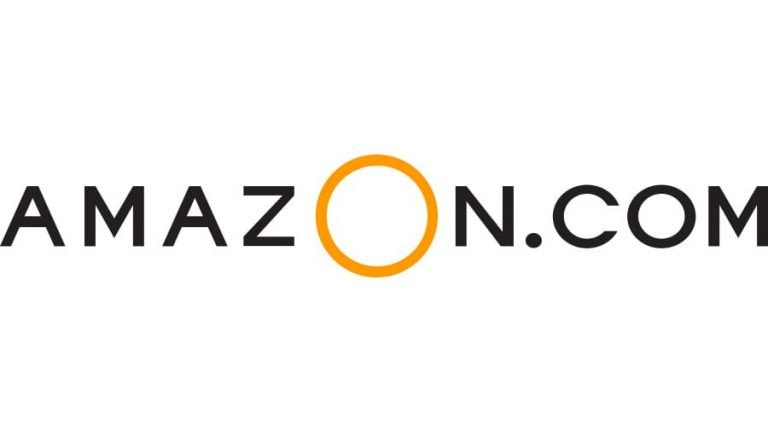
1998–2000: The First Appearance of the Smile
In late 1998, Amazon unveiled the “Swish” logo—an early blueprint of the modern brand. The lowercase wordmark was paired with a subtle yellow arc, slightly curved upward like a bridge between “old” ecommerce and the industry’s future.
Executed in Officina Sans, this version hinted at the friendly personality that would soon define Amazon.

2000–2024: The Iconic A-to-Z Smile
In 2000, Amazon introduced the logo that would become one of the most famous symbols of the digital age. Designed by Turner Duckworth, the emblem featured:
-
A clean, lowercase “amazon” wordmark
-
A bold orange arrow curving from A to Z
-
A dual meaning: a smile and a promise to offer everything from A to Z
This design became a powerhouse of brand equity—friendly, modern, and universally understood.

2024–Today: A Brighter, Deeper Smile
Amazon’s most recent update intensifies the orange hue of the arrow, creating a warmer, more vibrant expression without altering the fundamental design. It’s a subtle evolution that strengthens the brand’s emotional impact while respecting its visual legacy.
The Amazon Icon: A Modern Symbol Turned Cultural Touchstone
Beyond the full logo, Amazon’s standalone icon—featuring the lowercase “a” and the curved arrow—has become a digital signature recognized around the world.
Turner Duckworth suggested using the smile alone on packaging, transforming every shipping box into a walking advertisement. Millions of people now associate that simple curved line with speed, reliability, convenience, and joy.
The arrow’s symbolism is layered:
-
A smile of customer satisfaction
-
A path from A to Z
-
A forward-moving trajectory representing innovation
-
A metaphor for delivery and connection
It is branding at its purest: minimal, meaningful, and endlessly scalable.
Symbolism & Color: Why the Amazon Logo Works
The Arrow
A smile. A path. A bridge. A promise that whatever you need, Amazon will deliver.
The Colors
-
Black: authority, reliability, confidence
-
Orange: friendliness, optimism, warmth
Their contrast makes the logo feel professional yet approachable—perfect for a brand built on trust.
The Typography
The current wordmark uses a customized version of Officina Sans Bold, with smooth curves and subtle personality. Notably, the “Z” hugs the arrow, reinforcing visual harmony between text and symbol.
Hidden Meanings Inside the Amazon Logo
Amazon’s emblem contains two intentional easter eggs:
– The Smile: A warm, human signifier of satisfaction.
– A-to-Z Connection: A subtle promise that the store offers everything imaginable.
This combination of friendliness and functional symbolism is a masterclass in effective branding.
Logo Heritage in Action: Why Amazon’s Design Endures
Amazon’s logo heritage is a perfect study in restraint, consistency, and emotional clarity. The company has refined its emblem over decades without ever losing its core message. Minimal changes. Maximum recognition.
It’s proof that timeless logos don’t need constant reinvention—they need meaningful evolution.
A Simple Smile That Transformed Global Branding
The Amazon logo has become one of the most recognizable symbols of modern commerce, blending friendliness with functional purpose. Its arrow has turned into a global shorthand for convenience, speed, and customer delight. More importantly, it stands as an example of how thoughtful logo history and logo heritage can shape a brand’s identity for generations.
Amazon isn’t just delivering packages—it’s delivering a visual legacy.
FAQ: Amazon Logo
What does the arrow in the Amazon logo mean?
It represents both a smile and a connection from A to Z, symbolizing that Amazon offers everything a customer might need.
Why did Amazon choose the name Amazon?
Jeff Bezos wanted a name associated with size, scale, and global ambition. The Amazon River—largest in the world—fit perfectly.
Who designed the modern Amazon logo?
The iconic A-to-Z smile logo was designed by the branding agency Turner Duckworth in 2000.
Has the Amazon logo changed much over the years?
Only subtly. Amazon retains its core design for brand consistency but adjusts colors and refinements over time.
Is the Amazon logo trademarked?
Yes. The logo, icon, and all related symbols are protected trademarks of Amazon.