AllSaints Logo: The Ram Skull Explained
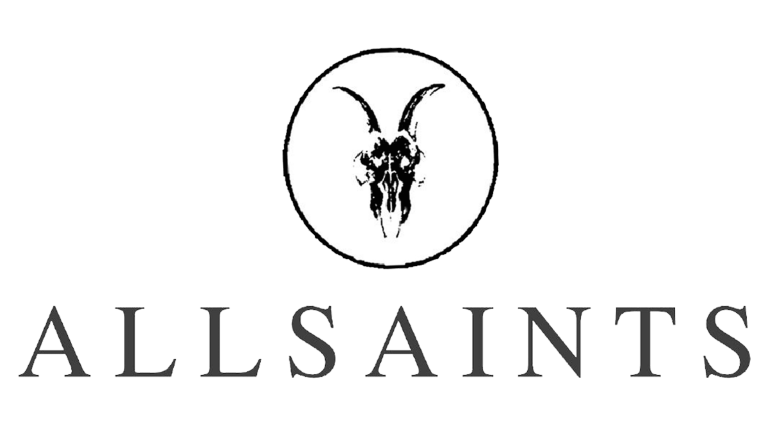
AllSaints built its identity on the same rock ‘n’ roll edge that defined its Notting Hill birthplace, pairing a half-erased ram skull emblem with a clean serif wordmark that has anchored the brand since the 1990s.
Meaning and History
AllSaints was founded in 1994 by designers Stuart Trevor and Kate Bolongaro, who took the brand’s name from All Saints Road in Notting Hill, London, a street known in the 1960s as a gathering point for fashionable, musically minded youth. The label’s first boutique opened on November 1, 1997, the All Saints holiday, initially focused on menswear before expanding into women’s collections the following year. That Notting Hill heritage, steeped in music and countercultural style, has shaped the brand’s visual identity from the start.
Logo Symbolism Analysis
The AllSaints identity rests on two elements working in tension with each other: a classic, elegant serif wordmark and a deliberately rough-edged ram skull emblem. Where the lettering reads as composed and considered, the half-erased skull carries the unique rebellion and boldness the brand is known for, incorporating religious iconography that reflects its rock ‘n’ roll aesthetic. Together, the pairing lets AllSaints read as polished without losing the edge rooted in its Notting Hill origins.
Typography and Visual Construction
The AllSaints wordmark uses a simple serif type set in uppercase black lettering, with generous breathing space between the letters that keeps the name legible and composed. The typeface has been compared to Times Ten Roman and Hebrew Vilna Tanach Black, both known for their restrained, classic character. The ram skull mark, by contrast, is deliberately softened and imperfect at the edges rather than rendered with sharp clarity, giving the overall identity a handmade, lived-in quality.
Heritage and Brand Positioning
Since opening its first store in 1997, AllSaints has kept its visual identity remarkably consistent, with no major logo redesigns recorded since the brand’s founding. That stability lets the ram skull and serif wordmark function as a recognizable shorthand for the label’s music-driven, Notting Hill-rooted take on contemporary fashion.
Frequently Asked Questions
When was AllSaints founded?
AllSaints was founded in 1994 by Stuart Trevor and Kate Bolongaro, with its first boutique opening in 1997 on Notting Hill’s All Saints Road.
Where does the AllSaints name come from?
The brand takes its name from All Saints Road in Notting Hill, London, a street associated with fashionable, music-oriented youth culture in the 1960s.
What does the AllSaints ram skull logo represent?
The half-erased ram skull emblem conveys the brand’s rebellious, rock ‘n’ roll character, balancing the more classic, composed serif wordmark used alongside it.
Has the AllSaints logo changed over the years?
No major redesigns have been recorded since the brand’s founding in 1994, giving AllSaints a consistent visual identity throughout its history.