
Abarth Logo History: Meaning, Symbolism & Brand Heritage
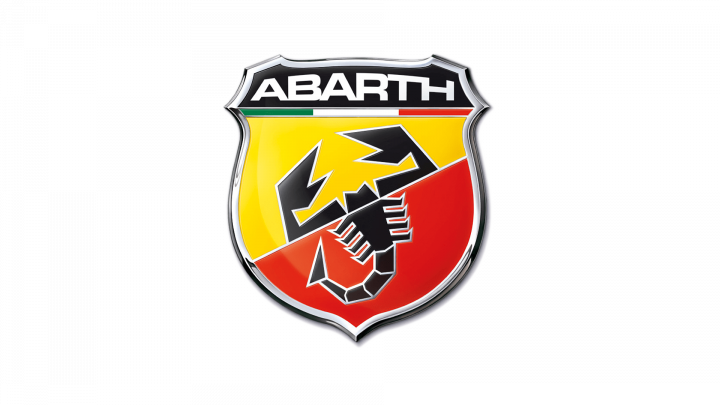
Few performance sub-brands have managed to transform small production cars into cultural icons as decisively as Abarth. Born in post-war Italy, the marque carved its reputation not through luxury or mass production, but through sound, speed, and attitude. Closely associated with Fiat yet fiercely independent in spirit, Abarth represents a rare blend of racing heritage and street-level accessibility. Its visual identity, centered on one of the most aggressive animal symbols in automotive history, has played a decisive role in shaping this perception.
Much like the unmistakable evolution explored in the Ferrari logo history or the performance-driven storytelling behind the Alfa Romeo logo history, Abarth’s emblem reflects far more than branding aesthetics. It embodies the founder’s personality, Italian motorsport culture, and a philosophy of turning modest machines into emotional drivers’ cars. Within the broader landscape of Italian car brand logo heritage, Abarth stands apart as a symbol of compact aggression and unapologetic character.
Meaning and History: The Origin of the Abarth Identity
Abarth was founded in 1949 by Carlo Abarth, a former motorcycle racer whose career was abruptly ended by a severe accident. Rather than stepping away from motorsport, Abarth redirected his obsession with speed and engineering precision into automobile design and performance tuning. Based in Turin, the heart of Italy’s automotive industry, the company initially focused on performance exhaust systems and race-tuned vehicles, quickly earning a reputation for punching well above its weight.
From its earliest days, the brand’s visual identity was inseparable from its founder. Carlo Abarth personally designed the original logo, choosing the scorpion as its central symbol. This decision was deeply personal and strategic at the same time. Born under the zodiac sign Scorpio, Abarth saw the creature as a reflection of his own temperament: compact, aggressive, underestimated, and deadly effective when provoked. This symbolism aligned perfectly with the brand’s mission to extract extraordinary performance from small-displacement cars.
The Abarth logo meaning has therefore always extended beyond simple identification. It functions as a visual manifesto, communicating defiance, precision, and competitive instinct. Unlike many automotive brands that adopted abstract crests or heraldic shields without personal ties, Abarth’s emblem was rooted directly in its origin story.
Logo Meaning: Performance, Identity, and Personality
At its core, the Abarth logo meaning revolves around transformation. The scorpion represents latent power rather than brute size, mirroring Abarth’s philosophy of enhancing existing vehicles instead of building entirely new ones. This concept became especially prominent through the brand’s long-standing collaboration with Fiat, most notably in high-performance versions of the Fiat 500.
The shield shape used in most versions of the logo adds an additional layer of meaning. Traditionally associated with protection and honor, the shield frames the scorpion as a badge of distinction rather than mere decoration. It signals motorsport credibility and mechanical craftsmanship, reinforcing the idea that Abarth vehicles are engineered with racing DNA, even when designed for public roads.
Logo Symbolism: The Scorpion as a Visual Signature
The scorpion is one of the most aggressive animal symbols ever adopted by a car manufacturer. In logo symbolism, it conveys danger, speed, and precision, qualities that resonate strongly with driving enthusiasts. Unlike lions or horses, which often symbolize nobility or freedom, the scorpion suggests calculated aggression and tactical superiority.
Over time, the scorpion’s depiction evolved from a detailed illustration into a more abstract, geometric figure. This shift mirrors broader trends in automotive logo design, where simplification enhances legibility and modern appeal. Despite these changes, the symbol’s core meaning remained intact, ensuring continuity within the brand’s logo heritage.
Importantly, the Abarth logo avoids excessive ornamentation. Its symbolism is direct and unapologetic, aligning with the brand’s mechanical honesty. What you see is what you get: compact cars engineered to deliver visceral driving experiences.
Abarth Logo History Timeline
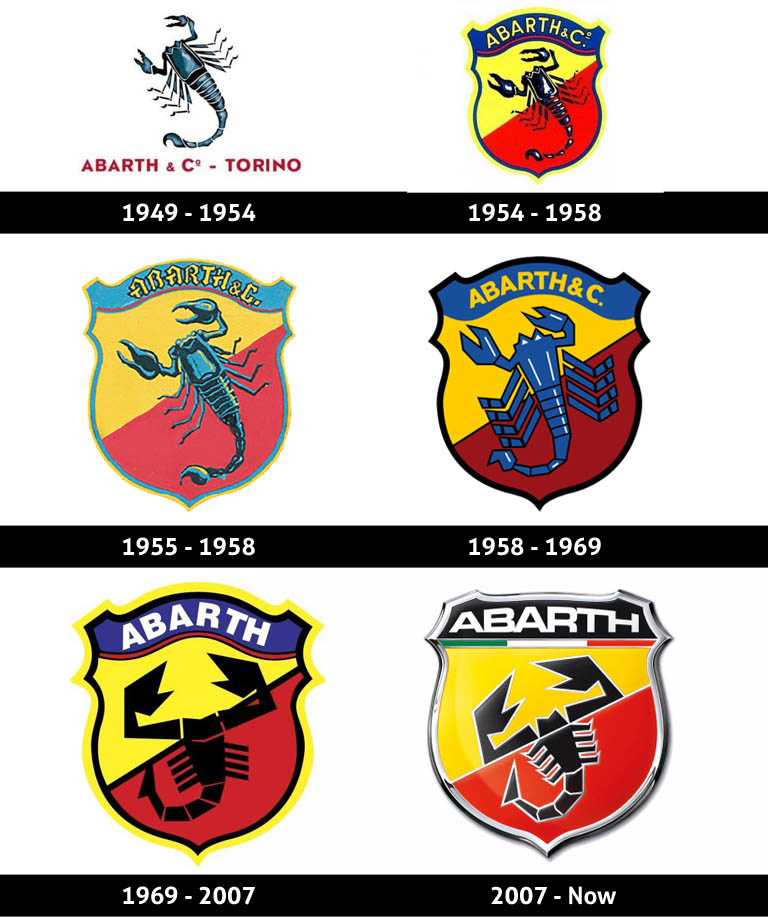
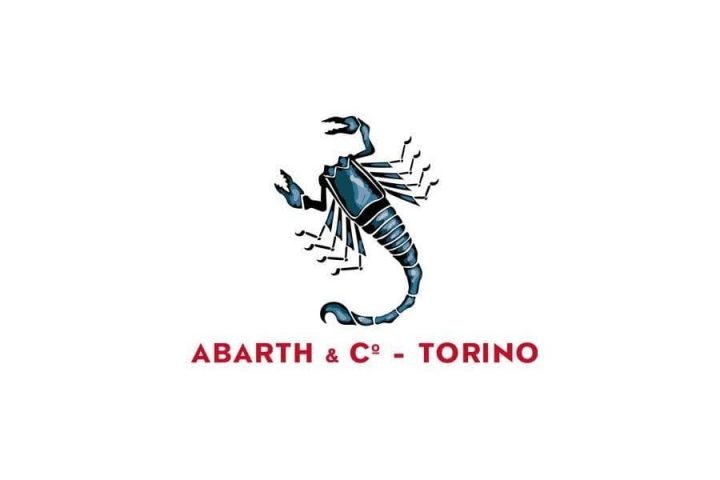
1949–1954: The Original Scorpion Wordmark
The first Abarth logo introduced in 1949 featured a blue scorpion outlined in black, paired with a bold red uppercase wordmark reading “Abarth & Co – Torino.” This design emphasized clarity and confidence, reflecting a young company eager to establish credibility in the competitive Italian automotive landscape.
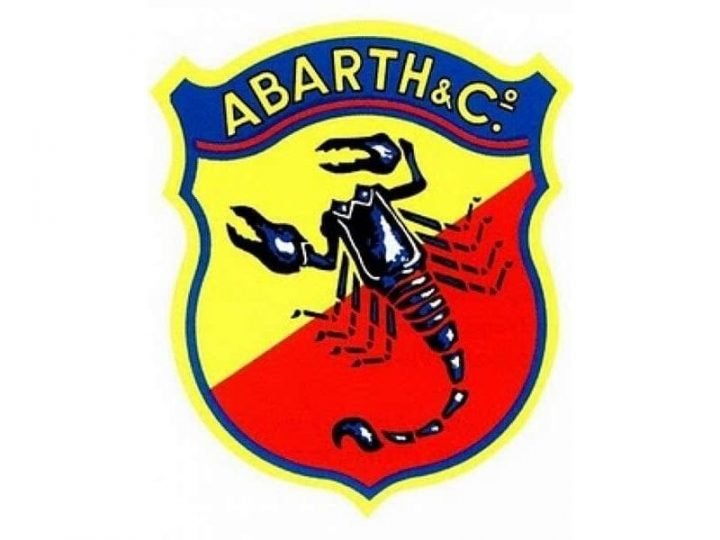
1954–1958: The Birth of the Shield Emblem
In 1954, the logo adopted the shield shape that would become synonymous with the brand. Rendered in red and yellow with a blue outline, the emblem introduced arched lettering and a centrally placed scorpion. This redesign marked the transition from a workshop identity to a recognizable automotive brand.
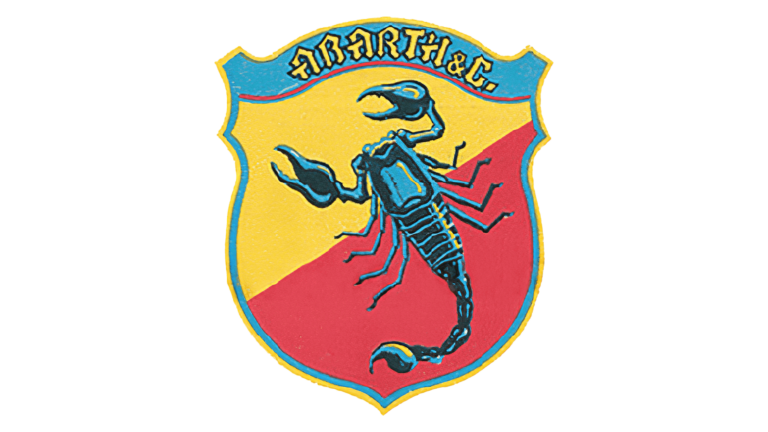
1955–1958: The Gothic Lettering Variant
An alternative version introduced during this period featured softer colors and a sky-blue scorpion. The most distinctive change was the adoption of Gothic-style typography, adding a sense of heritage and craftsmanship. Though short-lived, this variant demonstrated Abarth’s willingness to experiment visually.
1958–1969: Geometric Simplification
The late 1950s brought a more geometric scorpion rendered in black, accompanied by a simplified color palette. The wordmark shifted to white lettering on a light blue background, signaling a move toward modernism while retaining symbolic strength.
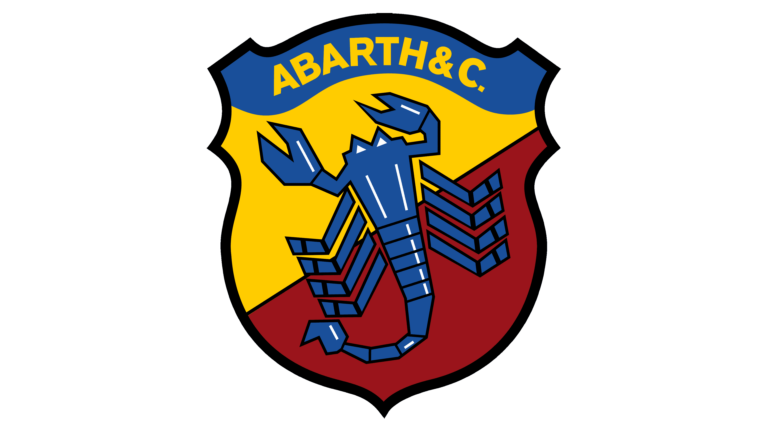
1969–2007: National Identity and Experimentation
During this era, the blue scorpion returned, and the Italian tricolor was incorporated into the wordmark, reinforcing national identity. Various experimental versions appeared, including a notable 1971 iteration featuring a purple scorpion on a yellow-orange field. These designs reflected changing ownership structures and evolving market positioning.
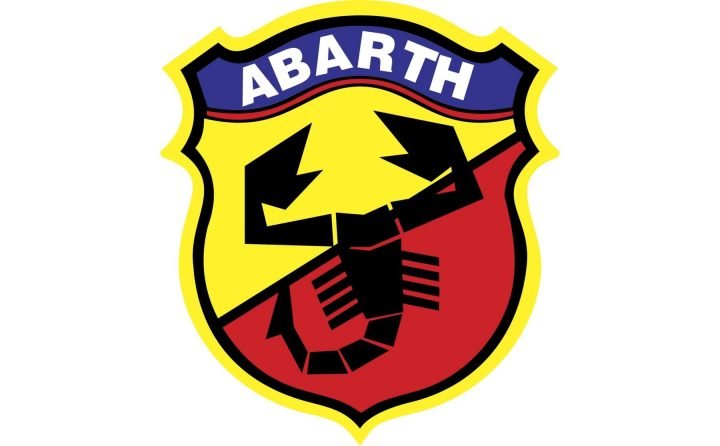
2007–Today: The Modern Performance Crest
The current Abarth logo, introduced in 2007, refined the shield into a sharper, more masculine form. The background is diagonally split between red and yellow, framed by a metallic gray outline. A black, abstract scorpion dominates the center, while the wordmark sits atop a black band accented with the Italian tricolor. This version balances heritage with contemporary performance aesthetics and remains in use today with only minor refinements.
Typography and Color Palette
The Abarth wordmark uses a custom uppercase sans-serif typeface characterized by straight lines and angular cuts. While inspired by extended commercial fonts such as Microgramma Pro Bold Extended, the lettering is uniquely adapted to fit the crest, resulting in subtle variations in letter proportions.
Color plays a crucial role in the logo description. Red and yellow convey energy, passion, and speed, while black adds authority and aggression. Silver metallic accents enhance the emblem’s mechanical feel, reinforcing its association with performance engineering and motorsport technology.
Logo Heritage and Cultural Impact
Abarth’s logo heritage is inseparable from its cultural impact within the automotive world. Over decades, the scorpion crest became a badge of honor among enthusiasts, symbolizing defiance against size-based performance expectations. The logo’s consistent presence across racing victories, road cars, and aftermarket tuning culture cemented its reputation as a mark of authenticity.
Within the broader context of automotive performance logo history, Abarth stands as a case study in how a tightly focused visual identity can achieve global recognition without constant reinvention. Its emblem has remained emotionally resonant precisely because it never abandoned its origin.
Abarth Logo as a Symbol of Compact Performance
The Abarth logo is a powerful example of how personal vision, national identity, and mechanical philosophy can converge into a lasting visual symbol. From Carlo Abarth’s zodiac-inspired scorpion to the modern performance crest, the logo’s evolution reflects unwavering commitment to speed, precision, and character. In the landscape of automotive branding, Abarth proves that true logo heritage is built not through scale, but through consistency and conviction.
FAQ: Abarth Logo Meaning and History
What does the Abarth logo represent?
The Abarth logo represents performance, aggression, and precision, embodied by the scorpion symbol and reinforced through bold color choices.
Why is a scorpion used in the Abarth logo?
The scorpion was chosen because Carlo Abarth was born under the Scorpio zodiac sign and viewed the creature as a symbol of compact strength and lethal efficiency.
Has the Abarth logo changed over time?
Yes, the logo evolved through several redesigns, but the scorpion and shield elements remained consistent, preserving brand continuity.
What colors define the Abarth logo identity?
Red, yellow, black, and metallic silver define the Abarth visual identity, symbolizing energy, power, aggression, and engineering precision.