The Macy’s Star: Where the Red Logo Came From
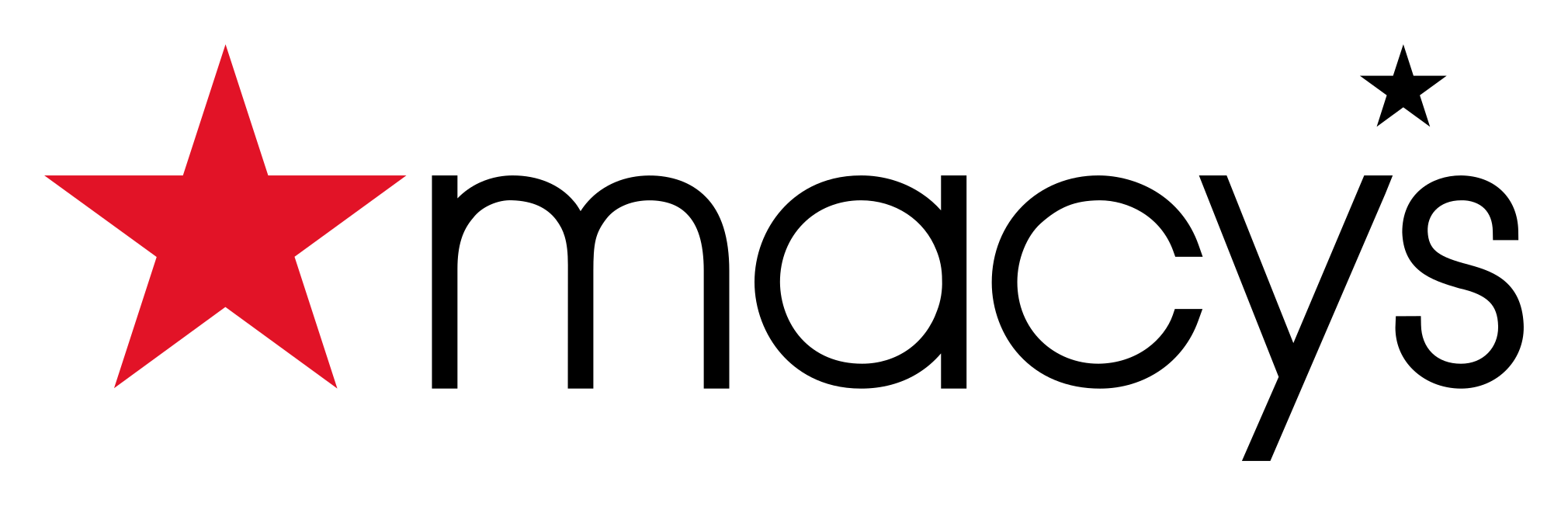
Few logos in American retail are as easy to draw from memory as the Macy’s star. A short lower-case name and a red five-pointed star have hung over Herald Square in New York for generations, floated above the Thanksgiving Day Parade and replaced the names of dozens of old regional department stores. The star is older than most people think: Macy’s has used it in some form since the 1860s, and the story of where it came from begins on a whaling ship.
What does the Macy’s star mean?
The red star is linked to the founder, Rowland Hussey Macy. As a teenager from Nantucket, Massachusetts, he went to sea on a whaling ship, and the story most often told is that he had a star tattooed on his hand during that voyage, a sailor’s symbol for finding the way home. Whether the tattoo existed has never been proven, but the star became his good-luck sign and then the store’s emblem.
It did not appear on day one. When R. H. Macy & Co. opened in Manhattan in 1858, its emblem was a rooster. The red star replaced it in 1862, and it has been tied to the business ever since. Today it is the part of the identity Macy’s uses most freely: on gift cards, shopping bags, parade floats and the “star rewards” loyalty programme.
How has the Macy’s logo changed over time?
The name and the star have been arranged in many ways. Early printed material used a script “R. H. Macy & Co.” with the store address. Through the middle of the twentieth century, the wordmark switched between bold serif capitals and cleaner sans-serif lettering, and in several versions the star took the place of the apostrophe in MACY’S. Some decades used the star; others dropped it for a simple comma.
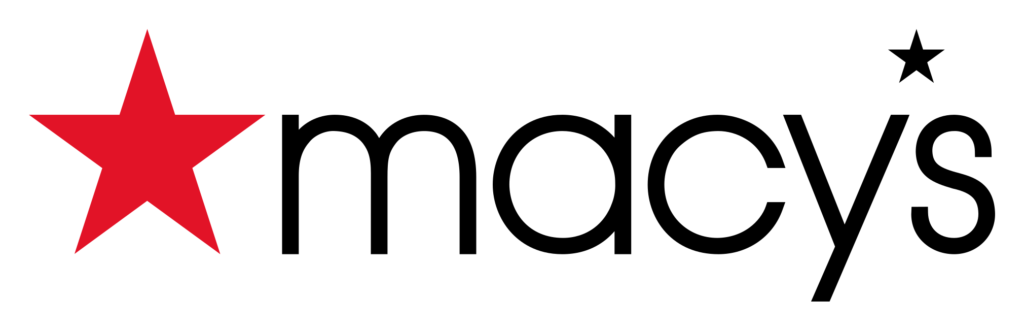
The modern look, a light geometric lower-case “macy’s” with the red star beside it, settled in during the 2000s, just as Macy’s was turning into a national brand. Logo archives date the most recent refresh to 2019, when the letters became a little heavier and the star was resized to match the height of the type, so the two parts read as one unit on phone screens and app icons.
Why did so many department stores become Macy’s?
For most of the twentieth century, Macy’s was mainly a New York name with a few regional divisions. That changed after Federated Department Stores, owner of Bloomingdale’s and several regional chains, bought Macy’s out of bankruptcy in 1994. Federated then acquired the May Department Stores Company in 2005, and in September 2006 it converted hundreds of stores to the Macy’s name in one go. Marshall Field’s in Chicago, Filene’s in Boston, Hecht’s, Foley’s, Kaufmann’s, Famous-Barr, Strawbridge’s and many others disappeared from shop fronts.

To soften the change, Macy’s used transition logos for a while, putting the old local name beside the Macy’s star. The conversions were unpopular in some cities, especially Chicago, where Marshall Field’s had been a local landmark for 150 years. In 2007 Federated renamed itself Macy’s, Inc.
What is the history of Macy’s Herald Square?
Rowland Macy had failed with four small stores before he moved to New York in 1858. His new shop on Sixth Avenue near 14th Street took $11.08 on its first day. He died in 1877, and in 1895 the store passed to Isidor and Nathan Straus, who had run its china department. In 1902 the Strauses moved Macy’s uptown to 34th Street and Broadway. The Herald Square store grew to fill almost the whole block and is still one of the largest department stores in the world.
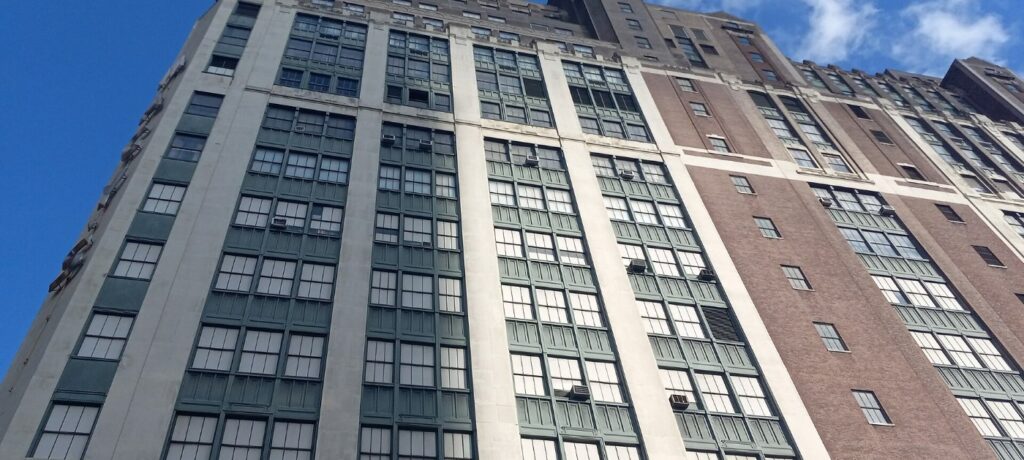
The building famously goes around a small five-storey building on the corner of 34th Street and Broadway, which a rival bought in 1900 to block Macy’s. Macy’s simply built around it and today leases the outside for a giant shopping-bag sign with the red star.
What does the Thanksgiving Day Parade have to do with the logo?
Macy’s has run its Thanksgiving Day Parade in Manhattan since 1924, and it has sponsored New York’s Fourth of July fireworks since 1976. The parade puts the red star in front of millions of television viewers every November, and the star appears on balloons, floats and the start of the broadcast. For many Americans the parade is the first place they ever saw the Macy’s logo, long before they set foot in one of its stores.
Who runs Macy’s today?
Macy’s, Inc. is listed on the New York Stock Exchange and also owns Bloomingdale’s and the Bluemercury beauty chain. Tony Spring, who previously ran Bloomingdale’s, became chief executive in February 2024. Under his “Bold New Chapter” plan the company has been closing around 150 weaker stores while investing in its best locations, its own clothing labels and smaller-format shops. It operated about 450 Macy’s stores in 2025. Macy’s carries many of the brands covered on this site, from Ralph Lauren and Calvin Klein to Tommy Hilfiger, Coach and Levi’s.
Quick facts
| Founded | 28 October 1858, New York City |
| Founder | Rowland Hussey Macy |
| Symbol | Red five-pointed star (since 1862; before that, a rooster) |
| Logo | Lower-case “macy’s” with red star, refreshed around 2019 |
| Flagship | Herald Square, 34th Street and Broadway (since 1902) |
| Parade | Thanksgiving Day Parade since 1924 |
| Parent company | Macy’s, Inc. (formerly Federated Department Stores, renamed 2007) |
| CEO | Tony Spring (since February 2024) |