Hugo Boss Logo History: The BOSS and HUGO Wordmarks
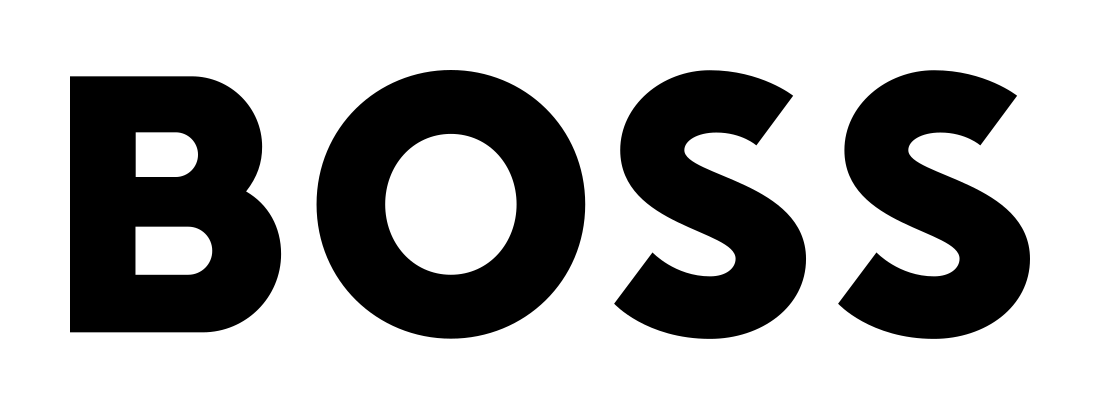
Hugo Boss is one of the few German fashion names known all over the world, and for most of its life the company has been identified by a single word: BOSS. In January 2022 that word was redrawn for the first time in almost fifty years, turning a refined serif logo into a heavy, modern block of capitals. The company wanted to reach younger shoppers without losing the suit-wearing customers who made it rich, and the new logo was the most visible part of that push.
What does the Hugo Boss logo mean?
The company now runs two main brands, BOSS and HUGO, each with its own logo. The BOSS logo is the name in bold, wide, rounded capitals, usually black on white. The letters are tightly spaced and very heavy, which makes the word read like a statement as much as a surname. It fits the campaign that launched it, #BeYourOwnBOSS, where the founder’s family name doubles as an English word for being in charge.
HUGO, aimed at a younger, more fashion-driven customer, uses a similarly bold, graphic typeface. Keeping both logos as plain wordmarks, with no symbol or monogram, lets the names themselves carry the identity.
Has the Hugo Boss logo changed over time?
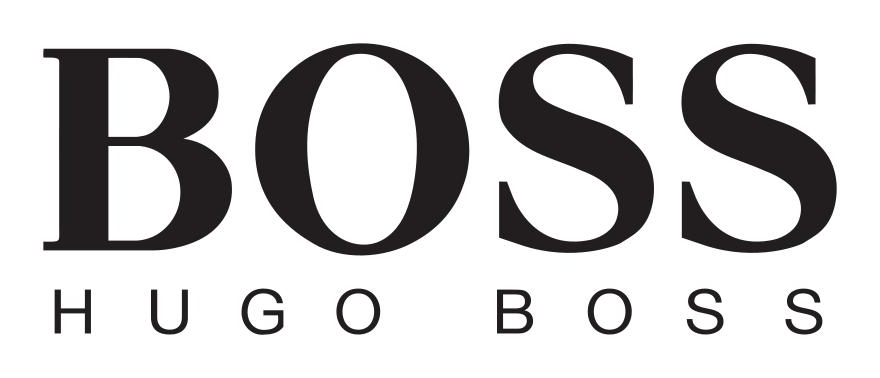
Yes. For decades the main logo was BOSS in a large, elegant serif, often with HUGO BOSS in small sans-serif capitals underneath, in black or dark gray. It looked like the label inside a well-cut jacket, which is exactly what it was. The HUGO logo for the younger line dated from the early 1990s.
On 26 January 2022 the company launched what it called a 360-degree brand refresh. BOSS received a new logo for the first time in almost 50 years and HUGO its first new look since the early 1990s, both with bolder graphic lettering. Campaigns shot by Mikael Jansson featured Kendall Jenner, Hailey Bieber, Future, Khaby Lame, Lee Minho and Anthony Joshua for BOSS, and Adut Akech and Maddie Ziegler for HUGO. Older sub-labels such as Boss Orange had already been folded into the main lines.
Who founded Hugo Boss?
Hugo Ferdinand Boss opened a clothing factory in Metzingen, near Stuttgart, in 1924, making workwear and raincoats. In the 1930s and during the Second World War the company produced uniforms for Nazi organizations, and Boss was a party member. In 2011, after an independent study by historian Roman Köster, the company publicly expressed regret for the suffering of forced laborers at the factory during that period.
After Boss died in 1948, his son Siegfried and son-in-law Eugen Holy took over and moved the business into men’s suits from 1953. Eugen Holy’s sons, Jochen and Uwe, built the modern brand from the late 1960s: the first suits under the BOSS name appeared in 1970, a fragrance followed in 1984 and the company listed on the Frankfurt Stock Exchange in 1985. Over the years it added the HUGO line, womenswear and labels such as Baldessarini, later sold.
Who owns Hugo Boss today?
The Italian Marzotto group bought a 77.5% stake in 1991, and from 2007 the private equity firm Permira had a strong influence before the shares became widely held. Daniel Grieder became chief executive in 2021. Revenue was about €4.3 billion in both 2024 and 2025. In June 2026 the British retailer Frasers Group, controlled by Mike Ashley, launched a takeover offer at €38 a share; the bid did not win full control, but by August 2026 Frasers held about 48% of the company, and in September its chief executive Michael Murray became chairman of the Hugo Boss supervisory board.
In tailoring and premium casual wear Hugo Boss competes with brands such as Giorgio Armani, Ralph Lauren and Tommy Hilfiger.
Quick facts
| Founded | 1924, Metzingen, Germany |
| Founder | Hugo Ferdinand Boss |
| Main brands | BOSS and HUGO |
| Logo | Bold sans-serif BOSS wordmark (since January 2022) |
| Earlier logo | Serif BOSS with HUGO BOSS underneath |
| Revenue | About €4.3 billion (2025) |
| Largest shareholder | Frasers Group, about 48% (2026) |
| Website | hugoboss.com |