Goyard Logo: The Chevron Pattern Explained
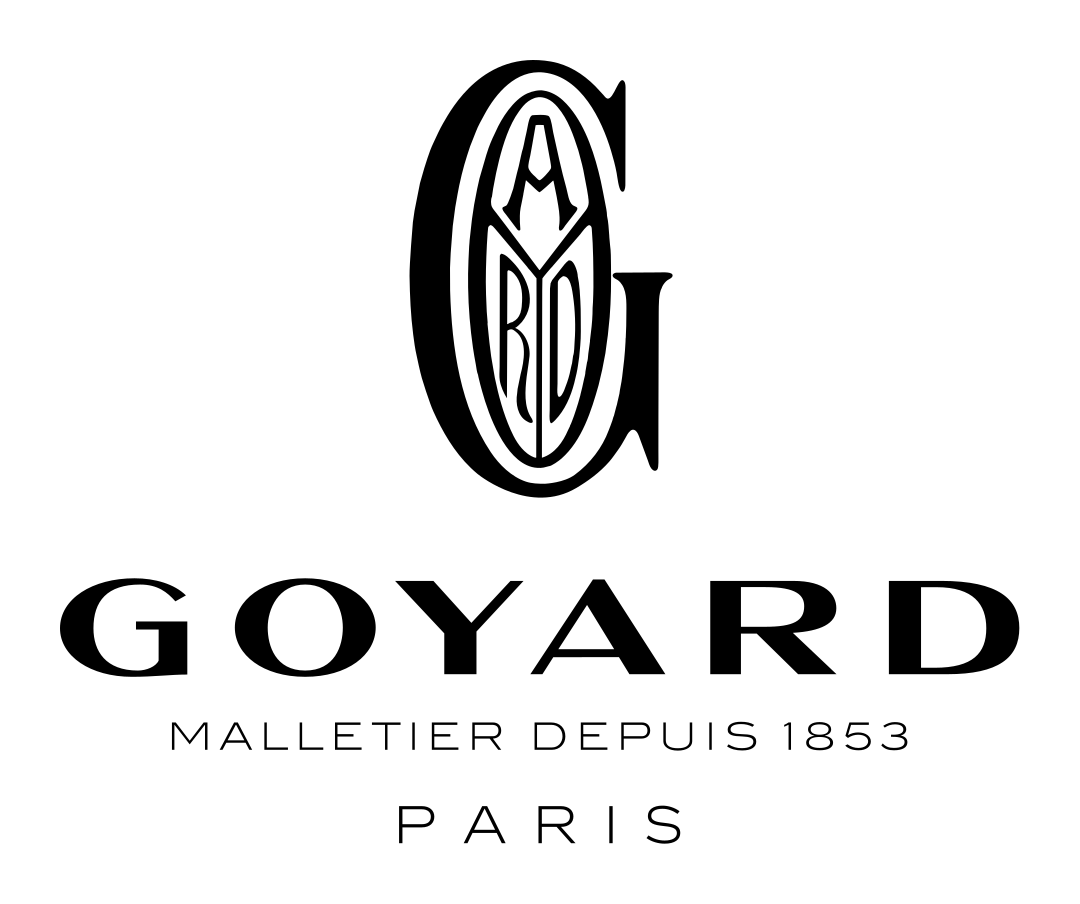
Goyard’s story starts in 1845, when a young apprentice named François Goyard joined the Paris trunk maker Maison Morel. After his employer died he took the business over, and from 1853 the house carried his name. More than 170 years later Goyard still makes trunks and bags by hand and does not sell online, and its logo combines a tall, ornate “G” monogram with the name set in classic capitals above the words “Malletier depuis 1853, Paris.”
What does the Goyard logo mean?
The full logo has three parts. At the top is a tall monogram: a large serif “G” that wraps around an oval in which the remaining letters of the family name, including an “A,” an “R” and a “D,” are tucked together like a puzzle. Below it, “GOYARD” is written in wide, spaced capitals, followed by “MALLETIER DEPUIS 1853” (“trunk maker since 1853”) and “PARIS” in much smaller letters.
The design looks deliberately old-fashioned, like an engraved plate on a 19th-century steamer trunk, and that is the point. Goyard trades on its past: hand-painted canvas, wooden trunk frames and personalised initials. The words “malletier depuis 1853” place it among the oldest Parisian trunk makers, a rival in heritage to Louis Vuitton, which was founded the following year.
What is the Goyard Y pattern?
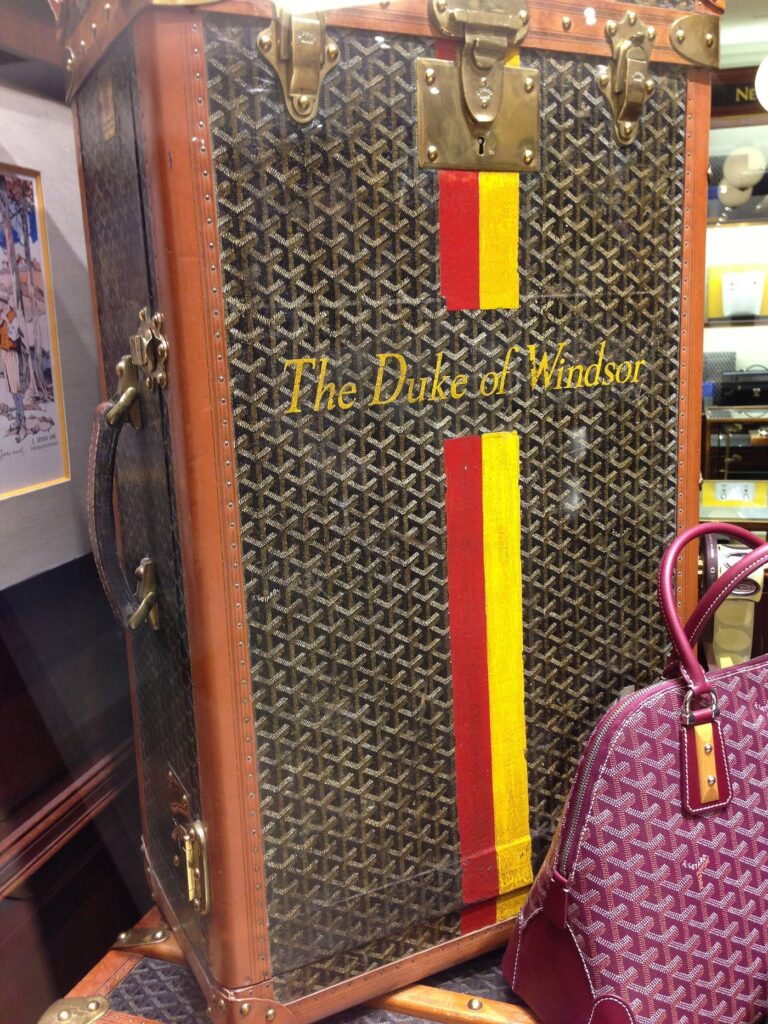
For most people, Goyard is recognised not by its logo but by its canvas. Edmond Goyard, François’s son, who took over in 1885, developed a coated cloth called Goyardine, made from hemp, linen and cotton, designed to look like leather. Its pattern of small dots forms three linked chevrons that together make a “Y,” the middle letter of the family name, so the family name was built into the canvas itself before 1900.
The pattern has been updated over time. Robert Goyard patented a new woven canvas in 1965, the Signoles family added twelve colours to the original black in 2002, and a jacquard-woven version appeared in 2010. Customers can also have their initials or stripes hand-painted on, a tradition that dates back to the steamer-trunk era.
Who owns Goyard today?
The Goyard family ran the house for about a century and a half. Edmond Goyard turned the shop on rue Saint-Honoré into an international luxury name, opened branches, took part in world exhibitions and even made accessories for pets and cars. Early clients included the Duke and Duchess of Windsor, and later fans ranged from Catherine Deneuve and Édith Piaf to Madonna and Victoria Beckham.
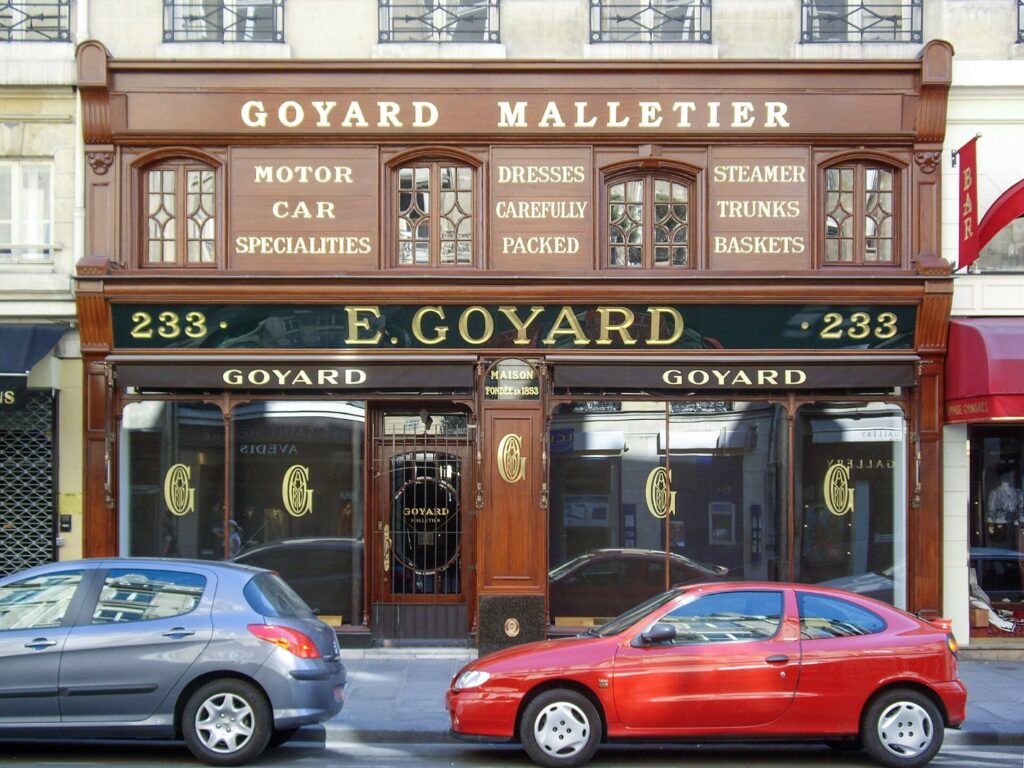
In 1998 the house was bought by Jean-Michel Signoles, who has kept it independent rather than selling to a luxury group. He built new workshops in Carcassonne and opened boutiques around the world, while keeping the flagship at 233 rue Saint-Honoré, near Place Vendôme. The family-owned house still does not sell online, and in 2024 it signed a ten-year lease for a 9,000-square-foot store at 699 Madison Avenue in New York, close to Hermès. Its quiet, word-of-mouth approach to luxury is closer to that of Bottega Veneta than to logo-heavy rivals.
Quick facts
| Founded | 1853, Paris (roots in Maison Morel) |
| Founder | François Goyard |
| Flagship | 233 rue Saint-Honoré, Paris |
| Industry | Trunks, luggage, handbags, leather goods |
| Signature | Goyardine canvas with the chevron “Y” pattern |
| Owner | Signoles family (since 1998) |
| Workshops | Carcassonne, France |
| Logo | G monogram with “GOYARD, Malletier depuis 1853, Paris” |