Falke Logo: The German Sock Maker
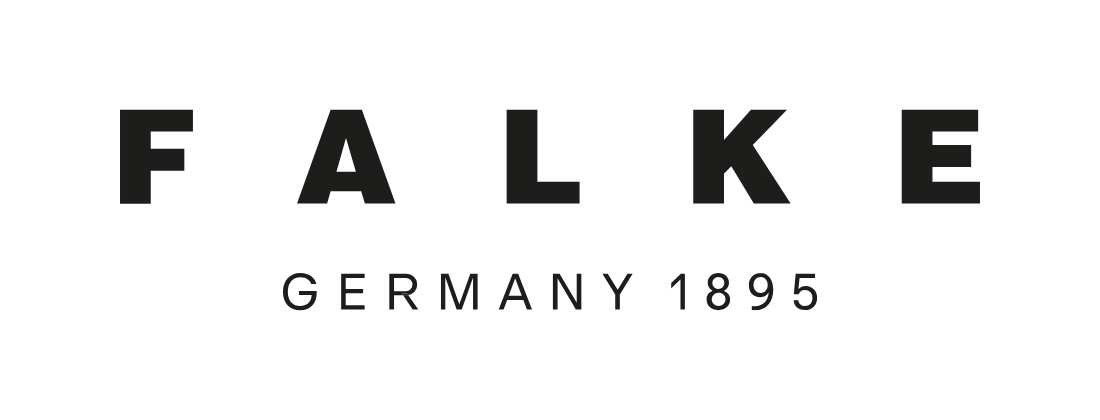
Falke began in May 1895, when Franz Falke-Rohen, a trained roofer in the Sauerland hills of western Germany, started knitting stockings during the winter months. The business he founded in Schmallenberg is still run by his family four generations later. Its logo is the family name in five widely spaced black capitals, “F A L K E,” a design protected as a trademark since 1950 and now often paired with the line “GERMANY 1895.”
What does the Falke logo mean?
“Falke” is the German word for falcon, but the brand has never needed a bird to make the point: the logo is simply the surname, set in bold, geometric sans-serif capitals with wide gaps between the letters. The wide spacing makes the short word look calm and expensive, and easy to read on a sock cuff, a shopping bag or a sign. In its current form the name sits above a smaller line reading “GERMANY 1895,” which stresses the brand’s origin and age.
The plain lettering suits a company that sells on quality and fit rather than on loud branding. On products the wordmark is often printed small on socks and labels, and the black-on-white version is used across packaging, stores and the brand’s sports and fashion lines.
Has the Falke logo changed over time?
Only in detail. Logo references date the spaced “F A L K E” wordmark to 1950, when it was designed and registered as a trademark, and the same idea is still in use more than 70 years later. The brand later added the “GERMANY 1895” line beneath the name to underline its heritage. Sub-brands and partnerships use variations, such as the logo of the FALKE friends loyalty programme.
Who founded Falke?
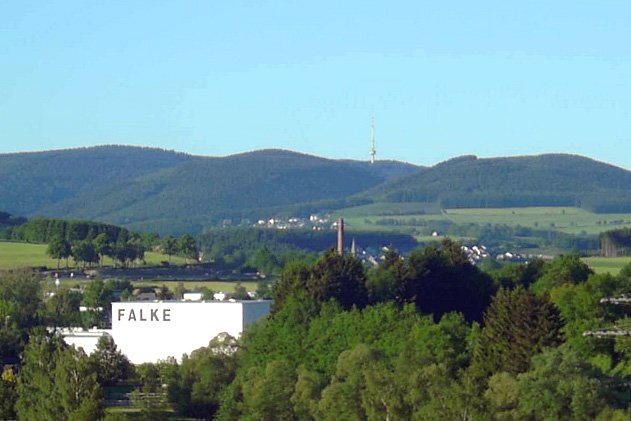
Franz Falke-Rohen founded the business in 1895. His son Franz Falke joined in 1902 and took majority control in 1928, and in 1920 the company built the factory on Oststraße in Schmallenberg that is still its headquarters. After Franz Falke died in 1951, his sons Paul and Franz-Otto Falke ran the company together for about four decades, turning a regional stocking maker into an international clothing brand. Franz-Otto, who handled marketing, sales and product development, died in July 2024 at the age of 101.
In 1990 leadership passed to the fourth generation, the cousins Paul Falke and Franz-Peter Falke, who still run the company. Falke makes socks, tights and stockings for women, men and children, as well as running and ski socks, functional sportswear, knitwear, outerwear and underwear. In 2008 it bought the rights to the argyle sock brand Burlington for much of the world outside North America, and it has worked on collaborations with labels such as Moncler. In hosiery it competes with names like Calzedonia, and in socks with newer brands such as Bombas.
How big is Falke today?
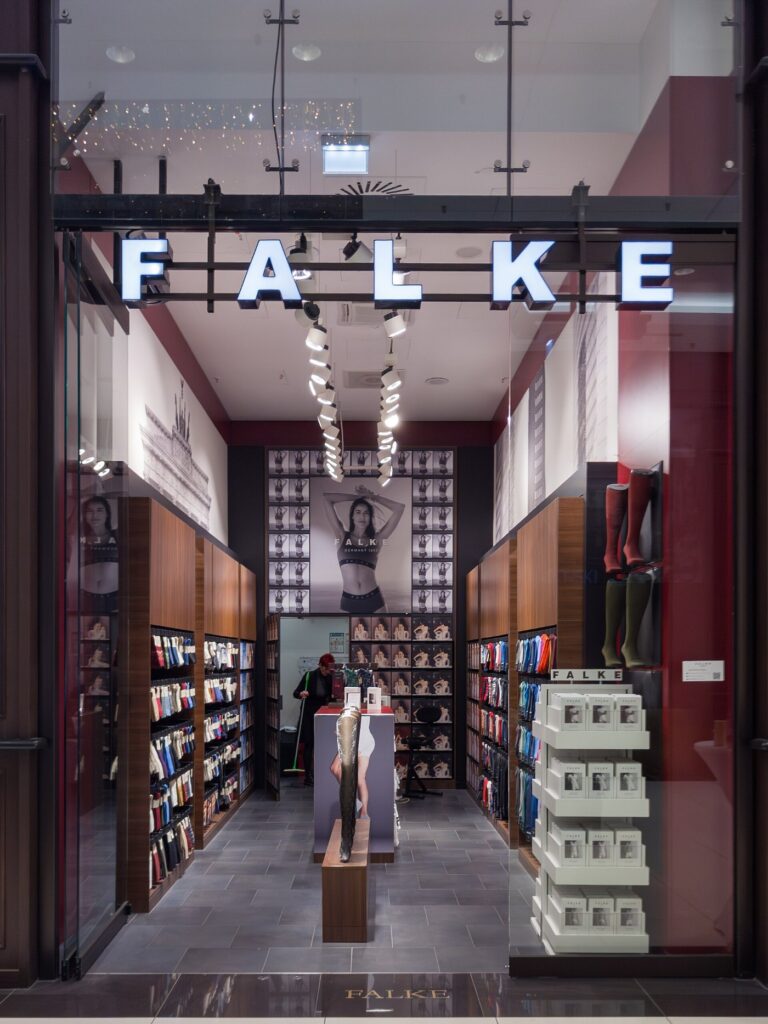
The Falke Group had revenue of about 285 million euros in 2024 and nearly 2,900 employees. It has been the official equipment supplier of the Austrian Ski Federation since 1996, with the contract extended in February 2025, a partner of the German alpine and ski cross teams since the 2014/15 season, and the official fashion partner of the football club TSG Hoffenheim since 2018. Alongside its German roots, Falke sells through its own stores, shop-in-shops and online shops across Europe and beyond, much like other family-run German brands such as Brax.
Quick facts
| Founded | May 1895, Schmallenberg, Germany |
| Founder | Franz Falke-Rohen |
| Name | Family surname; German for “falcon” |
| Logo | Spaced “F A L K E” wordmark, trademarked 1950 |
| Management | Paul Falke and Franz-Peter Falke (fourth generation) |
| Revenue | About 285 million euros (2024) |
| Other brand | Burlington (rights acquired 2008) |