Bluebella Logo: The London Lingerie Brand
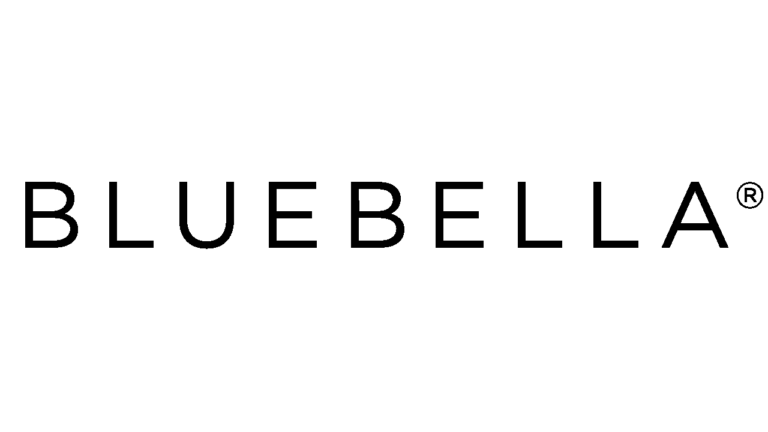
Emily Bendell started Bluebella in 2005 by testing her lingerie designs through parties with friends and family while working out of her own bedroom, and within a decade that bootstrapped side project had grown into a brand stocked at Selfridges, Bloomingdale’s, Nordstrom, and Victoria’s Secret, with Maggie Gyllenhaal and Nicki Minaj among its celebrity fans. The wordmark that carries that growth today keeps the same unfussy confidence Bendell built the label on — “BLUEBELLA®” set in a sleek, capitalized sans-serif, printed simply in black against white.
Meaning and History
Bluebella was founded in 2005 by Emily Bendell, an Oxford-educated former legal journalist who had no formal fashion training but a clear idea of what mainstream lingerie was missing. She tested the concept for six months through informal parties with friends and family, personally handling orders, packing, and customer service from her bedroom before the business had any outside structure at all. Growth followed quickly once the model proved out: turnover doubled annually between 2007 and 2010, and by 2008 Bluebella had around 100 agents selling across the UK. Early backing came from investors including Gü founder James Averdieck, Incito Ventures, and the South East Seed Fund, and Bluebella became the first company funded through Addidi Business Angels, an all-female investor network Bendell helped bring together after finding the wider angel investment world dominated by men. The brand went on to secure major retail placements at Selfridges in 2014, followed by ASOS, Figleaves, Bloomingdale’s, Nordstrom, and Victoria’s Secret in 2019, while a 2016 crowdfunding round raised more than £1 million to fund its US expansion.
Logo Symbolism Analysis
Bluebella’s identity centers entirely on its wordmark rather than any pictorial emblem, spelling out “BLUEBELLA®” in a sleek, modern sans-serif typeface with every letter capitalized for a bold, clean appearance. That directness suits a brand that has built its reputation on body positivity and inclusivity rather than ornate branding — campaigns like 2017’s “Dare To Bare,” which put 19 non-professional models on display at Oxford Circus during London Fashion Week, reflect the same confidence-over-decoration approach visible in the logo itself. The plain black-on-white palette reinforces that same idea: nothing about the mark distracts from the name itself.
Typography and Visual Construction
The BLUEBELLA wordmark relies on capitalized, evenly weighted sans-serif letterforms with no additional icon or flourish competing for attention. That minimalistic construction gives the brand a chic, unfussy image that scales cleanly from a swing tag to a storefront sign, and it has stayed consistent even as Bluebella’s retail footprint expanded from bedroom-run mail orders to shelves at Nordstrom and Victoria’s Secret.
Colors
Bluebella’s logo uses a strictly black-and-white palette, a timeless combination chosen for the high contrast and standout visibility it guarantees across packaging, storefronts, and digital placements alike. The restraint of sticking to two colors keeps the focus on the wordmark itself rather than on any seasonal branding trend, giving the mark a consistency that has carried through the brand’s rapid retail growth since 2005.
Heritage and Brand Positioning
Bluebella’s story is very much a founder’s story: Emily Bendell built the company from a six-month test run among friends into a brand recognized with Drapers’ “Lingerie Brand of the Year” award in both 2017 and 2018, plus a UK Lingerie Awards win for Marketing Campaign of the Year in 2018. Along the way, Bluebella positioned itself as a challenger to mainstream lingerie conventions, pairing body-positive campaigns featuring Olympic athletes and everyday women with placements in some of the industry’s most recognizable retailers. The wordmark’s plain, confident simplicity mirrors that positioning — a brand that built its name through hands-on hustle and inclusive marketing rather than an elaborate visual identity.
Frequently Asked Questions
Who founded Bluebella?
Bluebella was founded in 2005 by Emily Bendell in London, England.
What does the Bluebella logo look like?
The logo is a bold, capitalized “BLUEBELLA®” wordmark in a sleek sans-serif typeface, printed in black on a white background.
Where does Bluebella sell its products?
Bluebella is stocked at major retailers including Selfridges, Bloomingdale’s, Nordstrom, and Victoria’s Secret.
What awards has Bluebella won?
Bluebella won Drapers’ “Lingerie Brand of the Year” in 2017 and 2018, and the UK Lingerie Awards’ “Marketing Campaign of the Year” in 2018.