The Power of Logo Heritage
A brand begins telling its story the moment its logo appears. Before a customer reads a slogan or tries a product, the mind forms an instant impression based on the shape, color, and personality of the mark. This is why logo heritage matters so deeply today. A logo carries the visual memory of a brand, the cultural layers behind it, and the strategic thinking that shaped it long before the digital era. Even in a world dominated by fast design trends, minimal aesthetics, and AI-generated graphics, the heritage behind a logo remains the most reliable source of meaning.
This pillar article explores the discipline of logo heritage and the broader idea of logo heritage and logo history meaning. It examines where logos come from, how they evolve, what symbolism they carry, and why heritage has become an essential element of modern branding.
Why Logo Heritage Still Defines Identity
A logo works instantly. Consumers recognize familiar forms faster than they consciously realize. Trends shift constantly, but heritage gives a logo a sense of authenticity that cannot be manufactured. This is why certain marks feel timeless. The Coca-Cola script still communicates warmth and tradition, Ferrari’s prancing horse still signals prestige and power, and the BMW roundel still reflects its original identity even when modernized. These symbols carry cultural familiarity because their heritage has been preserved over decades.
When people choose heritage brands, they are drawn as much to the story as to the product. The logo becomes a vessel of memory and meaning, not just a decorative icon.
Where Logos Began: The Deep Roots of Visual Identity
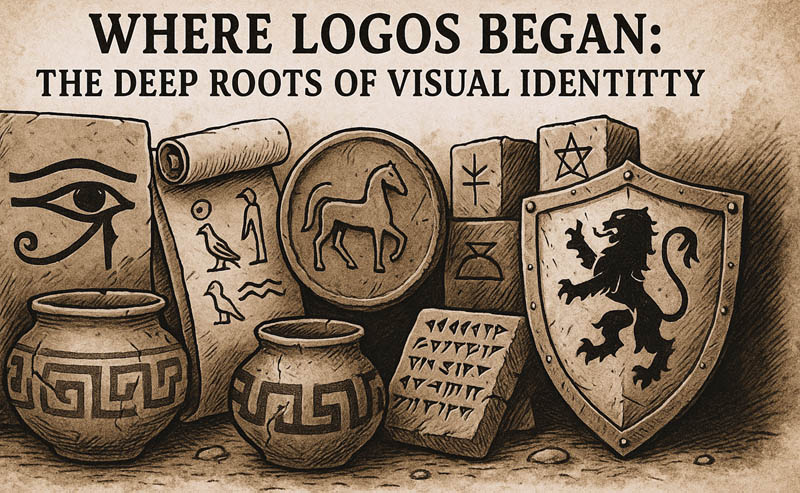
Logo heritage can be traced back long before modern branding. Early civilizations used symbolic marks to identify ownership, establish authority, or communicate status. Egyptian hieroglyphs, Mesopotamian seals, Roman and Greek pottery signatures, and medieval heraldry all served as early identity systems. As soon as commerce expanded, these marks evolved into trade symbols that helped merchants build trust.
When industrialization created mass-market goods, logos became essential tools for recognition. Many early logos from the late 1800s and early 1900s still influence their brands today, forming the foundations of their heritage long before they became global.
The Shift Toward Modern Identity
By the early twentieth century, technological improvements in printing allowed designers to simplify and refine brand symbols. The mid-century corporate identity movement gave logos a central role in branding. Designers like Paul Rand and Saul Bass introduced principles that remain at the core of logo heritage today: consistency, clarity, adaptability, and long-term recognizability. This shift transformed the logo from a decorative element into a strategic brand asset.
What Logo Heritage Actually Represents
Logo heritage is more than a record of old versions. It is the complete narrative surrounding a brand’s symbol. It includes the origin of the mark, the meaning behind its shapes and colors, the choice of typography, the cultural influences of the era in which it was created, and the evolution it undergoes over time. It also reflects the decisions a brand makes about what should be preserved and what can be modernized.
A logo with strong heritage carries emotional weight. Consumers recognize it faster, trust it more easily, and accept updates when they feel connected to the brand’s visual lineage. Without heritage, redesigns feel abrupt or artificial. With heritage, evolution strengthens identity.
Why Iconic Logos Change Slowly
The world’s most recognizable logos demonstrate a consistent truth: brands evolve, but rarely reinvent themselves completely. Coca-Cola has adjusted its script many times, yet the character of the letterforms remains unchanged. Nike’s Swoosh has barely moved since its introduction. BMW continues to modernize its roundel while retaining its essential geometry. Ferrari’s horse remains untouched, even when the frame or color tones are refreshed.
These brands understand that heritage is a form of equity. Changing the mark too dramatically would break recognition and dilute emotional connection.
How Logo Evolution Reflects Culture
Logo heritage also reveals the evolution of culture itself. The ornate detailing of nineteenth-century marks reflected craftsmanship. The bold, streamlined forms of the Art Deco era reflected industrial optimism. The geometric minimalism of the mid-twentieth century reflected the global rise of corporate identity. The glossy, three-dimensional effects of the early 2000s reflected the excitement surrounding digital screens. Today’s flat, simplified logos reflect the need for clarity on mobile devices.
By studying logo heritage and logo history meaning, we uncover visual evidence of how society changes over time.
How Industries Develop Their Own Heritage
Every industry forms its own traditions that influence the heritage of its logos. Automotive brands often emphasize precision, engineering, and national identity. Luxury fashion houses build their heritage around refined typography and long-standing monograms. Financial institutions favor strong, stable shapes that communicate trust. Technology companies rely on simplicity to reflect clarity and innovation. Food and beverage brands often maintain warmth and nostalgia, using expressive lettering and familiar color palettes.
These traditions shape expectations. Yet the brands that stand out are those that understand their heritage deeply enough to evolve without losing authenticity.
Why Heritage Outlasts Trends
Trends come and go. Heritage remains relevant because it is built from meaning rather than fashion. A logo designed purely around current trends risks becoming outdated the moment the trend changes. A logo grounded in heritage continues to communicate the same story even as styles shift around it.
This is why brands that combine modern design with historical identity consistently outperform those that rely only on trend-driven visuals.
How Brands Use Logo Heritage as Strategy
Logo heritage builds credibility, even for young companies. A sense of history can make a new brand appear established and trustworthy. Heritage also supports emotional attachment, because people prefer symbols that feel familiar. It differentiates brands in crowded markets because heritage cannot be copied. It gives logos longevity by grounding them in meaning rather than fashion. And it expands storytelling, because every detail—color, line weight, typography—has a purpose that connects past and present.
Heritage in Practice: Examples from Iconic Brands
Several global brands demonstrate how logo heritage becomes a strategic advantage.
BMW’s roundel developed a powerful narrative around aviation history, a story that strengthened its identity even as it evolved. Starbucks refined its siren, originally taken from a sixteenth-century woodcut, yet it retained the mystical quality that shaped the brand’s personality.
Coca-Cola’s script, inspired by Spencerian handwriting, became one of the strongest typographic signatures in commercial history.
Apple’s bitten apple carries layers of symbolism that extend from biblical references to computing terminology, shaping its identity far beyond a simple minimalist mark.
These examples show how heritage elevates a logo from a simple graphic to a cultural reference point.
Why Designers and Marketers Must Understand Logo Heritage
Understanding logo heritage helps designers create marks that endure. It allows them to make informed decisions, protect essential elements, and evolve symbols without breaking recognition. For marketers, heritage provides a foundation for storytelling, positioning, and emotional resonance. It aligns product narratives with historical context and strengthens trust.
Logo heritage is a strategic tool, not a nostalgic one.
The Future of Logo Heritage in a Digital Environment
As the visual world accelerates—driven by AI-generated graphics, rapid rebranding, and digital-first design—authentic heritage becomes even more valuable. Brands that retain their essence while modernizing will stand out in a visually crowded environment. Those that understand their logo heritage will adapt confidently without losing their identity.
The logos that thrive in the future will be those anchored in meaning, clarity, and continuity.

Why Logo Heritage Will Always Matter
A logo is far more than an aesthetic element. It carries a brand’s legacy, culture, and promise. Trends fade quickly, and technology evolves constantly, but heritage endures. When brands honor their roots, they reinforce their future. When designers study logo heritage and logo history meaning, they create marks that last beyond trends. When consumers recognize a symbol instantly, emotional trust forms naturally.
Logo heritage is the bridge between past and future—a steady foundation in an ever-changing visual world.
FAQ
What is logo heritage?
Logo heritage is the historical, cultural, and symbolic meaning behind a brand’s logo, as well as the evolution of that symbol across time.
What does “logo heritage and logo history meaning” refer to?
It refers to the origins of a logo, the symbolism behind its design, and the narrative developed through its evolution.
Why do iconic logos change slowly?
Because consistency builds recognition and trust, and drastic changes risk breaking that connection.
Can a new brand develop logo heritage?
Yes. Heritage forms through consistent use, meaningful storytelling, and stable identity over time.
Does heritage help SEO?
Yes. Searches related to logo origins, symbolism, history, and meaning naturally align with heritage-focused content and improve organic visibility.