Louis Vuitton Logo History: Is the Monogram Really Roman?
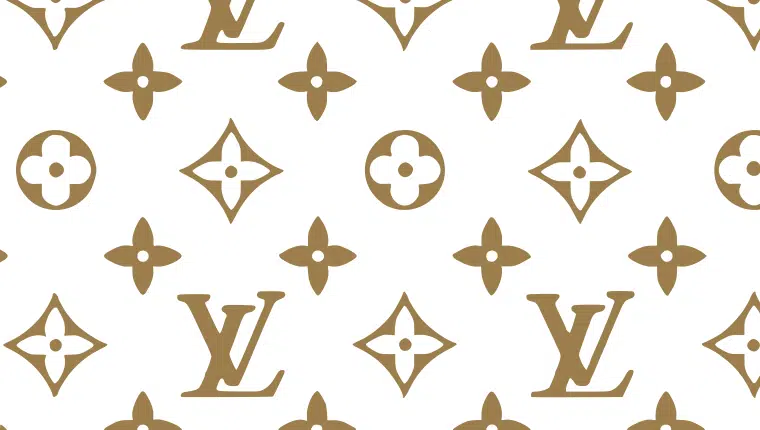
The Louis Vuitton monogram is often described as drawing on classical Roman typography, but the real inspiration was much further east. Georges Vuitton created the LV monogram in 1896 during a period when the Vuitton family, like much of fashionable Paris, was fascinated by Japanese design, and the pattern’s floral motifs echo the shapes of Japanese family crests and sword-guard ornamentation rather than anything Roman.
How did Louis Vuitton actually get to Paris?
Louis Vuitton was born on 4 August 1821 in Lavans-sur-Valouse, in France’s Jura region. He left home at 13, in the spring of 1835, after conflict with his stepmother, not simply because he was orphaned. The roughly 470-kilometer journey to Paris took about two years on foot and by odd jobs along the way, and he didn’t arrive until 1837. Once there, he apprenticed under trunk-maker Monsieur Maréchal, eventually earning a reputation among Paris’s fashionable set.
Vuitton opened his own workshop in Paris in 1854, the same year he married. His breakthrough came in 1858, with a flat-topped, canvas-covered trunk design (built around what became known as Trianon canvas) that could be stacked for travel, a real improvement over the rounded-top trunks common at the time and far more practical for the railway and steamship travel then booming across Europe. His growing reputation led to a prestigious client: Empress Eugénie, consort of Napoleon III, hired him as her trunk maker.
Why did Georges Vuitton create the LV monogram, and where did it really come from?
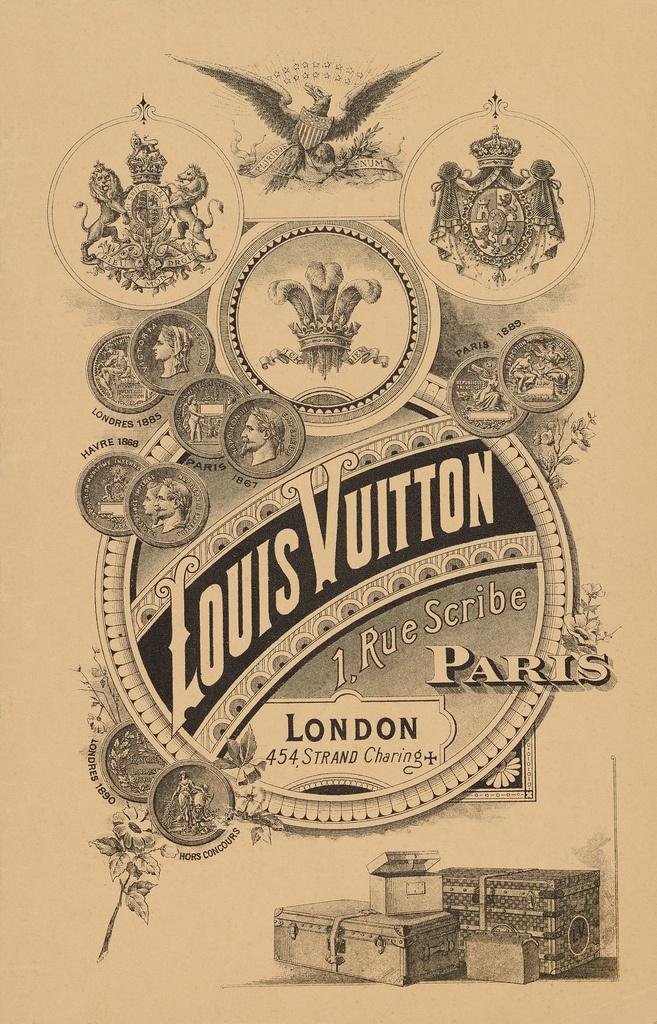
Louis Vuitton died in 1892, and his son Georges took over and expanded the company internationally, which brought a growing counterfeiting problem. In 1896, Georges introduced the Monogram Canvas, intertwining a bold “L” and “V” with floral motifs, and patented the design worldwide specifically to fight imitators. Rather than drawing on Roman letterforms, as is often claimed, the pattern’s geometric flowers and quatrefoils are widely attributed to the Vuitton family’s documented interest in Japanese aesthetics, particularly family crests (mon) and sword-guard (tsuba) design, a connection consistent with the broader wave of Japonisme that influenced French art and design in the late 19th century.
How did Marc Jacobs change the LV monogram’s role?
For a century, the monogram stayed almost entirely a travel-goods and leather-goods mark. That changed after Marc Jacobs became artistic director in 1997 and introduced Louis Vuitton’s first ready-to-wear collection in 1998, putting the LV symbol at the center of fashion rather than just luggage. Jacobs went on to commission a string of high-profile artist collaborations: street artist Stephen Sprouse’s graffiti-lettered overlay on classic bags in 2001, followed by Takashi Murakami’s brightly colored reimagining of the monogram (Monogram Multicolore) in 2003. Later creative directors, including Virgil Abloh and Nicolas Ghesquière, continued reworking the monogram’s presentation while leaving the underlying 1896 design untouched.
Quick facts
| Louis Vuitton born | 4 August 1821, Lavans-sur-Valouse, Jura, France |
| Left home for Paris | 1835 (age 13), arrived 1837 after a ~470 km journey |
| Opened own workshop | 1854, Paris |
| Flat-top trunk introduced | 1858 |
| Louis Vuitton died | 1892; son Georges Vuitton took over |
| LV monogram created | 1896, by Georges Vuitton, as anti-counterfeiting protection |
| Monogram’s design influence | Japanese family crests and sword-guard motifs (Japonisme), not Roman typography |
| Marc Jacobs joined as artistic director | 1997; first ready-to-wear collection, 1998 |
| Stephen Sprouse / Takashi Murakami collaborations | 2001 / 2003 |
Related reading: Chanel logo history, Gucci logo history, Dior logo history, and Hermès logo history.
Further reading
FAQ: Louis Vuitton Logo and History
Why did Louis Vuitton leave home as a teenager?
He left after conflict with his stepmother, not simply because he was orphaned, and spent about two years traveling roughly 470 kilometers to Paris before arriving in 1837.
Who created the LV monogram, and why?
Louis Vuitton’s son, Georges Vuitton, created it in 1896, primarily to fight the counterfeiting that had grown alongside the brand’s success, and patented the design worldwide.
Is the LV monogram based on Roman typography?
That’s a common claim, but the floral motifs are more plausibly linked to Japanese family-crest and sword-guard design, reflecting the Vuitton family’s documented interest in Japanese aesthetics.
When did the LV monogram move from luggage into fashion?
Largely after Marc Jacobs became artistic director in 1997 and launched the brand’s first ready-to-wear collection in 1998.
Which artists has Louis Vuitton collaborated with on the monogram?
Stephen Sprouse (graffiti overlay, 2001) and Takashi Murakami (Monogram Multicolore, 2003) were among the most prominent, followed by later creative directors including Virgil Abloh.