Pringles Logo History: Meaning, Symbolism & Brand Heritage
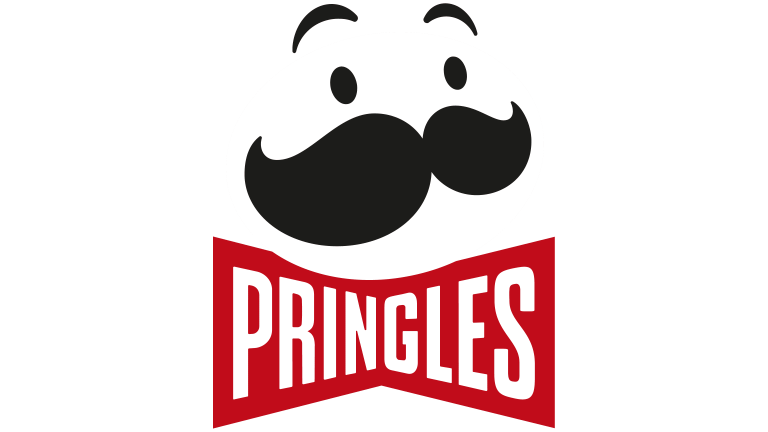
Few snack brands have managed to build an identity as instantly recognizable as Pringles. More than just a name or a mascot, Pringles represents a complete system of branding in which logo, packaging, product shape, and storytelling work together seamlessly. From the unmistakable cylindrical can to the perfectly uniform chips stacked inside it, Pringles created a visual and physical identity unlike anything else in the snack industry.
At the center of this identity stands the Pringles logo, anchored by its iconic mascot, Mr. Pringle. Over decades, the logo has evolved stylistically while remaining conceptually loyal to its origins. This balance between continuity and modernization makes Pringles a compelling case study in logo heritage, where design evolution reinforces brand recognition rather than replacing it.
Meaning and History: The Origin of the Pringles Logo
Pringles was introduced in the late 1960s as a response to a specific problem in the potato chip market: broken chips, greasy packaging, and inconsistent quality. From the start, the brand was engineered rather than improvised. The chips were designed with a precise hyperbolic paraboloid shape, allowing them to stack neatly. The now-famous tube was invented by Frederick Baur in 1970, becoming as iconic as the product itself.
The logo origin followed the same logic of engineered distinctiveness. Instead of abstract symbols or photographic realism, Pringles adopted a stylized character: a mustachioed face inspired by classic baker illustrations. This figure would become Mr. Pringle, later officially named Julius Pringles. His face echoed the shape of the chips themselves, subtly reinforcing product recognition at a subconscious level.
From the beginning, the logo meaning centered on fun, familiarity, and engineered perfection rather than rustic authenticity.
Pringles Logo History Timeline
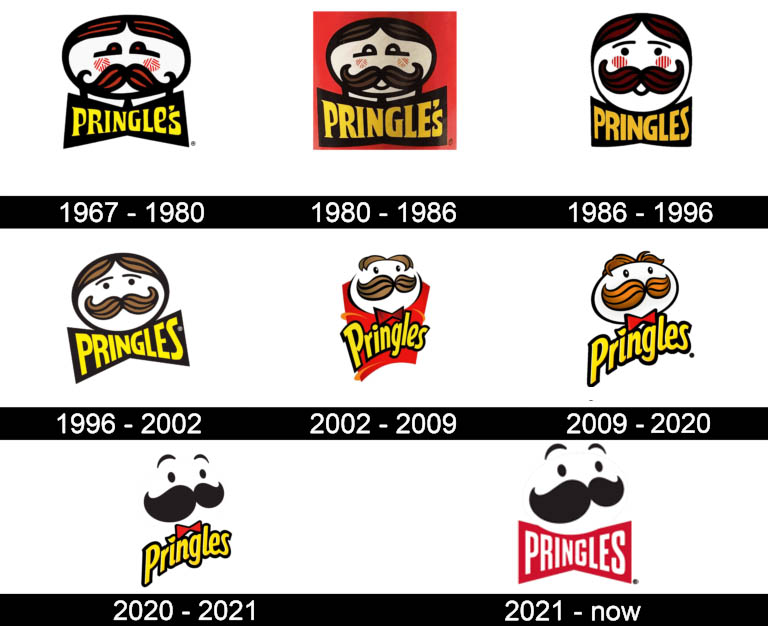
1967–1980: The Birth of Mr. Pringle
The original Pringles logo debuted in 1967, when the brand was still known as “Pringle’s.” It featured a horizontally stretched portrait of a man with exaggerated black mustache, red cheeks, and striped hair. The illustration style was bold and graphic, using thick black lines and strong contrasts.
Beneath the portrait sat the brand name in yellow serif lettering, placed on a black bowtie-like banner. The typography was decorative, with elongated serifs and sharp terminals, lending the logo a slightly theatrical, old-world character.
1980–1986: Background Refinement
In 1980, the logo retained its core elements but was placed on a red square background. This change improved shelf visibility and strengthened color contrast, making the brand easier to spot in retail environments without altering its identity.
1986–1996: Modernization and Name Simplification
In 1986, the apostrophe was dropped, officially renaming the brand to “Pringles.” The logo was refined accordingly. Mr. Pringle’s portrait was enclosed in a circular frame, and the facial features were simplified to appear more playful and contemporary.
The typography shifted from serif to a bold geometric sans-serif, signaling a move toward modernity and mass-market appeal. This period marked Pringles’ transition from novelty product to global snack brand.
1996–2002: Stylization and Confidence
During the late 1990s, the portrait was tilted diagonally, adding motion and energy to the composition. The color palette softened, with reds giving way to browns and warmer tones. Mr. Pringle’s cheeks and mouth were removed, resulting in a cleaner, more confident expression.
The wordmark became brighter and more legible, reinforcing brand clarity as Pringles expanded internationally.
2002–2009: Ornamental Revival
In 2002, the logo gained a more decorative look. The bowtie returned in a red gradient with a thick black outline, and the portrait was placed against a vibrant red-and-yellow background. Mr. Pringle was redrawn with smoother contours, combining nostalgia with contemporary polish.
This version emphasized fun and indulgence, aligning with aggressive global marketing campaigns.
2009–2020: Refinement and Consistency
The 2009 logo built directly on its predecessor, retaining the face, bowtie, and general composition. The hair color became auburn, with more nuanced detailing, and the wordmark was subtly stretched and refined for improved balance.
This logo became one of the most widely recognized versions of the brand worldwide.
2020–2021: Minimalist Transition (United States)
In 2020, Pringles introduced a minimalist redesign in the U.S. market. Mr. Pringle lost his hair entirely, leaving only eyebrows, eyes, and mustache rendered in flat black. The face became outline-free, embracing contemporary flat design trends.
The wordmark adopted a smoother sans-serif cursive style, outlined in black with a yellow gradient fill. This redesign emphasized clarity, scalability, and digital friendliness.
2021–Today: International Simplification
In 2021, an international version of the logo was adopted. While visually similar to the U.S. redesign, it features white lettering placed on a red bowtie beneath the simplified face. This version prioritizes contrast and consistency across global markets.
Logo Symbolism: Fun, Precision, and Familiarity
The Pringles logo symbolism is deliberately approachable. Mr. Pringle is not a chef or a farmer, but a friendly, abstract figure who suggests craftsmanship without realism. His round face mirrors the shape of the chips, reinforcing brand-product cohesion.
The mustache evokes tradition and personality, while the simplified facial features prevent the character from feeling dated. Over time, the logo evolved toward abstraction, but its symbolic core—joy, consistency, and engineered perfection—remained unchanged.
Typography and Color in the Pringles Logo
Typography has shifted from decorative serif forms to modern sans-serif styles, reflecting broader design trends. The current lettering is smooth, rounded, and highly legible, optimized for digital and physical applications alike.
Color has always played a critical role. Red and yellow dominate the palette, chosen for their ability to attract attention and stimulate appetite. Black and white provide contrast and authority, ensuring the logo remains readable across packaging variations and flavors.
Pringles Logo Heritage and Brand Identity
Pringles’ logo heritage is inseparable from its packaging and product design. The cylindrical can, the uniform chips, and the mascot together form a unified system of recognition. This cohesion explains why the brand can afford to simplify its logo without losing identity.
Owned today by Kellogg’s, Pringles continues to demonstrate how long-term brand consistency, paired with thoughtful modernization, creates enduring recognition across generations and markets.
A Mascot That Outlived Trends
The Pringles logo history proves that strong brand foundations outperform constant reinvention. By preserving its mascot while adapting style and execution, Pringles maintained relevance without sacrificing familiarity.
Mr. Pringle’s evolution—from a detailed illustrated character to a minimalist icon—mirrors the broader story of modern branding. It is a rare example of a logo heritage built not on radical change, but on disciplined refinement.
FAQ: Pringles Logo Meaning, Symbolism, and History
What is the name of the Pringles mascot?
The mascot is called Mr. Pringle, officially named Julius Pringles.
When was the first Pringles logo introduced?
The first logo debuted in 1967.
Why did the Pringles man become bald?
The bald design was introduced as part of a minimalist redesign focused on modern digital aesthetics.
What does the Pringles logo symbolize?
It symbolizes fun, consistency, and engineered perfection.
Who designed the original Pringles logo?
The original logo was created by the design firm Teague, led by art director Arch Drummond.
Is the Pringles logo the same worldwide?
There are minor regional differences, but the core design remains consistent globally.