Stella Artois Logo History: Meaning, Symbolism & Brand Heritage
Few beer brands in the world can legitimately trace their roots back more than six centuries. Stella Artois is not only one of the oldest continuously operating beer brands, but also one of the most visually disciplined. Its logo is not a marketing invention of the modern age—it is the product of centuries of brewing tradition, civic identity, and European heraldry.
From medieval Leuven to global distribution under Anheuser-Busch InBev, Stella Artois has maintained a visual identity deeply rooted in history. The logo is not simply decorative; it is a layered historical document, preserving symbols that predate industrial branding by hundreds of years. This continuity places Stella Artois among the strongest examples of true logo heritage in the beverage industry.
Meaning and History: The Origin of the Stella Artois Logo
The origin of Stella Artois begins in 1366, when the Den Hoorn brewery was established in Leuven, one of Europe’s historic brewing centers. The brewery took its name from the “horn” that once hung outside taverns to signal beer availability—an early form of visual branding that would later become a permanent emblem.
In 1708, brewer Sebastian Artois became head brewer at Den Hoorn. Less than a decade later, in 1717, he purchased the brewery and renamed it Brouwerij Artois, formally linking the family name to the beer’s identity.
The word “Stella,” meaning “star” in Latin, entered the brand’s story much later. In 1926, a special Christmas beer—marketed as the “Christmas Star”—was brewed in Leuven. Its success transformed Stella Artois from a seasonal product into a year-round beer, permanently adding the star to both the name and the logo.
Stella Artois Logo History Timeline
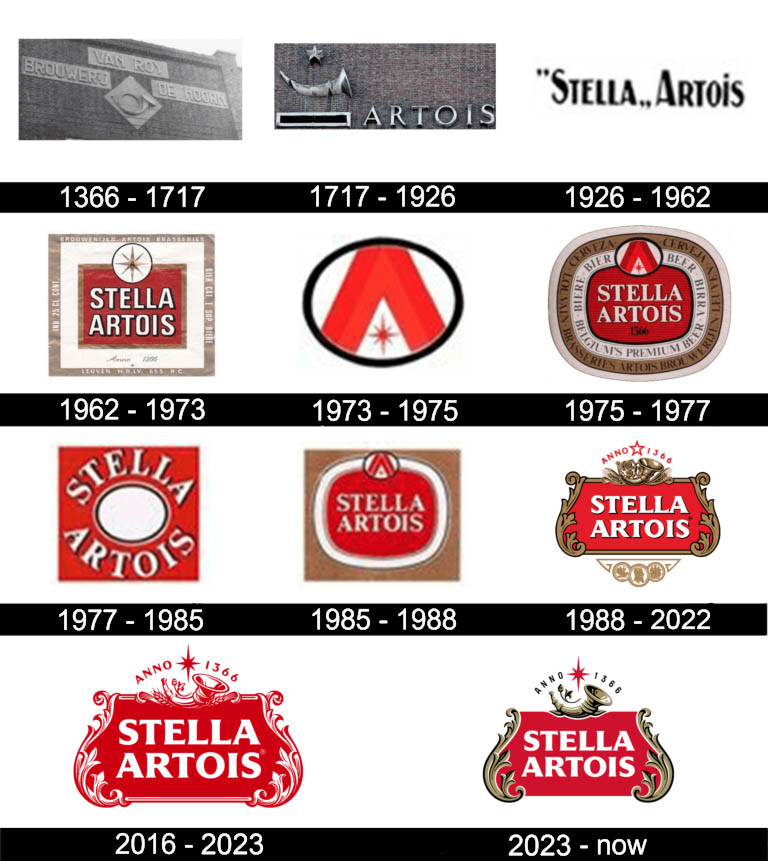
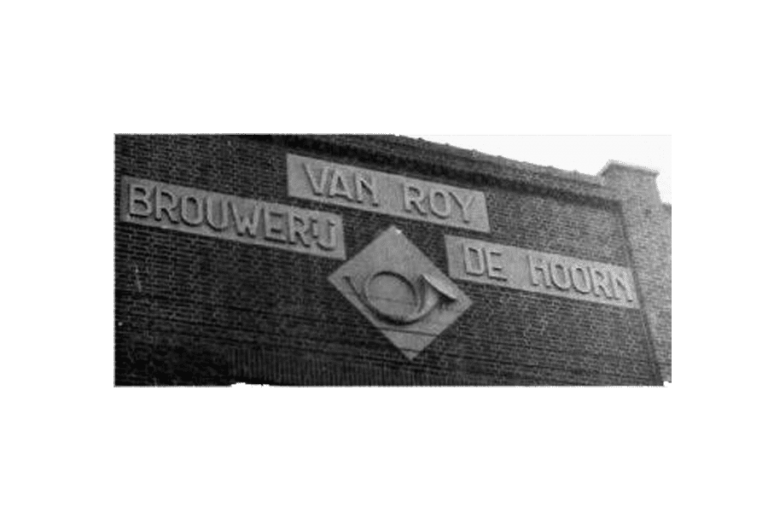
1366–1717: Den Hoorn and the Horn Symbol
The earliest visual mark associated with Stella Artois was the horn emblem of the Den Hoorn brewery. This symbol, representing hospitality and beer availability, became one of the oldest surviving brewery icons in Europe. Remarkably, it still appears on Stella Artois labels today.
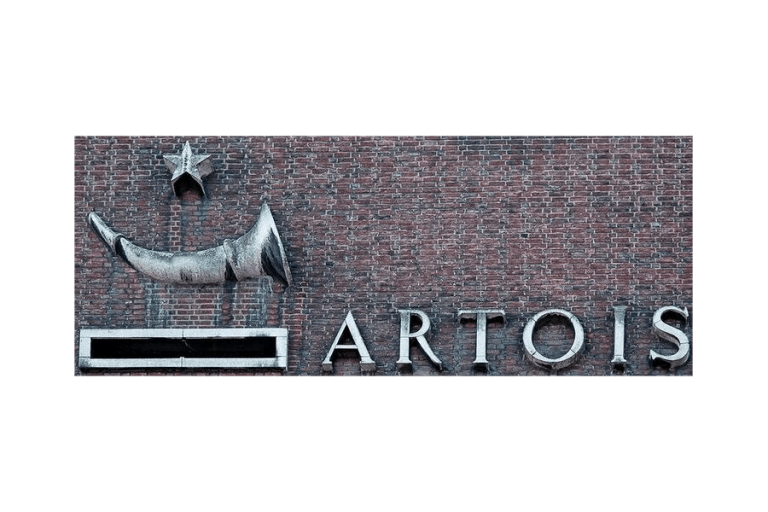
1717–1926: Brouwerij Artois Identity
After Sebastian Artois acquired the brewery, the horn remained central, now accompanied by the Artois name and a star above it. Serif lettering and symmetrical layouts reflected traditional European craft and authority.
1926–1962: Birth of Stella Artois
With the introduction of Stella Artois as a branded beer, the logo evolved into a more structured composition. The name “Stella Artois” appeared prominently, often framed, with the star emphasized as a central element. This period marked the transition from brewery identity to product brand.
1962–1988: Framing and Ornamentation
The logo adopted red panels, white lettering, and decorative frames. Crowns, stars, and borders became more pronounced, reinforcing premium positioning. These versions leaned heavily into classic European label design.
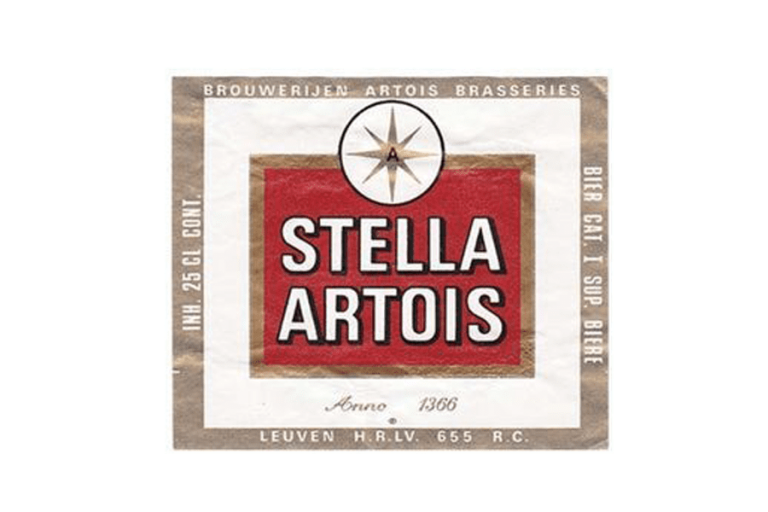
1988–2022: Heraldic Maturity
In 1988, Stella Artois introduced a refined heraldic emblem combining all historical elements: the horn, the star, ornate frames, and medals referencing brewing awards. Bronze and gold accents added depth and prestige. This design became globally iconic.
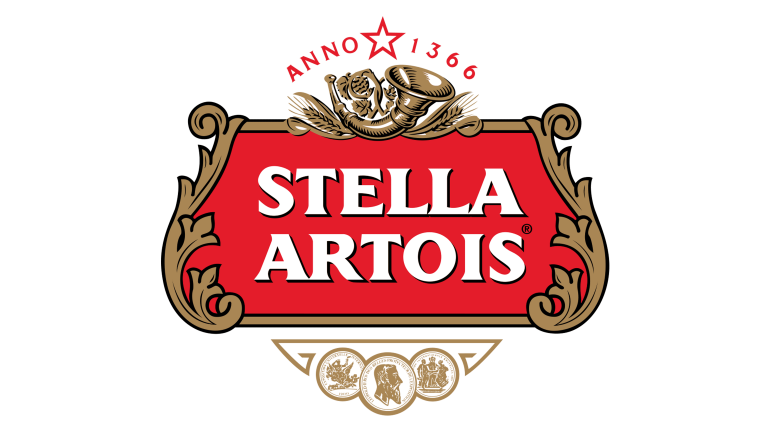
2023–Present: Refined Heritage
The most recent update refined lines, sharpened contours, and restored a brighter red, gold, and white palette. While cleaner and more legible, the logo preserved every core historical symbol, proving that modernization can coexist with deep heritage.
Logo Symbolism: Horn, Star, and Heraldic Authority
The Stella Artois logo symbolism is exceptionally rich. The horn represents the Den Hoorn brewery and the medieval tradition of announcing beer availability. Its survival across six centuries makes it one of the oldest continuous symbols in commercial branding.
The star—“Stella”—commemorates the original Christmas beer of 1926 and symbolizes celebration, excellence, and guidance. Often depicted with eight points, it adds texture and visual gravity to the emblem.
Decorative frames and medals reference Flemish architectural styles and historical brewing awards, reinforcing authenticity rather than invention. Unlike modern minimalist beer logos, Stella Artois deliberately embraces ornamentation to signal longevity and craft.
Typography and Color in the Stella Artois Logo
Typography is central to Stella Artois’ identity. The bold serif wordmark is inspired by classical European lettering, closely aligned with Friz Quadrata–style forms. It conveys authority, balance, and tradition.
The color palette—red, white, gold, and black—is equally symbolic. Red evokes heritage and passion, gold represents quality and prestige, white suggests purity, and black provides contrast and seriousness. Together, they create a timeless visual hierarchy instantly associated with premium European beer.
Stella Artois Logo Heritage and Global Identity
Stella Artois’ logo heritage is built on preservation rather than reinvention. While ownership structures have changed over centuries, the visual language has remained anchored in its Belgian origins. This consistency allowed the brand to scale globally without losing authenticity.
In a market where many beer brands simplify or abandon heritage cues, Stella Artois demonstrates that historical depth can be a competitive advantage. Its logo functions not just as branding, but as proof of lineage.
Stella Artois Logo Meaning and Evolution: Conclusion on Brand Heritage
The Stella Artois logo history stands as a rare example of uninterrupted visual storytelling. Its meaning and symbolism—rooted in medieval brewing, seasonal celebration, and European craftsmanship—have survived because they were never fabricated, only refined.
By preserving the horn, the star, and heraldic structure, Stella Artois has built one of the most credible logo heritages in the global beer industry. The logo does not merely represent a product; it represents over 650 years of brewing culture, discipline, and identity.
FAQ: Stella Artois Logo Meaning, Symbolism, and History
What does the Stella Artois logo represent?
It represents Belgian brewing heritage, quality, and tradition through historical symbols like the horn and star.
Why is there a horn in the Stella Artois logo?
The horn comes from the original Den Hoorn brewery founded in 1366.
What does “Stella” mean in the brand name?
“Stella” means “star” in Latin and references the original Christmas beer brewed in 1926.
Has the Stella Artois logo changed over time?
Yes, but only through refinement. Core symbols have remained intact for centuries.
Who owns Stella Artois today?
Stella Artois is owned by Anheuser-Busch InBev.