World of Tanks Logo History: Meaning, Symbolism & Brand Heritage
Among modern online games, few titles have managed to transform realism, competition, and historical fascination into a long-lasting global phenomenon as successfully as World of Tanks. Released in 2010, the game quickly established itself as a defining force in multiplayer gaming, not only through its mechanics but also through a visual identity that communicates weight, precision, and authority at first glance.
Within gaming logo history, World of Tanks occupies a distinct position. Unlike fantasy-driven brands such as Clash of Clans logo heritage or experimental platforms like Roblox logo history, World of Tanks relies on restraint, symmetry, and militaristic symbolism. Its logo heritage reflects the same principles that define the gameplay itself: discipline, realism, and strategic depth. As part of the broader video game logo heritage archive, it stands as a benchmark for how seriousness and minimalism can build trust and longevity.
Meaning and History: The Origin of the World of Tanks Identity
World of Tanks was developed by Wargaming, which began work on the project in 2008. Initially, the studio considered creating a fantasy MMO, but ultimately chose a far less explored niche: armored warfare of the mid-20th century. This decision shaped not only the gameplay but also the brand’s visual identity.
From the very beginning, the logo meaning was intended to mirror the weight and seriousness of military machinery. Rather than using illustrative or exaggerated elements, the designers opted for geometry, metallic textures, and subdued colors. This approach positioned World of Tanks closer to simulation-oriented titles than arcade-style games, reinforcing credibility among history enthusiasts and competitive players alike.
As the game expanded globally and surpassed major milestones in player numbers, its logo remained unchanged, becoming a stable visual anchor amid constant content updates and technological growth.
World of Tanks Logo History Timeline
2010–Today: A Singular and Unchanged Identity
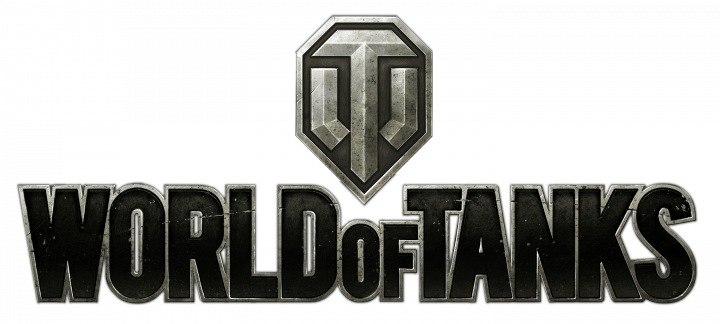
The World of Tanks logo was introduced in 2010 and has remained unchanged ever since. This consistency reflects a deliberate branding decision, emphasizing permanence and authority rather than trend adaptation.
The wordmark is set in all-capital letters using a bold sans-serif typeface. The letters are rendered in dark gray with a lighter metallic outline, creating a three-dimensional, steel-like appearance. The word “OF” appears in a smaller size, maintaining hierarchy without disrupting balance.
Above the wordmark sits the emblem: a shield containing a stylized monogram. The central vertical stroke of the “W” doubles as the letter “T,” visually merging the initials into a single armored form. The pointed angles at the base and crossbar echo the shield’s geometry, reinforcing cohesion between typography and symbol.
This unified construction ensures that the logo reads as a single, compact unit rather than separate elements, enhancing memorability and impact.
Logo Symbolism: Strength, Protection, and Precision
The World of Tanks logo symbolism is rooted in military iconography. The shield represents defense, endurance, and resilience—core concepts in armored warfare. Its symmetrical form conveys balance and control, qualities essential to strategic gameplay.
The metallic gray palette evokes steel, machinery, and industrial power. Unlike logos that rely on color contrast for emotional appeal, World of Tanks uses tonal depth to communicate seriousness and realism. This restraint reinforces the game’s positioning as a tactical experience rather than casual entertainment.
The fusion of the “W” and “T” into a single monogram symbolizes unity and structure, reflecting both teamwork and mechanical cohesion.
Typography and Color Philosophy
Typography plays a critical role in establishing the World of Tanks logo heritage. The heavy sans-serif lettering conveys solidity and reliability, while the metallic outline adds depth without ornamentation. There are no decorative flourishes, curves, or playful elements—every line serves a functional purpose.
The grayscale color palette further supports this philosophy. By avoiding bright colors, the logo aligns itself with historical authenticity and mechanical realism. This design choice allows the emblem to remain visually relevant across platforms, regions, and technological generations.
World of Tanks Logo Heritage and Cultural Impact
The cultural impact of the World of Tanks logo lies in its consistency. As the game surpassed 100 million registered players and set Guinness World Records for concurrent users, the logo became a symbol of credibility within the online gaming community.
Compared to evolving identities explored in Fortnite logo history or League of Legends logo heritage, World of Tanks demonstrates the strength of visual stability. Its emblem has become inseparable from the game’s reputation, appearing unchanged across PC, console, esports broadcasts, and global events.
World of Tanks Logo Heritage and the Power of Stability
The World of Tanks logo history proves that a strong visual identity does not require constant reinvention. By introducing a logo that perfectly matched its subject matter in 2010, the brand avoided the need for future correction. Rooted in realism, geometry, and restraint, the emblem continues to represent one of the most successful online games in history. Within gaming logo history and the broader digital brand heritage landscape, World of Tanks stands as a prime example of how clarity and discipline can build lasting recognition.
FAQ: World of Tanks Logo Meaning and History
What does the World of Tanks logo represent?
It represents strength, protection, and military precision through shield symbolism and metallic typography.
Has the World of Tanks logo ever changed?
No. The logo introduced in 2010 has remained unchanged.
Who developed World of Tanks?
The game was developed by Wargaming.
Why does the logo use gray and metallic colors?
The palette reflects steel, machinery, and realism, aligning with the game’s historical armored warfare theme.