WNBA Logo History: Meaning, Symbolism & Brand Heritage

WNBA is the abbreviation for the Women’s National Basketball Association, the top professional basketball league for women in the United States. Founded in 1996 and officially launched in 1997, the WNBA was created with a clear long-term vision: to establish a stable, elite-level women’s basketball league operating at the same professional standards as the NBA. From the very beginning, the league functioned under the governance of the NBA Board of Governors, a structural decision that helped legitimize the WNBA within the broader ecosystem of American professional sports.
While the league was initially introduced as the women’s counterpart to the NBA logo history, the WNBA quickly developed an identity of its own. It was not designed as a short-term experiment or a marketing extension, but as a permanent institution capable of showcasing the highest level of women’s basketball talent. Over time, the WNBA became a proving ground for elite athleticism, tactical sophistication, and cultural leadership, hosting teams across major U.S. cities and reaching an increasingly global audience.
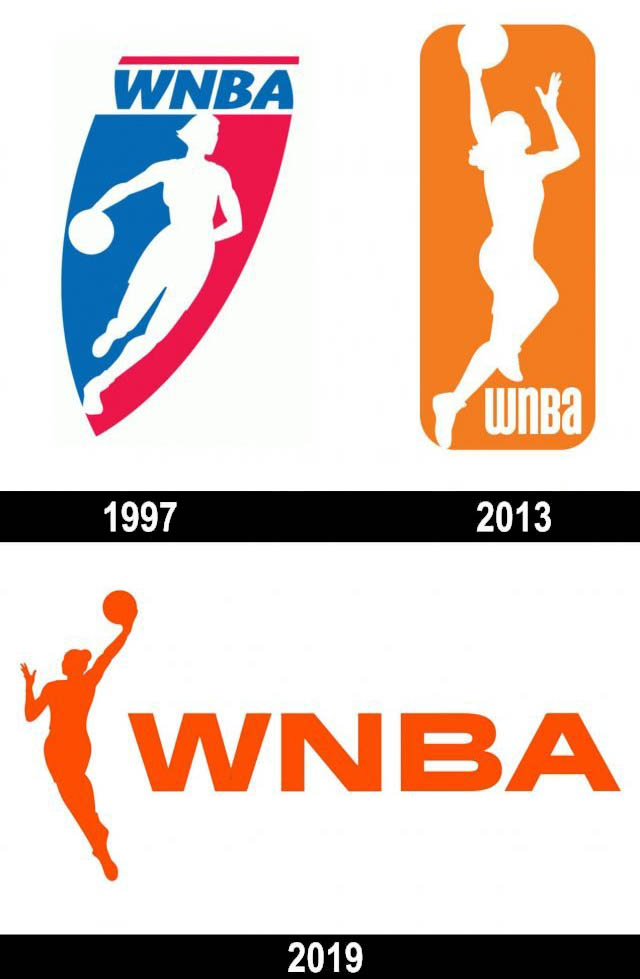
The WNBA logo history mirrors this evolution. Early visual decisions focused on institutional credibility and parity with the NBA, using familiar shapes, colors, and compositional logic. As the league matured, its logo heritage shifted toward independence, confidence, and expressive symbolism. Each redesign reflects not just aesthetic updates, but changing perceptions of women’s professional sports and the growing authority of the league itself.
Within basketball logo history, the WNBA occupies a unique position. Unlike individual franchises that evolve around wins, relocations, or ownership changes, the WNBA’s visual identity evolved alongside a broader cultural movement. Its logo meaning extends beyond branding, functioning as a symbol of progress, representation, and competitive legitimacy. Today, the WNBA stands as one of the most influential women’s sports leagues in the world, and its visual identity tells that story with clarity and purpose.
Meaning and History: The Origin of the WNBA Identity
The WNBA was officially founded in April 1996 and launched its inaugural season in 1997. From its inception, the league positioned itself as both a professional basketball organization and a platform for visibility, opportunity, and advocacy. That dual role has always been central to its logo meaning.
In its early years, the league leaned deliberately on visual familiarity. By echoing elements of the NBA’s identity, the WNBA communicated legitimacy and structural parity at a time when women’s professional leagues often struggled for recognition. Over time, however, the league’s confidence grew. The WNBA no longer needed to visually borrow authority; it had earned its own.
As the league expanded its influence—on the court, in media, and in social discourse—its logo heritage evolved accordingly. Each redesign reflected not only changes in branding trends, but shifts in how women athletes were perceived and presented at the highest professional level.
WNBA Logo History Timeline
1997–2012: Institutional Foundations and Visual Parity
The original WNBA logo, introduced in 1997, featured a slanted shield containing the silhouette of a female basketball player in motion. The inclined shape suggested speed and progression, while the shield itself conveyed tradition and legitimacy. The red, white, and blue color palette directly referenced the American flag, reinforcing national identity and institutional credibility.
This design was intentionally aligned with the NBA’s visual language. The most significant distinction lay in the silhouette, which was unmistakably feminine. At a time when women’s leagues were often marginalized, the logo’s meaning was clear: the WNBA belonged within the same professional framework as the NBA, not outside it.
2013–2019: Identity Separation and Athletic Assertion
In 2013, the WNBA introduced a bold redesign that marked a turning point in its visual identity. The shield was replaced by a vertical rectangular frame, and the color palette shifted from patriotic tones to orange and oatmeal—colors inspired by the league’s basketballs.

The silhouette was redrawn to depict a player attacking the basket rather than dribbling. This change carried strong symbolic weight. It emphasized aggression, confidence, and competitive intensity, reflecting the league’s growing athletic standard. The new logo meaning moved away from institutional parity and toward individual excellence and assertiveness.
During this era, discussion emerged around the identity of the silhouette itself, with speculation linking it to prominent players. The league consistently maintained that the figure represented all WNBA athletes collectively, reinforcing the idea of shared legacy rather than individual branding.

2019–Today: Modern Minimalism and Symbol-First Branding
The 2019 update refined the 2013 concept into a cleaner, more flexible system. The silhouette was redrawn once more, mirrored, and rendered entirely in orange. It became the primary emblem, paired with a full “WNBA” wordmark in wide, modern sans-serif lettering.
This version reflects contemporary branding priorities: scalability, digital clarity, and icon-first recognition. The silhouette now functions independently as a symbol of the league, no longer dependent on frames or complex structures. Within modern sports logo history, this shift aligns the WNBA with leagues and brands that rely on strong, simplified marks capable of standing alone.
Logo Symbolism: Movement, Confidence, and Collective Identity
The WNBA logo symbolism centers on motion and empowerment. The attacking posture of the player conveys ambition and decisiveness, while the absence of facial detail ensures universality. The figure is not a portrait; it is a statement.
Color plays a crucial role in reinforcing this symbolism. Orange represents energy, visibility, and confidence, while neutral tones in earlier versions communicated balance and professionalism. The gradual removal of national colors reflects the league’s evolution from institutional validation toward independent authority.
Typography further supports this message. The wide, clean sans-serif wordmark communicates strength and clarity, aligning with the league’s modern, assertive voice.
A Logo Heritage That Mirrors Cultural Progress
The WNBA logo history is more than a sequence of graphic updates. It is a visual record of progress—athletic, cultural, and institutional. From early efforts to establish legitimacy to its current position as a confident, global league, the WNBA’s logo heritage reflects the journey of women’s professional basketball itself.
Within basketball logo history, the WNBA stands as a rare example of a league whose visual identity matured alongside its mission. The logo meaning today is clear and unapologetic: excellence, strength, and collective legacy. As the league continues to grow, its visual identity remains a powerful symbol of how far women’s sports have come—and where they are headed.
WNBA Team Logos – Logo History & Design Evolution
Discover all official WNBA logos in one place, from the league’s original teams to today’s modern franchises. WNBA team logos reflect women’s basketball history, city identity, and years of design evolution, from early emblems to contemporary rebrands. This complete WNBA logos collection offers a clear look at how visual identity has shaped the growth of professional women’s basketball.











FAQ: WNBA Logo Meaning and History
What does the WNBA logo represent?
The logo represents athletic excellence, empowerment, and collective identity within women’s professional basketball.
Why did the WNBA move away from NBA-style branding?
As the league matured, it established its own authority and no longer needed visual alignment with the NBA for legitimacy.
When was the current WNBA logo introduced?
The current logo was introduced in 2019.
Is the WNBA logo silhouette based on a real player?
The league states that the silhouette represents all WNBA athletes collectively, not a single individual.