
Wendy’s Logo History: Meaning, Symbolism & Brand Heritage

Wendy’s is one of the most distinctive names in the global fast-food industry. Founded in 1969 by Dave Thomas, the brand quickly set itself apart through unconventional ideas, from square burgers to a marketing voice that felt more personal and authentic than corporate. Yet, beyond menu innovation, Wendy’s achieved something far rarer in fast-food branding: a visual identity built around a human face that remained relevant for decades.
When people think of Wendy’s, two things usually come to mind immediately: square hamburgers and the smiling red-haired girl with pigtails. Despite multiple redesigns, the Wendy’s logo has preserved its core character since the very beginning. This balance between evolution and familiarity defines Wendy’s logo history and explains why its logo heritage remains so powerful today.
Meaning and History of the Wendy’s Logo
The story of Wendy’s visual identity begins even before the brand itself. In the early 1960s, Dave Thomas worked closely with Colonel Harland Sanders of KFC, playing a key role in streamlining operations and even contributing to the development of the KFC logo. When Sanders bought Thomas’s shares for 1.5 million dollars, Thomas used the experience and capital to launch his own restaurant.
Wendy’s opened its first location on November 15, 1969, in Columbus, Ohio. The restaurant was named after Thomas’s daughter, Melinda Lou, whose nickname was Wendy. From the start, Thomas wanted the brand to feel warm, approachable, and honest. That philosophy became the foundation of the Wendy’s logo meaning, centered on family values, friendliness, and home-style comfort.
Over time, the Wendy’s logo heritage evolved alongside the company’s growth, including its 2009 merger with Arby’s and its expansion to thousands of locations worldwide. Yet through every era, the red-haired girl remained the heart of the brand.
Wendy’s Logo Evolution Timeline
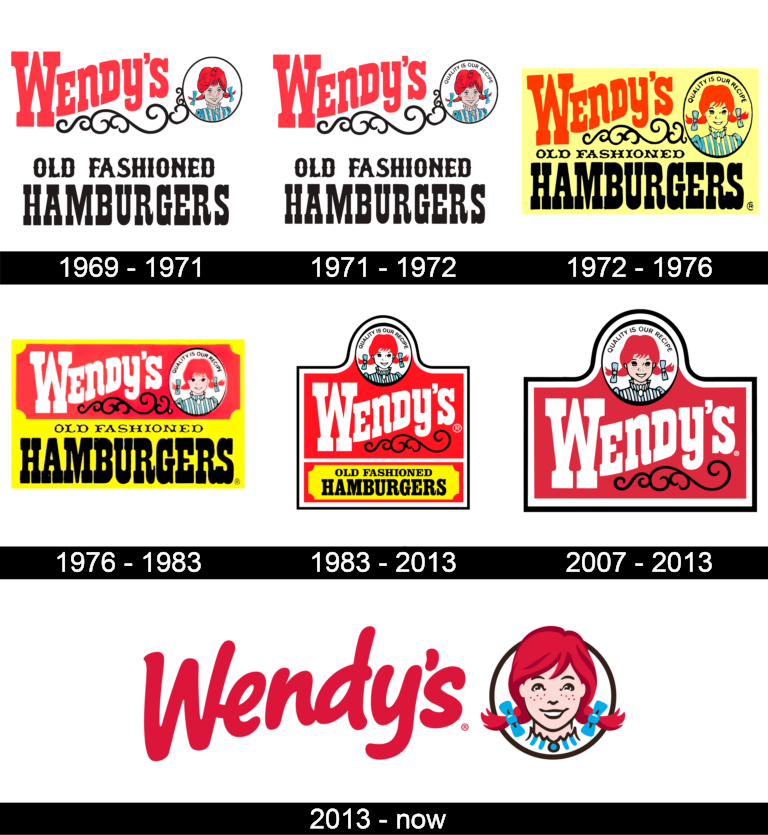
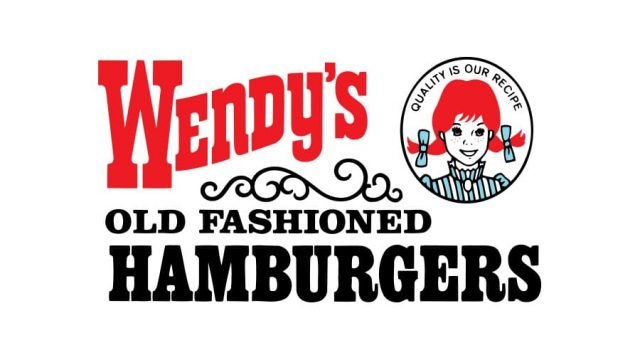
1969 – 1971: The Original Badge and Old-Fashioned Identity
The first Wendy’s logo, introduced in 1969, was a complex and richly detailed badge. It featured a circular emblem with the portrait of a smiling red-haired girl placed beside a Wild West–style nameplate. The word “Wendy’s” appeared in red, title-case lettering with playful curves, while the phrase “Old Fashioned Hamburgers” was written below in black capital letters.
A thin ornamental line separated the colorful upper section from the monochrome lower part, reinforcing the idea of tradition and quality. This logo firmly established Wendy’s visual personality as friendly, nostalgic, and family-oriented.
1971 – 1972: Refinement and the Quality Message
In 1971, the logo was subtly refined. The overall structure remained the same, but the contours were cleaned up and the composition became slightly more balanced. During this period, the slogan “Quality Is Our Recipe” was sometimes added, reinforcing Wendy’s commitment to freshness and standards.
This update strengthened the logo meaning without disrupting brand recognition.
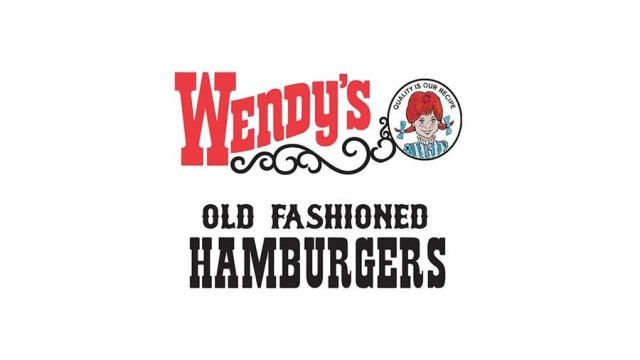
1972 – 1976: Stronger Contrast and Clearer Portrait
The mid-1970s redesign focused on clarity. The typography of “Hamburgers” was thickened, while the “Old Fashioned” wording was reduced in size. The portrait of Wendy was redrawn with a white face, increasing contrast and making the character more visible from a distance.
This version marked an important step in Wendy’s logo history, as the mascot became more visually dominant and expressive.
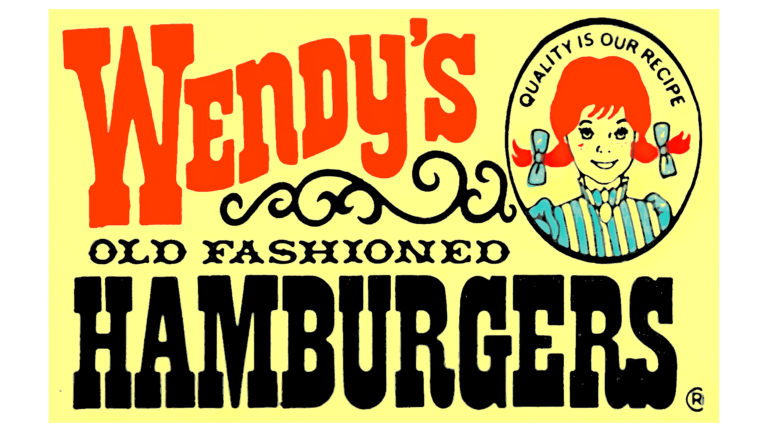
1976 – 1983: Bright Banners and Retail Visibility
In 1978, Wendy’s adopted a bolder, more retail-friendly look. The emblem was placed inside a bright yellow rectangular banner, while the upper section featured a red background with white lettering spelling out “Wendy’s.”
This design increased shelf and signage visibility and reflected the chain’s growing presence across the United States.
1983 – 2013: A Long Era of Stability and Recognition
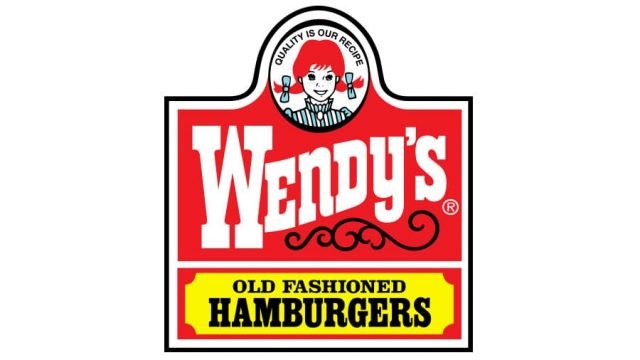
From the early 1980s onward, Wendy’s entered its longest period of logo consistency. The circular portrait moved to the top of the badge, while red became the dominant background color. The “Wendy’s” wordmark was enlarged and refined, and “Old Fashioned Hamburgers” appeared on a yellow banner beneath it.
For many consumers, this version became synonymous with Wendy’s itself. It anchored the brand’s logo heritage for over two decades and helped establish deep emotional recognition.
2007 – 2013: Simplification and Modern Balance
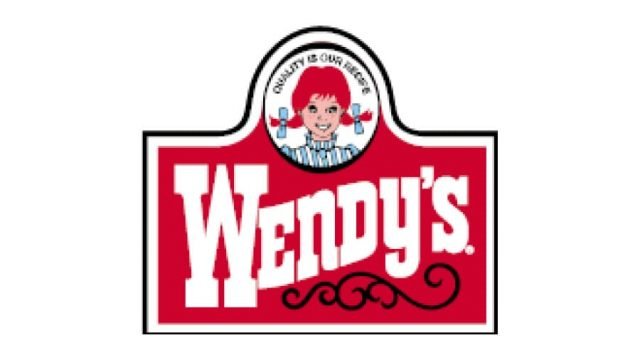
In 2007, Wendy’s simplified its logo by removing the bottom banner. The design now consisted of a red-and-white nameplate with the circular portrait above it, outlined in thin black.
This version modernized the brand without sacrificing familiarity, preparing Wendy’s for a more digital-first future.
2013 – Today: Friendly Minimalism and Contemporary Warmth
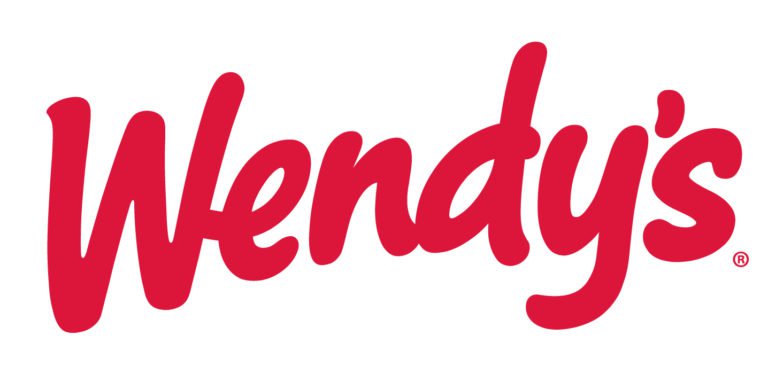
The 2013 redesign marked the most significant update in Wendy’s logo history. The badge was stripped down to two main elements: the portrait of Wendy and the wordmark beneath it. The typography was replaced with a rounded, friendly sans-serif script that resembled handwriting, giving the logo a more personal tone.
The portrait was enlarged, and Wendy’s hair extended beyond the circular frame, creating a sense of openness and movement. This modern identity preserved the brand’s emotional core while making it more adaptable across digital platforms.
Wendy’s Logo Symbolism
The Wendy’s logo symbolism is rooted in family and warmth. The red-haired girl represents Melinda Lou “Wendy” Thomas, making the logo deeply personal and authentic. Her smile, pigtails, and blue-and-white dress evoke comfort, honesty, and home-style values.
A widely discussed element of the logo is the perceived hidden word “Mom” in the collar of Wendy’s dress. While the company has stated this was unintentional, the association reinforces the logo meaning by suggesting homemade food and hospitality.
Typography and Color
Typography has evolved significantly throughout Wendy’s logo history. Early versions relied on decorative serif typefaces inspired by old-fashioned signage. In 2013, these were replaced by a modern script-like sans-serif font that feels warm, casual, and approachable.
The color palette remains emotionally driven. Red symbolizes love, appetite, and energy. Light blue adds balance and calm, while white enhances clarity. Together, these colors create a welcoming and instantly recognizable visual identity that supports Wendy’s logo heritage.
Wendy’s and the Enduring Power of Human-Centered Logo Heritage
The Wendy’s logo history demonstrates how a brand can remain relevant by staying emotionally consistent rather than visually aggressive. While styles changed and designs were refined, the heart of the logo never shifted.
By centering its identity around a real person and family values, Wendy’s built one of the most enduring logo heritages in fast-food branding. Its logo continues to feel friendly, trustworthy, and familiar, even in an industry defined by constant change.
Wendy’s Logo FAQ
What does the Wendy’s logo represent?
The Wendy’s logo represents warmth, family values, and friendliness, embodied by the portrait of the founder’s daughter.
Who is the girl in the Wendy’s logo?
The girl is Melinda Lou “Wendy” Thomas, daughter of Wendy’s founder Dave Thomas.
What is the hidden meaning in the Wendy’s logo?
Many people see the word “Mom” in the collar of Wendy’s dress, symbolizing home-cooked warmth, though Wendy’s states it was unintentional.
When did Wendy’s change its logo most significantly?
The most significant redesign occurred in 2013, introducing a cleaner, more modern and friendly identity.
Why is red the main color in the Wendy’s logo?
Red represents love, appetite, and energy, making it ideal for food branding and emotional connection.