
Vogue Logo History: Meaning, Symbolism & Brand Heritage

Few magazine logos have achieved the level of cultural permanence and visual authority held by Vogue. First published in 1892 as a weekly newspaper for New York’s high society, Vogue was conceived as a refined chronicle of fashion, culture, and social life. When Condé Nast acquired the magazine in 1909, Vogue transformed from a local society paper into a global fashion institution, shaping taste, aesthetics, and creative direction for more than a century.
Today, Vogue is distributed in 23 countries, with millions of subscribers and regional editions that influence everything from haute couture to photography and graphic design. Central to this influence is its visual identity. Unlike most global brands, Vogue does not rely on symbols or graphic emblems. Its logo is typography—pure, confident, and uncompromising. The Vogue logo heritage is, in essence, the story of how a single wordmark became the most powerful typographic signature in fashion.
Vogue Logo Meaning and Editorial Philosophy
The Vogue logo meaning is inseparable from elegance, authority, and exclusivity. From its earliest years, the magazine understood that fashion thrives on refinement rather than excess. The logo was never meant to distract from imagery or editorial content; instead, it frames them, acting as a seal of taste and legitimacy.
Vogue’s reliance on Didone-style typography communicates precision, luxury, and control. High contrast between thick and thin strokes mirrors the fashion world itself—bold silhouettes paired with delicate detail. The logo does not chase trends; it defines them.
Vogue Logo History: More Than a Century of Typographic Evolution
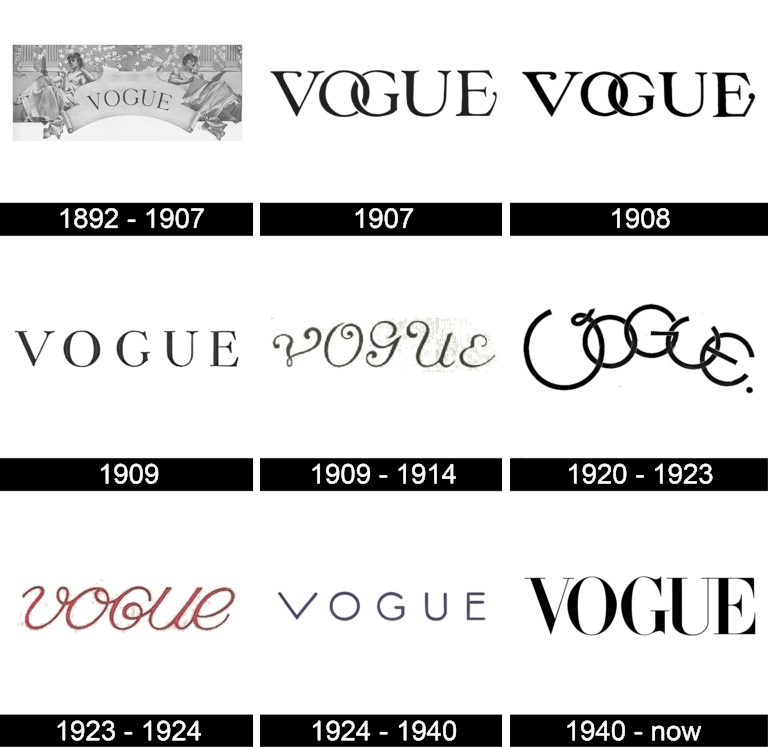
1892–1907: Hand-Lettered Beginnings and Editorial Freedom
When Vogue launched in 1892, there was no fixed logo. Each issue featured a hand-drawn nameplate created by the illustrator responsible for the cover. This approach reflected the magazine’s early identity as a society journal, where artistic expression took precedence over brand consistency.
The absence of a standardized logo allowed Vogue to experiment freely, aligning the wordmark with the mood and aesthetic of each cover illustration.
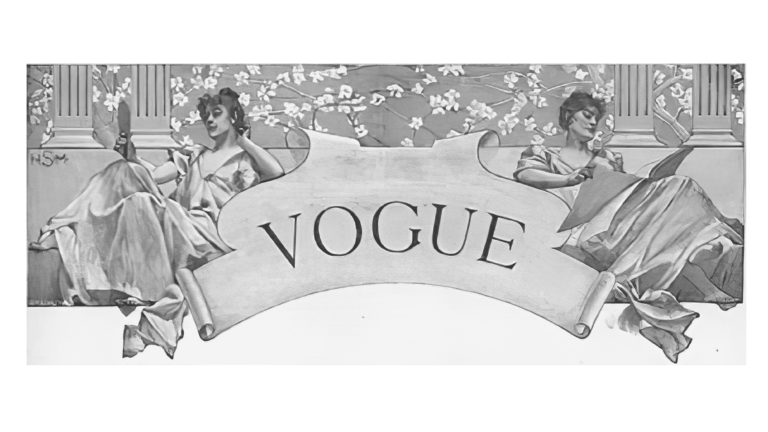
1907: The First Structured Vogue Wordmark
In 1907, Vogue introduced its first structured logo. The new wordmark featured heavy serif letters arranged in a straight horizontal line. Distinctive details included intertwined “O” and “G” characters and elongated, slightly curved terminals on the “V” and “E.”
This redesign marked a turning point, signaling confidence and editorial maturity while preserving sophistication.
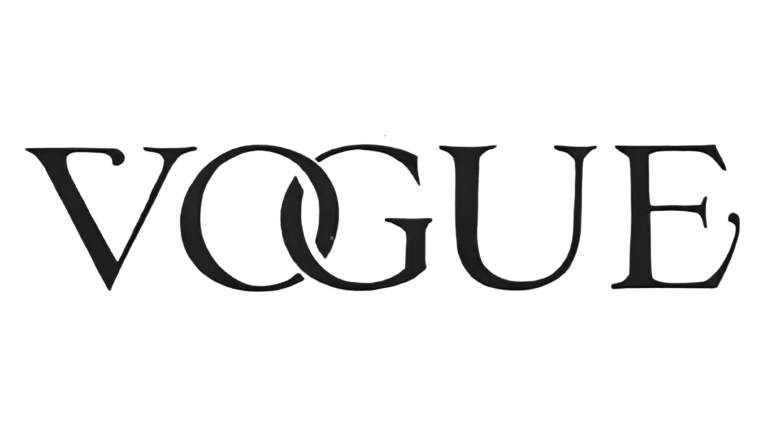
1908: Strengthened Letterforms and Visual Authority
Just one year later, the logo was refined further. The lines were thickened, contours cleaned, and the wordmark was executed in solid black on white. These changes gave the logo more visual weight and authority, ensuring readability and impact on increasingly bold cover designs.
1909–1914: Condé Nast Era and Feminine Elegance
After Condé Nast acquired Vogue in 1909, the magazine’s covers became more artistic and theatrical. The logo adopted a more playful and feminine appearance, with elongated curved terminals and subtle variation in letter size.
Letters gently expanded toward the center of the wordmark, creating rhythm and elegance. This version helped Vogue stand out in a competitive publishing landscape and cemented its reputation as a fashion-forward authority.
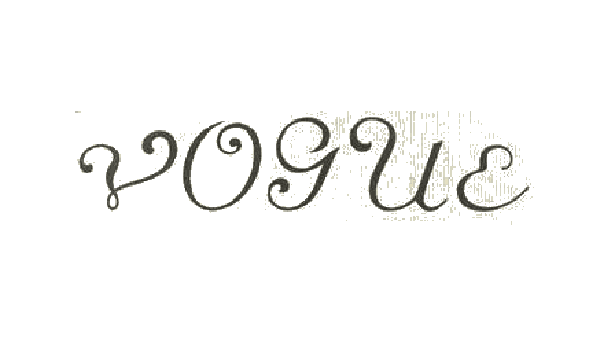
1920s–1930s: Artistic Freedom and Visual Experimentation
Throughout the 1920s and 1930s, Vogue continued to experiment with its logo. Hand-drawn variations persisted, especially as cover photography and illustration evolved rapidly. In 1932, Vogue introduced its first color photographic cover, paired with a minimalist white logo rendered in thin serif letters.
During this era, the logo adapted fluidly to artistic direction, reinforcing Vogue’s reputation for visual leadership rather than rigid branding.
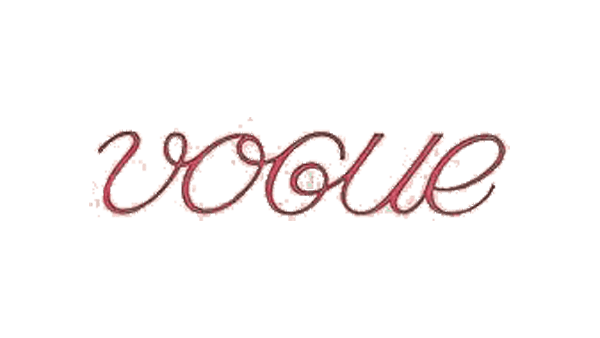
1923–1924: The Only Colored Vogue Logo
In 1923, Vogue briefly adopted a red cursive wordmark. This elegant script featured smooth curves and subtle flourishes, creating a delicate and refined appearance. Notably, this remains the only colored logo ever officially used by the magazine.
Although short-lived, this version demonstrated Vogue’s willingness to explore expressive typography when editorial context allowed.
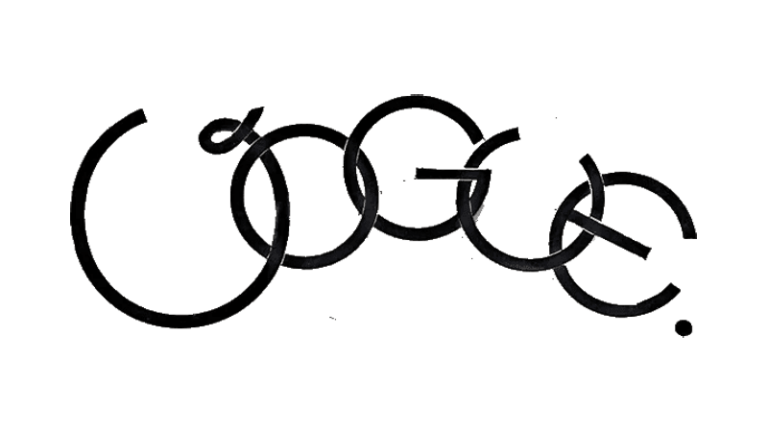
1924–1940: Geometric Modernism and Clean Precision
In 1924, Vogue transitioned to a geometric sans-serif logo. The clean, evenly spaced capital letters reflected modernist design principles emerging in the early 20th century. This version remained in use for more than a decade, offering clarity and restraint during a period of stylistic transition.

1940–Today: The Didot Era and Timeless Identity
By the mid-20th century, Vogue settled into what would become its definitive visual identity: the all-uppercase Didot wordmark. Named after Pierre and Firmin Didot, pioneers of the Didone type style, the font features dramatic contrast between thick vertical strokes and razor-thin serifs.
Since 1955, Didot has remained the foundation of the Vogue logo. Though subtly adjusted over time, its structure remains unchanged. This consistency is central to Vogue logo history and reinforces its role as a fashion authority beyond trends.
Vogue Logo Symbolism Through Typography
The Vogue logo carries symbolism through proportion rather than imagery. Didone typography conveys luxury, discipline, and editorial control. The sharp serifs evoke precision and craftsmanship, while the stark contrast in stroke weight mirrors high fashion’s balance of drama and refinement.
The absence of symbols reinforces exclusivity. The logo assumes recognition—it does not ask for attention; it commands it.
Vogue Logo Typography and Color Meaning
The primary Vogue logo is set in Didot, one of the most iconic serif typefaces in publishing history. Its distinctive elegance has made it synonymous with luxury fashion and editorial excellence.
While the core logo remains black on white, the background often adapts to complement cover photography. This flexibility allows the logo to remain timeless while interacting dynamically with evolving visual content.
In addition to Didot, Vogue uses a custom sans-serif typeface called Vogue AG, developed in 2004. This font blends elements of Futura and Avant Garde Gothic and is used primarily for supporting editorial design rather than the main logo.
Vogue Logo Heritage and the Power of Restraint
The Vogue logo heritage is a rare example of branding perfection achieved through restraint. While the magazine’s covers reinvent visual culture season after season, the logo remains a constant anchor of authority and elegance.
By committing to typography rather than symbolism, Vogue created a visual identity that transcends fashion cycles. The logo is not just a mark—it is a declaration of taste, discipline, and cultural leadership that has endured for more than a century.
Vogue Logo FAQ: Common Questions About the Iconic Fashion Wordmark
Why does Vogue use the Didot font for its logo?
Didot conveys luxury, elegance, and editorial authority, aligning perfectly with Vogue’s position in the fashion industry.
Has the Vogue logo ever used symbols or icons?
No. Vogue has always relied exclusively on typography, reinforcing its minimalist and sophisticated identity.
Was the Vogue logo ever colored?
Yes, briefly in 1923, Vogue used a red cursive logo. This remains the only colored version in its history.
Why hasn’t Vogue changed its logo significantly?
Consistency reinforces authority. Vogue’s logo has become timeless, eliminating the need for frequent redesigns.