Toyota Logo History: Meaning, Evolution & Symbolism

Few automotive emblems are as instantly recognizable as the Toyota logo. Sleek, minimalistic, and deeply symbolic, the Toyota emblem is more than a design — it reflects decades of innovation, craftsmanship, and global influence. At LogoHeritage, we look at logos not only as visuals, but as historical documents. And the Toyota emblem is one of the clearest examples of how a brand can evolve while staying true to its core values.
The modern Toyota logo — with its interlocking ovals — embodies trust, precision, and the relationship between the brand and millions of drivers worldwide. But the story starts long before Toyota became an automotive giant.
From Toyoda to Toyota: The Birth of a Global Identity
Toyota’s journey begins with Sakichi Toyoda, whose name originally shaped the company’s identity. But in 1936, a cultural shift changed everything. The name “Toyoda” became “Toyota” — easier to pronounce, visually cleaner in Japanese script, and composed of eight brush strokes, a number associated with luck and prosperity.
This subtle change marked the company’s evolution from a local family business into the foundation of what would become a global automotive empire. And naturally, a new brand name required a new visual identity, setting the stage for the first Toyota logo.

Early Logos: Simplicity Rooted in Japanese Craft
Toyota’s earliest logos were heavily influenced by traditional Japanese calligraphy. The very first emblem — a diamond-shaped design — symbolized clarity, precision, and reliability, values that Toyota wanted to embody from day one.
Minimalistic but meaningful, these early designs aligned with the brand’s philosophy of practicality and quality. As Toyota began expanding beyond Japan, the logo needed to become more universally recognizable, leading to decades of refinement.
Evolution of the Toyota Logo Through the Years
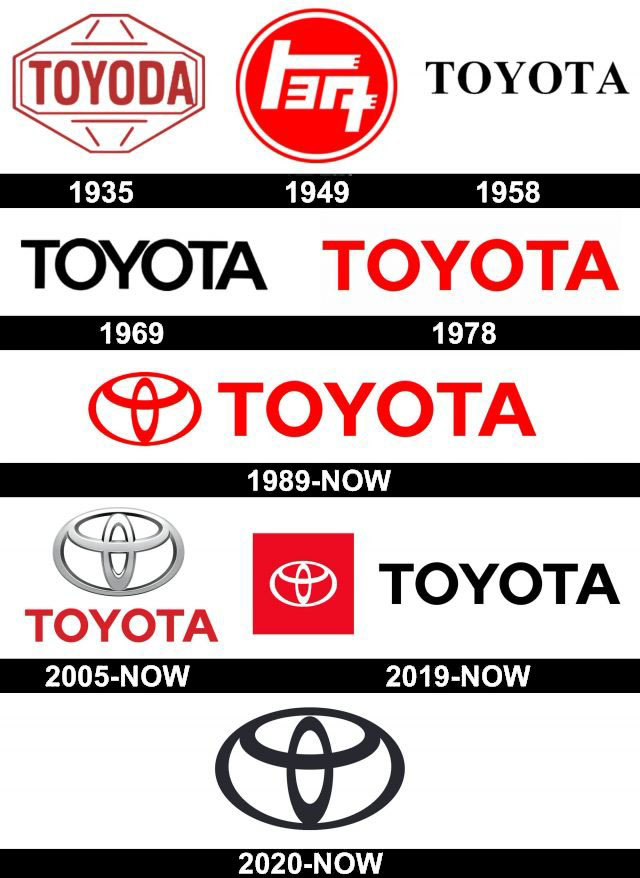
1935–1949: The First Official Emblem
The original Toyota logo introduced during the name transition featured a clean diamond motif, reflecting structure and dependability. It set the foundation for the company’s visual identity as it entered the automotive market.
1949–1958: A Symbol Inspired by the Rising Sun
Post-war Toyota redesigned its logo to echo the Japanese sun — a symbol of rebirth and resilience. This version strengthened the company’s cultural identity while signaling confidence in a rapidly evolving marketplace.
1958–1969: A Logo Designed for Global Expansion
As Toyota began exporting cars worldwide, the logo evolved to be more legible and instantly identifiable. Clean lines and better readability helped the brand resonate with international audiences.
1969–1978: A Modernized Identity
The 1969 redesign introduced a sharper, more modern look. Toyota’s global ambitions required a more contemporary emblem that reflected innovation, efficiency, and reliability.
1978–1989: Refinement and Consistency
Subtle updates created a more cohesive and iconic look, foreshadowing the emblem that would become Toyota’s most recognized design.
1989: The Introduction of the Three-Oval Logo
To celebrate the brand’s 50th anniversary, Toyota introduced the now-famous three-oval symbol — a masterclass in visual storytelling.
Each oval holds meaning:
• one represents Toyota’s heart
• one represents the customer’s heart
• the outer oval represents the world
Their overlap symbolizes trust, long-term partnership, and a shared journey — values still central to Toyota’s identity today.
2005 & 2019: Subtle Modernization
The emblem became sleeker and more polished, aligning with Toyota’s technological advancements and global status.
2020: Minimalism for a New Era
The latest update embraces clean geometry and digital-first design. The simplified ovals reflect Toyota’s forward-looking vision, sustainability goals, and commitment to innovation.
Meaning and Symbolism Behind the Toyota Logo
A Global Symbol of Trust
Throughout its evolution, the Toyota logo has represented more than the company itself. It stands for quality, innovation, safety, and an unwavering commitment to customer satisfaction. The emblem’s simplicity reinforces the brand’s reliability and global influence.
The Three Ovals Explained
The alignment of the ovals is deliberate and symbolic:
-
Inner horizontal oval: Toyota’s heart
-
Inner vertical oval: The customer’s heart
-
Outer oval: The world connecting both
Together, they communicate unity, mutual trust, and shared purpose.
Color & Typography: Toyota’s Design DNA
Red and Silver: Emotion + Precision
Toyota’s iconic red conveys energy, passion, and innovation, while silver expresses advanced technology, sophistication, and durability. Together, they create a balanced visual identity that reflects performance and technical excellence.
Typography: Stability and Modernity
The Toyota wordmark uses a bold, geometric sans-serif font designed for clarity and instant recognition. It communicates stability and confidence — qualities deeply associated with the Toyota brand.
Mascots, Heritage & Cultural Influence
Early Toyota branding incorporated traditional Japanese motifs such as the mythical Shachihoko, connecting the brand to its cultural roots and the city of Nagoya. As Toyota grew internationally, mascots gave way to more universal branding, culminating in the timeless three-oval design.
Today, this emblem serves as a symbol of Toyota’s heritage and its ongoing mission to innovate responsibly on a global scale.
Conclusion
The Toyota logo is a case study in thoughtful design evolution — a symbol that has matured with the brand while preserving its core values. From its origins in Japanese craftsmanship to its modern minimalism, the emblem reflects Toyota’s journey, aspirations, and relationship with millions of drivers worldwide. At LogoHeritage, we celebrate logos like Toyota’s not just for their aesthetics, but for the history, meaning, and cultural significance behind them.
Toyota Logo – FAQs
What do the three ovals in the Toyota logo mean?
They represent the relationship between Toyota, its customers, and the world.
Why did Toyota change from Toyoda to Toyota?
For easier pronunciation and because “Toyota” writes with eight strokes in Japanese — a lucky number.
What was Toyota’s original name?
Toyoda, named after founder Sakichi Toyoda.
Is the Toyota logo a needle and thread?
No. While some see a resemblance, the design is symbolic and intentional, representing unity and trust.
What did the 1949 Toyota logo symbolize?
A rising sun motif inspired by Japanese heritage and national identity.