
Toronto Raptors Logo History: Meaning, Symbolism & Brand Heritage

Since their introduction in the mid-1990s, the Toronto Raptors have occupied a distinctive place within the NBA landscape. As the league’s only Canadian franchise, the Raptors were tasked from the outset with carrying both competitive ambition and national representation. While the organization has traditionally prioritized performance on the court over aggressive visual reinvention, its logo history reveals a carefully controlled evolution—one that mirrors broader shifts in professional sports branding.
Unlike franchises known for frequent redesigns, Toronto’s visual identity progressed through clearly defined eras. Each change reflected not a rejection of the past, but a recalibration of how the brand wished to communicate strength, intensity, and modern relevance. This measured approach has allowed the Raptors logo heritage to remain cohesive while adapting to changing design philosophies.
Meaning and History: The Origins of the Raptors Identity
The Toronto Raptors were established in 1995 as part of the NBA’s expansion into Canada. The franchise name emerged during a period when dinosaur-themed popular culture was at its peak, lending immediate visual and emotional impact. “Raptors” conveyed aggression, speed, and dominance—qualities well suited to a professional basketball team seeking instant recognition.
From its inception, the logo meaning was closely tied to this concept. Early designs leaned heavily into literal representation, using character illustration to communicate identity. Over time, however, the franchise transitioned toward abstraction, allowing symbolism and typography to carry the message instead of overt imagery. This evolution reflects a broader maturation of the brand and its audience.
Toronto Raptors Logo History Timeline
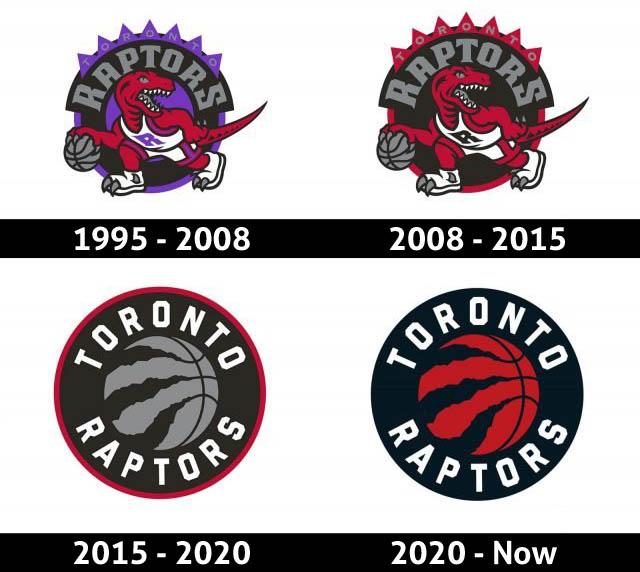
1995 – 2008: The Dino Era
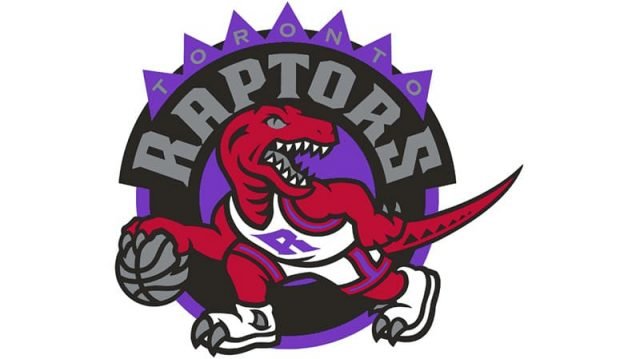
The original Raptors logo debuted in 1995 and remained unchanged for more than a decade. It featured a dynamic red dinosaur dribbling a basketball, set against a purple circular background framed in black. Above the circle, angular peaks formed a crown-like structure, with the “Toronto” lettering integrated across the top.
This design was unapologetically bold and illustrative. It embraced intensity, movement, and spectacle, aligning with the energetic identity the franchise sought during its formative years. The logo’s complexity made it instantly recognizable, particularly among younger fans, and firmly established the Raptors’ presence in the league.
2008 – 2015: Refined Aggression
In 2008, the Raptors introduced a refined version of their original emblem. While the dinosaur remained central, the color palette shifted dramatically. Purple was removed, replaced by a stark black background, while red became the dominant accent color.
The updated logo felt sharper and more aggressive, reducing visual clutter while amplifying contrast. This redesign marked the beginning of Toronto’s transition away from novelty toward a more serious competitive image, without fully abandoning the character-driven identity that defined the franchise’s early years.

2015 – 2020: The Modern Reset
A complete visual reset arrived in 2015. The dinosaur mascot disappeared entirely, replaced by a minimalist circular badge. At its center sat a stylized basketball, with seams shaped to resemble three claw marks—an abstract nod to the raptor theme.
Surrounding the ball, a bold sans-serif wordmark spelled out the team name in white against a black field, outlined in red. This redesign signaled a decisive shift toward contemporary sports branding, emphasizing symbolism over illustration and versatility across digital platforms.

2020 – Today: Minimalism and Authority
In 2020, the Raptors subtly refined their modern logo. The outer red outline was removed, allowing the black circular field to stand independently. Red was reintroduced within the basketball itself, replacing the earlier gray tones.
This iteration strengthened the logo’s visual authority. Cleaner lines, reduced elements, and high contrast enhanced legibility while reinforcing the franchise’s mature identity. The current logo reflects confidence through restraint, aligning the Raptors with the NBA’s most modern brand systems.
Logo Symbolism: From Mascot to Mark
The evolution of the Raptors logo symbolism mirrors the franchise’s broader identity journey. Early designs relied on literal storytelling, using a dinosaur mascot to communicate power and intimidation. While effective, this approach limited flexibility.
The modern logo communicates the same qualities through abstraction. The claw-mark basketball references aggression and competition without relying on character imagery. Circular geometry suggests unity and continuity, while diagonal elements introduce motion and tension—key aspects of the game itself.
Typography and Color Philosophy
The current wordmark employs a block-style sans-serif typeface with subtle angular cuts. This typography reinforces strength and clarity while remaining neutral enough to adapt across applications.
Color remains central to the Raptors’ visual identity. Red conveys intensity and passion, black adds authority and depth, and white provides contrast and balance. While silver and gold appear in secondary branding, the primary logo palette remains deliberately restrained, reinforcing consistency and recognition.
Toronto Raptors Logo Heritage and Brand Consistency
The Raptors’ logo heritage demonstrates how controlled evolution can strengthen a brand rather than dilute it. By limiting drastic experimentation, the franchise preserved continuity while adapting to changing aesthetic standards.
This strategy aligns with patterns seen throughout modern NBA logo history, where franchises increasingly favor scalable, symbolic identities over illustrative mascots. Toronto’s visual restraint has allowed its logo to age gracefully, maintaining relevance without sacrificing meaning.
Toronto Raptors Logo History and Modern Identity
The Toronto Raptors logo history reflects a franchise that understands the value of timing and intent in visual branding. From an expressive mascot-driven emblem to a refined, symbolic mark, each phase of evolution responded to cultural context rather than fleeting trends.
Today’s logo stands as a distilled expression of the Raptors’ identity—confident, disciplined, and unmistakably modern. It honors its origins while embracing the clarity demanded by contemporary sports branding, securing its place within the broader legacy of NBA logo heritage.
FAQ: Toronto Raptors Logo Meaning and History
What does the Toronto Raptors logo represent?
The logo represents intensity, competition, and precision, symbolized through claw-mark-inspired basketball seams and a bold circular form.
Why did the Raptors remove the dinosaur from their logo?
The franchise shifted toward a minimalist identity to improve versatility and align with modern sports branding trends.
When was the current Raptors logo introduced?
The foundational modern logo debuted in 2015, with refinements introduced in 2020.
What colors define the Toronto Raptors logo?
The primary colors are red, black, and white, chosen for contrast, authority, and emotional impact.