The Rolex Logo History: Meaning, Symbolism & Brand Heritage
Few logos in the world carry as much gravitas, symbolism, and instant recognition as the Rolex crown. It is the distilled essence of prestige, craftsmanship, and achievement — a symbol that transcends the watches it adorns. More than a century after its introduction, the Rolex logo remains a defining emblem of luxury, precision, and legacy. Its evolution mirrors the rise of the brand itself, from a small London-based enterprise to the most revered watchmaker on the planet.
This is the complete heritage story of the Rolex logo — its origins, symbolism, evolution, cultural impact, and the enduring power of the crown.
From Wilsdorf & Davis to the Birth of Rolex
The story begins in 1905, when Hans Wilsdorf and his brother-in-law Alfred James Davis founded Wilsdorf & Davis in London. The young company specialized in assembling high-precision wristwatches using Swiss movements from Aegler in Bienne. At the time, wristwatches were not yet mainstream; Wilsdorf envisioned a future where they would become essential instruments of modern life.
Three years later, in 1908, Wilsdorf sought a brand name that was short, memorable, simple to pronounce in any language, and clean on a watch dial. According to Rolex legend, the word came to him while riding a horse-drawn omnibus through London — “a genie whispered ‘Rolex’ in my ear,” he later claimed. Whether mystical or metaphorical, the name was filed and trademarked in Switzerland the same year and registered internationally in 1913.
The transition to Rolex was gradual. Retailers at the time preferred to place their own names on watch dials, so Wilsdorf cautiously inscribed Rolex on only one watch out of every six. But quality prevailed. By 1926 — the year the waterproof Oyster launched — Wilsdorf decided that every watch leaving the company would bear the Rolex name proudly on the dial, case, and movement.
The Origins and Symbolism of the Rolex Crown
The second defining element of the brand arrived in the early 1930s: the coronet. Registered in 1931, the Rolex crown would become one of the most iconic emblems in luxury history.
Although Rolex has never officially stated the crown’s inspiration, several theories surround its design. Some suggest its five points symbolize the five fingers of a skilled watchmaker’s hand — a nod to craftsmanship. Others view it as stylized tree branches ending in pearls, referencing the natural materials used in fine watchmaking. Most simply see it as a royal symbol representing excellence, mastery, and prestige.
Regardless of its literal meaning, the coronet’s emotional impact is unmistakable. It instantly communicates authority, achievement, and sophistication. The five-point crown complements the five-letter “ROLEX,” creating a perfectly balanced and unmistakable emblem.
Meaning and history: How the Rolex Logo Became Eternal
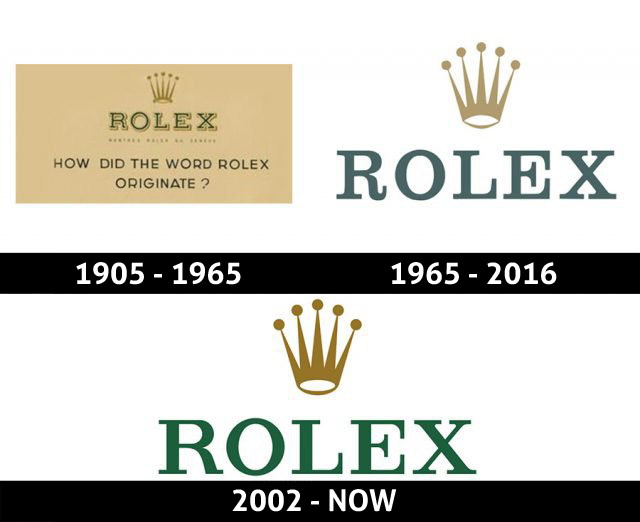
The Rolex logo has undergone remarkably few changes for a brand with more than a century of history. Its evolution is refined, subtle, and always respectful of its heritage.
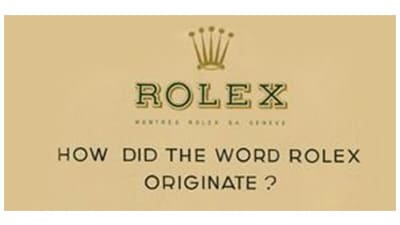
From 1905 to 1965, the logo combined a delicate cream background with a serif green inscription outlined in gold shadowing, topped with an elongated gold crown. It felt classic, ornate, and deeply tied to the early era of fine watchmaking.
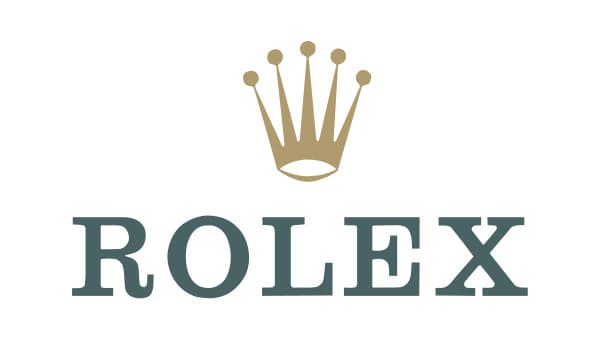
Between 1965 and 2002, the design was simplified. Colors softened into more muted tones, shadows were removed, and the typography was refined into a more elegant silhouette. This was the era when Rolex matured into a global powerhouse — and its logo reflected quiet confidence.
The modern version, introduced in 2002, returned to a stronger, more vibrant palette: a rich forest green wordmark paired with a deep gold crown. The typeface, rooted in a modified Garamond, became sharper and more assertive, representing Rolex’s elevated stature in luxury culture.
Through every iteration, the proportions and overall structure remained nearly unchanged — a testament to the logo’s timeless construction. Rolex understood early on that true icons need refinement, not reinvention.
A Crown for Every Achievement
The Rolex logo is more than branding; it is cultural shorthand for mastery. Over the decades, it has become synonymous with milestones, victories, and personal triumphs. This symbolism has been amplified by the countless world figures who have worn Rolex watches: Winston Churchill, Martin Luther King Jr., Paul Newman, Steve McQueen, Edmund Hillary on Everest, Jacques Piccard in the Mariana Trench.
Each appearance on the wrists of leaders, explorers, actors, and innovators has deepened the emotional power of the crown. Rolex is a brand worn at the top of the world — literally.
The coronet is both a reward and a reminder: excellence is earned.
Rolex Logo: The Power Behind the Symbol
At its core, the Rolex logo expresses three intertwined themes:
Prestige and authority. The crown signals mastery, heritage, and global leadership in horology.
Craftsmanship and excellence. The refined serif lettering emphasizes precision, tradition, and a commitment to artisan skill.
Prosperity and aspiration. The iconic green symbolizes wealth and achievement, while the gold crown evokes rarity and value.
Rolex has always positioned its watches as instruments of accomplishment. The logo reinforces that message with elegant clarity.
Rolex Brand Colors and Typography
Rolex uses a distinctive palette that has become inseparable from its identity: deep green paired with brilliant gold. Green evokes prosperity, success, and luxury — a fitting choice for a brand that built a legacy around achievement. Gold conveys prestige and preciousness, reinforcing the value of Rolex craftsmanship.
The wordmark is based on Garamond but modified to ensure absolute uniqueness. The spacing, serif angles, and proportions were tailored for a high-end, authoritative feel. Over time, these subtle modifications turned the Rolex typeface into a signature of its own.
The Rolex Logo’s Enduring Legacy
Few logos embody such a powerful narrative of heritage, luxury, and excellence. The Rolex crown is more than a design; it is a promise — a statement that every watch bearing it meets the highest standards of performance, durability, and artistry. Its evolution has been careful, thoughtful, and minimal, preserving the integrity of an icon that has stood unchanged in meaning for nearly a century.
In the world of luxury branding, the Rolex coronet remains one of the purest examples of logo heritage: timeless, respected, and instantly understood.
Rolex Facts You Didn’t Know
Here are a few compelling insights that enrich the legend:
– Rolex trademarked its name before it appeared on most of its watches, because retailers initially preferred their own branding.
– The coronet was not added to dials until the 1930s, years after the brand name became standard.
– Rolex was the first watch worn on Everest and the first to reach the deepest point of the ocean — an achievement unmatched by any competitor.
– The Rolex crown has had subtle shape variations through the decades, creating collector nicknames like “Bart Simpson” and “Frog Foot.”
– The combination of gold and green has been consistent throughout Rolex history, symbolizing prosperity and timeless prestige.
FAQ: Rolex Logo Heritage
What does the Rolex logo represent?
It symbolizes prestige, excellence, and artisanal mastery. The crown reflects the brand’s heritage as a leader in fine watchmaking.
Why is the Rolex crown so iconic?
Its simplicity, balance, and association with achievement have given it universal recognition across generations and cultures.
Has the Rolex logo ever changed?
Only minimally. Since 1905, every update has been subtle, preserving its proportions, structure, and overall meaning.
Why are green and gold used in the Rolex logo?
Green represents wealth and prosperity, while gold reflects rarity, value, and excellence in craftsmanship.