The Peace Symbol: History, Meaning & Global Logo Heritage
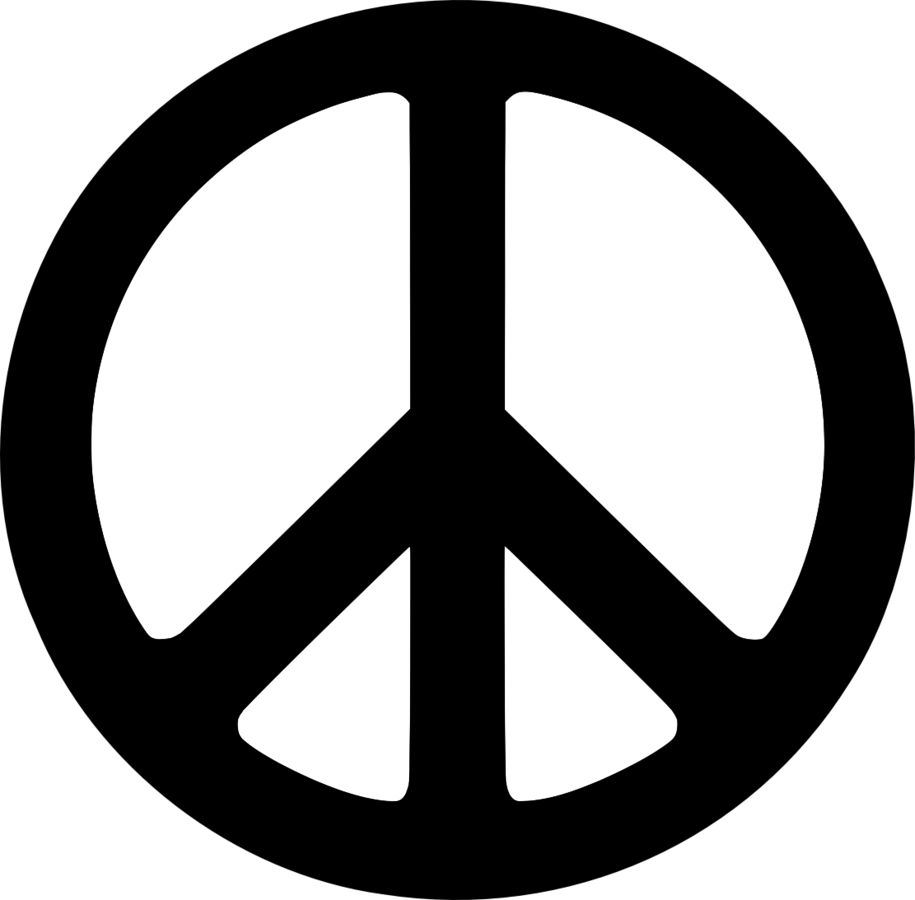
Few symbols in modern history have traveled as far, carried as much emotional weight, or united as many movements as the Peace Symbol.
Instantly recognizable, endlessly reproduced, and deeply rooted in political and cultural activism, it remains one of the most universal graphic marks ever created. Long before it appeared on posters, flags, jewelry, and global protest imagery, the symbol began as a purposeful piece of design — a visual call for life over destruction, and diplomacy over war.
Unlike the hand “peace sign,” which originated as the “V for Victory” gesture during World War II, the circular peace symbol emerged from a more technical and unexpectedly maritime source. Born from semaphore code used by naval signalers, it was crafted not as decoration but as a message — a concise demand for Nuclear Disarmament at a time when the world feared total annihilation.
From that single purpose, the mark expanded into a universal emblem for unity, anti-war causes, civil rights movements, and generations of cultural expression.
Today, the Peace Symbol stands as one of the world’s most enduring graphic icons, shaped by decades of activism and reinterpreted through countless movements — always with the same core message: peace must be chosen, defended, and continually imagined.
Meaning and History
1958 — The Birth of a Global Icon
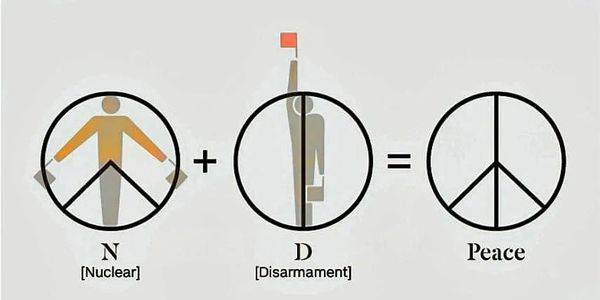
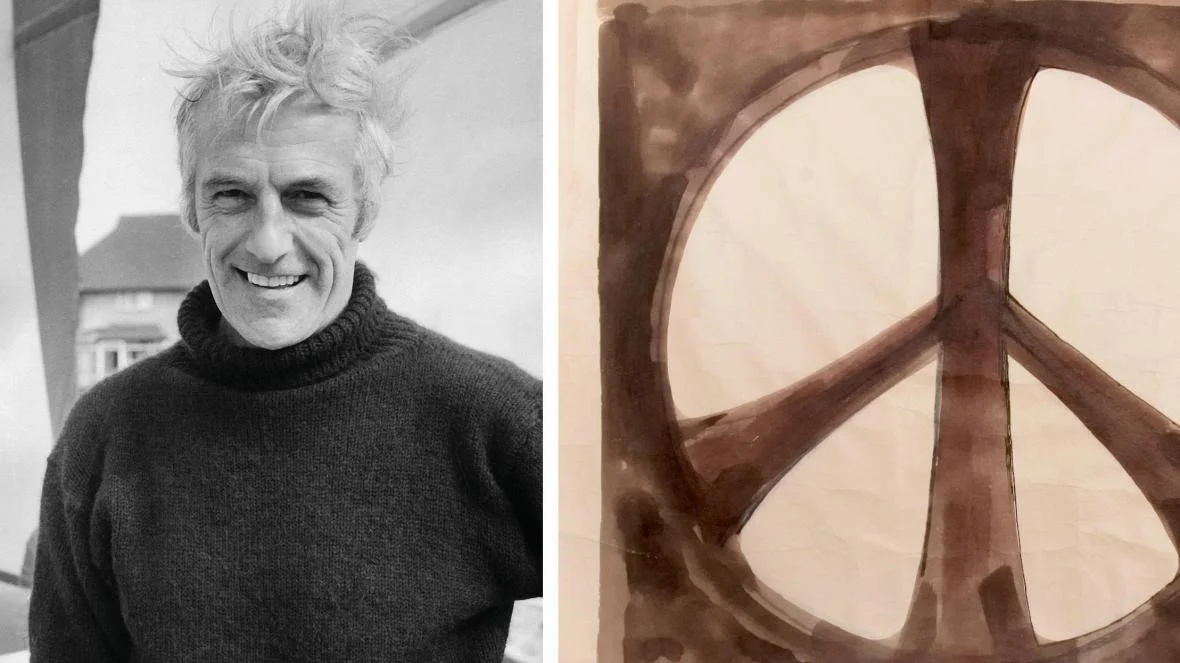
The Peace Symbol was created in 1958 by British designer Gerald Holtom for the Campaign for Nuclear Disarmament (CND). Holtom used naval semaphore flags to encode the letters N and D — the initials of “Nuclear Disarmament.” In semaphore, “N” is formed by holding two flags downward at diagonal angles, while “D” is formed with one flag raised straight up and the other lowered straight down. Holtom overlaid these two postures into a single line structure, enclosing it within a circle to create a bold, easily reproducible mark.
Holtom refused to copyright his design, intending it to belong freely to the world. This decision allowed the symbol to spread without restriction, becoming a shared visual language for peace movements around the globe.
1960s — The Symbol of Protest and Civil Rights
In the 1960s, the Peace Symbol crossed the Atlantic, becoming inseparable from anti-war and civil rights demonstrations in the United States. As nuclear fears escalated during the Cold War, and public anxiety intensified during the Vietnam War, activists adopted the symbol as an emblem of hope, unity, and resistance.
It quickly appeared on signs, banners, clothing, and the now-famous peace flags, which blended the American flag with the circular symbol to imagine a nation grounded in peace rather than perpetual conflict.
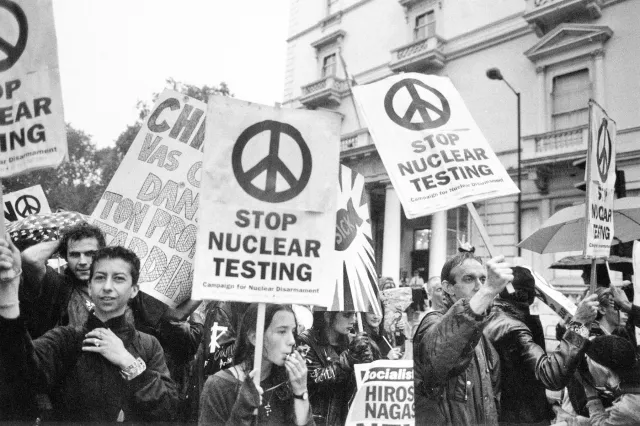
1970s–1990s — Counterculture, Music, and Global Recognition
The symbol gained new life within counterculture movements, from Woodstock to anti-nuclear rallies across Europe and Japan. It became part of everyday visual language — worn on jewelry, printed on posters, and embraced by youth movements that championed harmony, community, and social change.
Its simplicity made it adaptable: it could be painted by hand, carved into wood, printed on fabric, or incorporated into fashion and art. Through decades of evolving cultural contexts, the symbol retained its core meaning while expanding into broader calls for environmentalism, equality, and global unity.
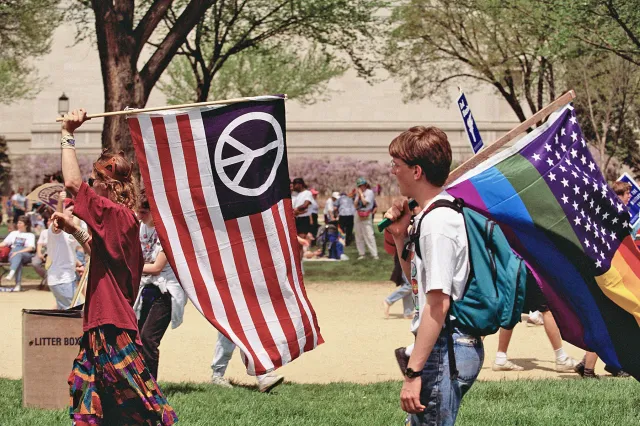
2000s — Resurgence in Fashion and Digital Culture
The Peace Symbol returned prominently in the 2000s, appearing in runway shows by brands such as Moschino and Michael Kors. In popular culture, it was adopted on apparel, accessories, and digital media as a cheerful, nostalgic reminder of “flower power,” while retaining its fundamental association with peace activism.
2015 — A Reinvented Symbol for a Global Moment
Following the Paris terror attacks in 2015, French artist Jean Jullien created a modern reinterpretation by merging the Peace Symbol with the silhouette of the Eiffel Tower. This simple drawing spread worldwide overnight, demonstrating how adaptable — and profoundly resonant — the symbol continues to be.
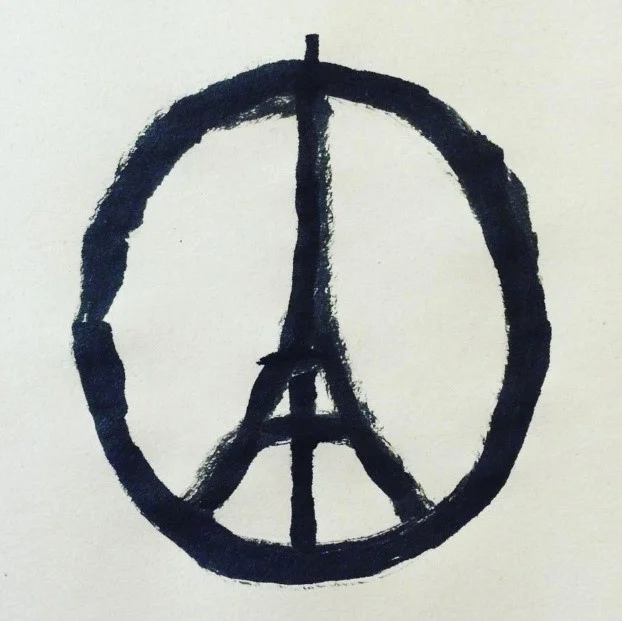
Today — A Universal Mark of Unity
More than six decades after its creation, the Peace Symbol remains one of the most powerful examples of purposeful graphic design. It continues to appear at climate marches, human rights demonstrations, and global peace initiatives. Its meaning endures because its message is timeless — and urgently needed.
The Peace Symbol: Meaning and Design
The design merges three ideas into one unified mark:
-
Semaphore alphabet origins — the combined signals for “N” and “D.”
-
Circular enclosure — representing unity, global community, and wholeness.
-
Minimalist line structure — a mark that can be reproduced by anyone, anywhere, without tools.
Its power lies in its accessibility. Anyone can draw it; everyone understands it.
A Symbol That Belongs to Everyone
The Peace Symbol is more than a cultural artifact — it is a reminder of how design can shape movements, influence generations, and give visual form to humanity’s deepest values. Created to oppose nuclear destruction, it has become a universal emblem for hope, solidarity, and the belief that peace is possible. Its message transcends language, nationality, and political borders, standing as one of history’s most meaningful and enduring marks.
FAQ Peace Symbol
What does the Peace Symbol represent?
It originally stood for Nuclear Disarmament, later expanding to represent global peace and anti-war activism.
Who designed the Peace Symbol?
British designer Gerald Holtom created the mark in 1958 for the Campaign for Nuclear Disarmament.
Why is the Peace Symbol based on semaphore?
Holtom used the positions for the letters “N” and “D” in naval semaphore code to encode “Nuclear Disarmament.”
Is the Peace Symbol copyrighted?
No. Holtom intentionally never copyrighted it, allowing anyone to use it freely.
Why is the Peace Symbol still used today?
Its universal message and simple design keep it relevant across movements supporting peace, human rights, and unity.