
The History & Symbolism of the American Flag: From Revolution to Modern Identity
Few national icons carry as much emotional weight, cultural meaning, and historical legacy as the American flag. Known affectionately as Old Glory, the Stars and Stripes, and the Star-Spangled Banner, the flag is far more than a patriotic emblem—it is a visual biography of the United States itself. Every stripe, star, and field of blue has been shaped through conflict, evolution, and the unifying search for identity.
Today it is one of the most recognized symbols in the world. It has appeared in songs, literature, art, civil movements, wartime propaganda, fashion, and even protest. Its story stretches across nearly 250 years, and like America, it began as an imperfect work in progress.
This article blends the historical foundations of the flag with a detailed timeline of the Stars and Stripes, offering a complete narrative of how the modern U.S. flag came to be—and why it remains such a powerful symbol of unity, struggle, and hope.
The Revolutionary Roots of the Flag
When the American Revolution began, the colonies were not yet fighting for independence. The early slogan was “rights within the empire,” not separation. That shift came later—and the flags of the era reflect this uncertain identity.
One of the earliest influences was the Sons of Liberty flag, a banner of red-and-white stripes flown by the group that famously dumped tea into Boston Harbor. Its striped design is believed to be an early precursor to the stripes on the national flag.

In 1775, when George Washington took command outside Boston, he carried two important flags. One was the Grand Union Flag, combining 13 red-and-white stripes with the British Union Jack—a sign that the colonies considered themselves united but not yet independent.
The second was Washington’s Headquarters Flag: a deep blue field with thirteen six-pointed stars arranged in a distinctive 3-2-3-2-3 pattern. This is the earliest known American star field, predating the first official national flag.
Despite declaring independence on July 4, 1776, Congress waited nearly a year before establishing a national flag. On June 14, 1777, the first Flag Act declared:
“The flag of the United States be thirteen stripes, alternate red and white; that the union be thirteen stars, white in a blue field, representing a new constellation.”
A powerful concept—yet Congress did not define:
– how the stars should be arranged
– whether stripes should be horizontal or vertical
– the number of points on the stars
– the placement of the blue field
Flag makers, upholsterers, naval shops, and private seamstresses were left to interpret the design freely.
The Betsy Ross Legend and Early Variations
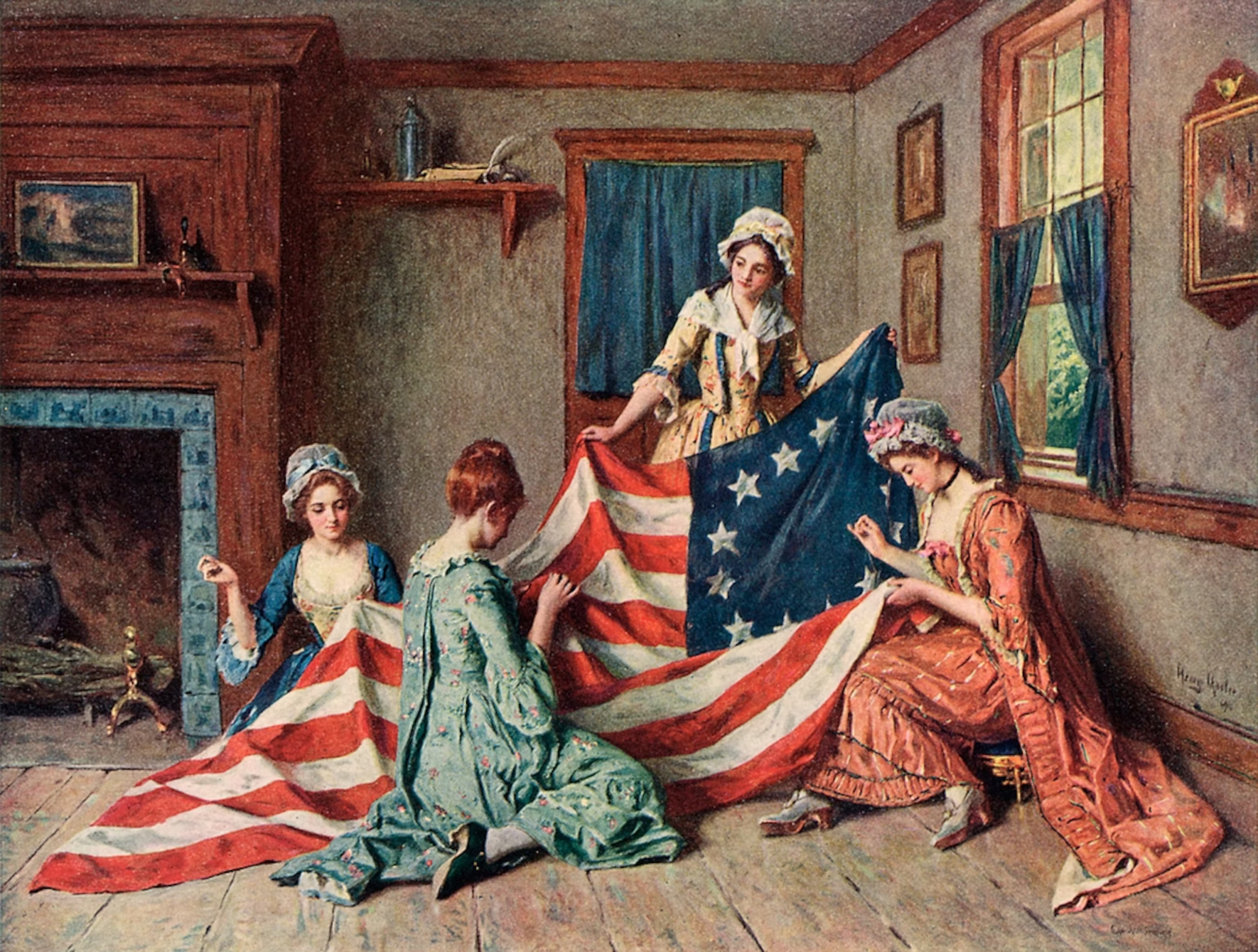
Flag-making in the 18th century wasn’t standardized. Most flags were produced in sail lofts or upholstery workshops. This is where the legend of Betsy Ross emerges.
Ross, an upholsterer for the Pennsylvania Navy, is widely believed to have sewn the first Stars and Stripes, but historians disagree. Her grandson’s 1870 public claim sparked the legend, yet no surviving drawings or records prove her authorship. Meanwhile, Francis Hopkinson—signer of the Declaration of Independence—submitted a bill to Congress requesting payment “for designing the flag,” adding more mystery to its origin.
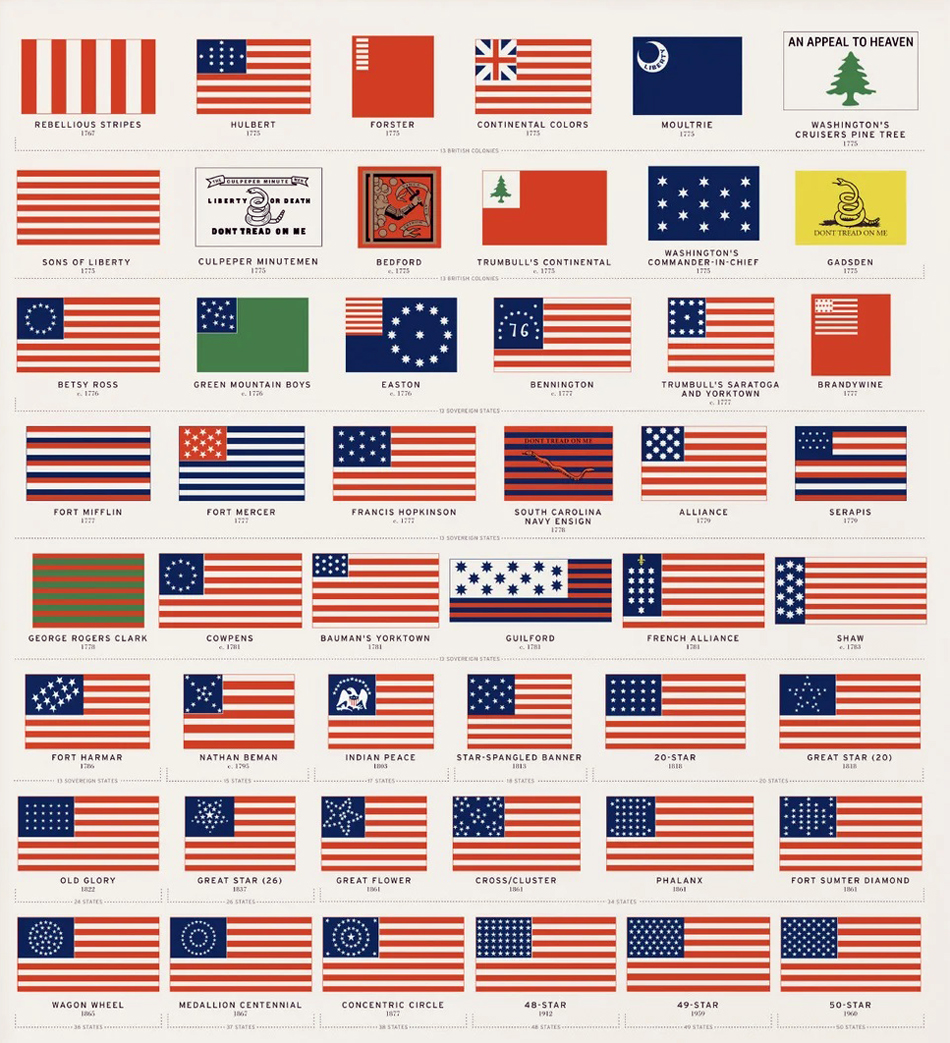
Regardless of who designed it, the earliest 13-star flags varied dramatically. Some arranged stars in circles (the “Betsy Ross” or “Philadelphia” pattern), others in rows, clusters, or wreath-like formations. Until 1912, star patterns were left entirely to a flag maker’s creativity.
National Growth and the Changing Star Field
As new states joined the Union, the flag needed to evolve. But early rules were inconsistent.
In 1795, Congress approved a 15-star, 15-stripe flag to honor Vermont and Kentucky. This banner—known as The Star-Spangled Banner—was the flag flying over Fort McHenry during the War of 1812, inspiring Francis Scott Key’s immortal poem.
But adding stripes for each new state quickly became impractical. After the war, Congress reset the design in the 1818 Flag Act: 13 permanent stripes, one for each original colony, and one star for every state. Even then, Congress still didn’t specify how the stars should be arranged, leading again to countless artistic variations.
True standardization finally arrived in 1912, when President Taft established strict proportions for the flag’s elements. This included the size of the canton, star diameter, stripe width, and the alignment of stars for the then-48-star flag.
A Century of Milestones and Cultural Meaning
As America expanded, its flag evolved into a powerful cultural symbol.
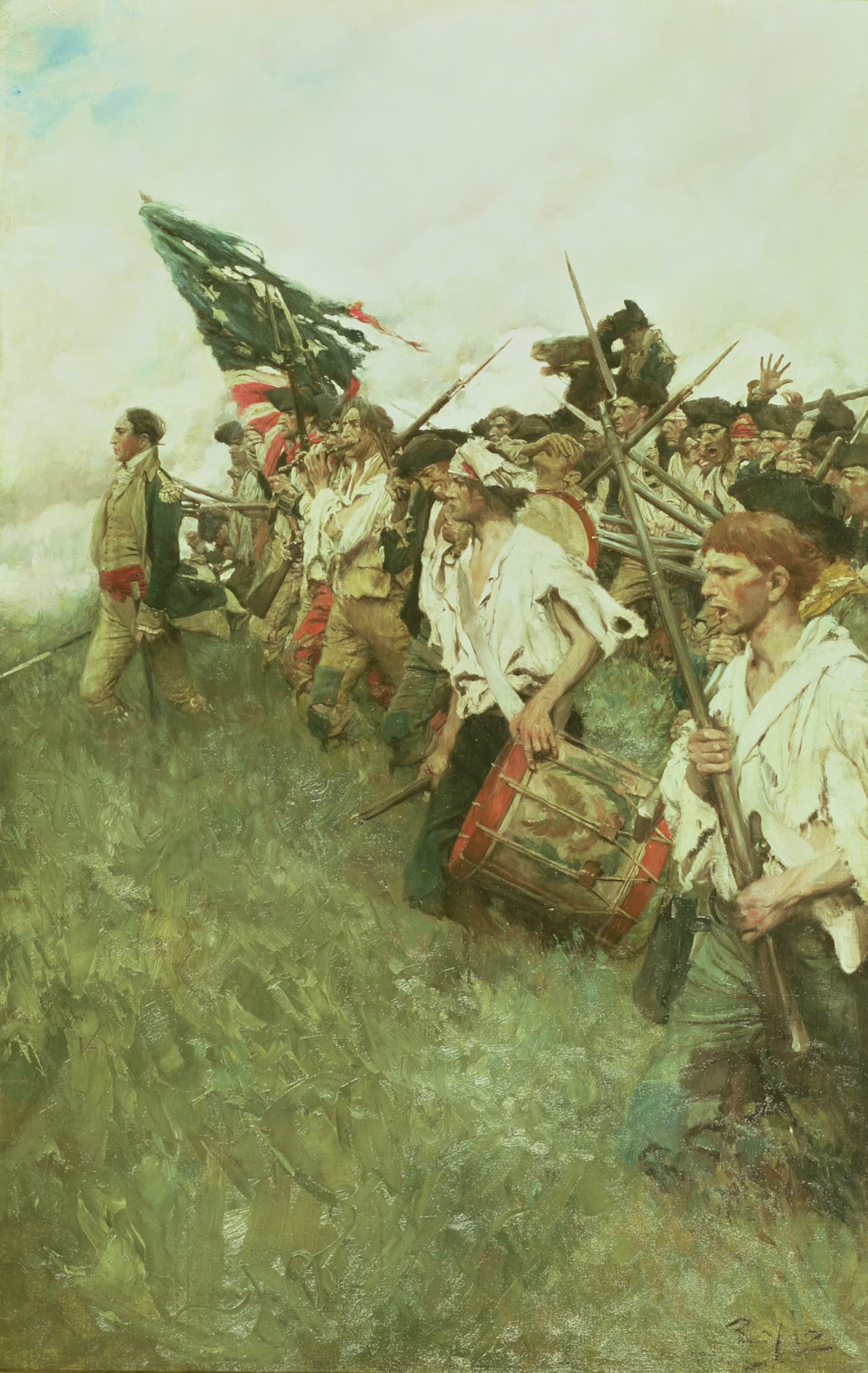
By 1861, during the Civil War, the flag had already become a unifying emblem. Despite secession, the Union never removed stars for Confederate states, symbolizing the hope of reunion.
National Museum of American Illustration & American Illustrators Gallery, Bridgeman Images
In the late 1800s, Flag Day celebrations began in schools, becoming a national observance under President Truman. Patriotic music followed, including Sousa’s The Stars and Stripes Forever in 1897.
Throughout the 20th century, the flag appeared at defining historical moments:
– raised at Iwo Jima in 1945
– planted on the moon in 1969
– honored during the Civil Rights Movement
– displayed after national tragedies
– carried in protests, demonstrations, and celebrations
By July 4, 1960, the modern 50-star flag became official—based on a student project by 17-year-old Robert Heft, whose design was selected from more than 100,000 submissions.
The Flag Today: Meaning, Symbolism & Respect
Today’s flag consists of thirteen horizontal stripes and fifty white stars on a blue field. Each color carries meaning:
Red for valor and courage
White for purity and innocence
Blue for vigilance, perseverance, and justice
The Federal Flag Code outlines respectful care and handling of the flag. It should never touch the ground, never be used as clothing or decoration that can be discarded, and should be retired respectfully—traditionally by burning—when worn out.
It is flown from sunrise to sunset, or 24 hours a day when properly illuminated. It is displayed on national holidays and saluted with the right hand over the heart during the Pledge of Allegiance.
The Evolving Legacy of an American Icon
The American flag is more than a design. It is a living timeline, a national signature, and a visual language of unity, struggle, hope, and freedom. Born from revolution, shaped by debate, strengthened through war, and adopted by generations for causes noble and controversial, it continues to reflect the character of the United States.
Each star marks a chapter. Each stripe honors the beginning. And together, they form a symbol that transcends politics, eras, and borders—a reminder of the ideals that continue to define America.
FAQ — The American Flag: History & Symbolism
Who created the first American flag?
The true creator of the first American flag remains unknown. Betsy Ross is traditionally credited, but historians point out that Francis Hopkinson—who submitted a bill to Congress for “designing the flag”—may have been responsible. Because no sketches or written descriptions of the original design survive, the flag’s earliest authorship remains a blend of documented history and enduring legend.
What do the colors of the American flag symbolize?
Red stands for valor and courage, white represents purity and innocence, and blue symbolizes vigilance, perseverance, and justice. Though these meanings were formally associated with the flag later, they reflect the ideals that shaped the nation.
Why are there thirteen stripes on the flag?
The thirteen stripes honor the original thirteen colonies that declared independence from Great Britain. No matter how many states join the Union, the stripes remain unchanged as a tribute to America’s beginnings.
When did the 50-star American flag become official?
The 50-star flag became official on July 4, 1960, after Hawaii entered the Union. Its design was based on a high school project by Robert Heft, whose layout was selected from more than 100,000 submissions.
How should a worn or damaged American flag be properly retired?
A flag that has become torn, faded, or worn out should be retired respectfully. The U.S. Flag Code recommends ceremonial burning as the most dignified method, often performed by veterans’ groups or patriotic organizations.