Tennessee Titans Logo History: Meaning, Symbolism & Brand Heritage
The visual identity of the Tennessee Titans reflects one of the most distinctive brand evolutions in National Football League history. Few franchises have experienced such a clear transformation of identity, not only in name and geography, but also in symbolism. From the oil derricks of Texas to the mythological references rooted in Tennessee culture, the Titans logo history tells a story of relocation, reinvention, and deliberate symbolism.
Within NFL logo history, the Titans occupy a special position. Their branding journey connects them conceptually to franchises such as Houston Texans logo heritage, which also rely heavily on regional symbolism, while contrasting sharply with the restrained continuity seen in Green Bay Packers logo history. As part of the wider American sports logo heritage archive, the Titans illustrate how a franchise can successfully redefine its visual identity without losing historical continuity.
Meaning and History: The Origin of the Tennessee Titans Identity
The franchise began its life in 1960 as the Houston Oilers, a name and identity deeply connected to the oil industry that shaped Texas culture and economy. The early logo meaning revolved around industrial strength, hard labor, and regional pride. When the team relocated to Tennessee in the late 1990s, the Oilers identity no longer reflected its new environment.
The transitional phase as the Tennessee Oilers preserved visual continuity temporarily, but it became clear that a full rebrand was inevitable. In 1999, the franchise adopted the Tennessee Titans name, drawing inspiration from Greek mythology and Nashville’s nickname, “The Athens of the South.” This shift allowed the team to replace industrial symbolism with a more abstract, powerful narrative rooted in mythology, state pride, and strength.
Tennessee Titans Logo History Timeline
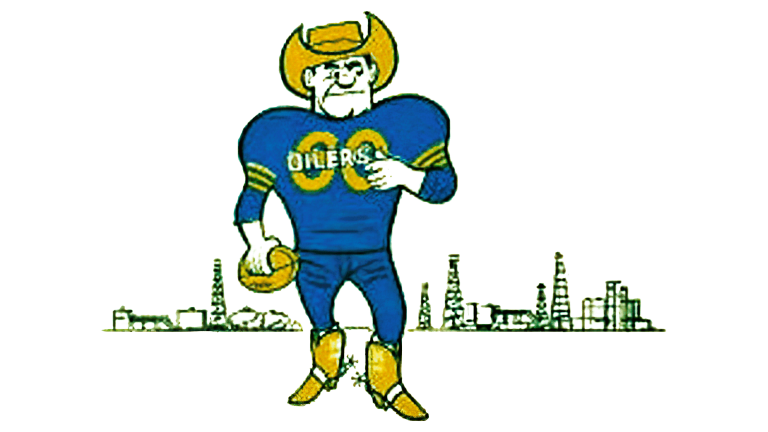
1960–1961: The Oilman and Industrial Roots
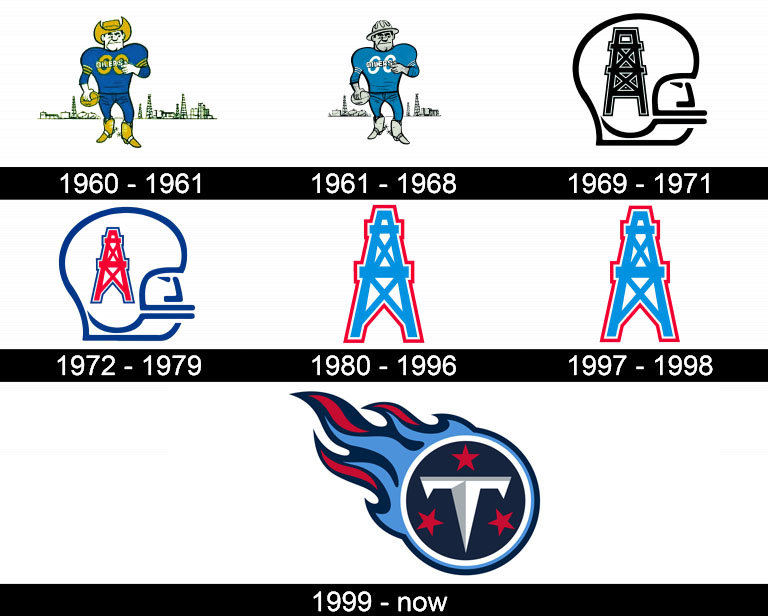
The first logo featured a human figure blending elements of a cowboy and a football player. Wearing a cowboy hat and holding a football, the character stood in front of oil derricks, clearly referencing Texas’ oil heritage. Blue and gold dominated the palette, reinforcing prosperity and strength.
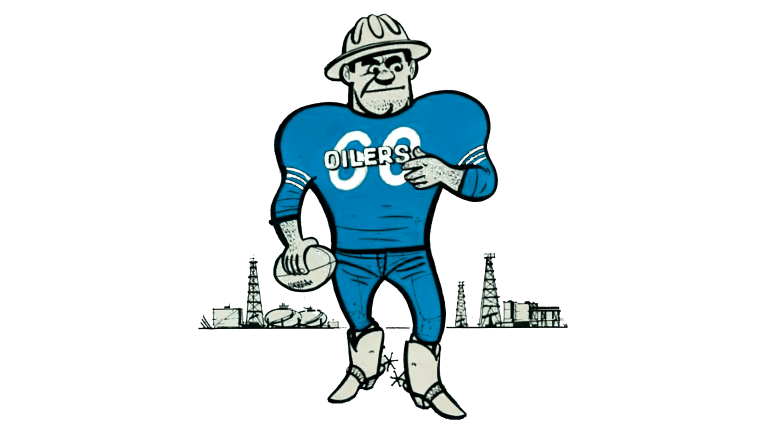
1961–1968: Simplification and Helmet Transition
The human figure was refined, with the cowboy hat replaced by a football helmet. The color palette shifted toward light blue and white, and background details were reduced. This version emphasized athletic identity over regional narrative while retaining oil-related symbolism.
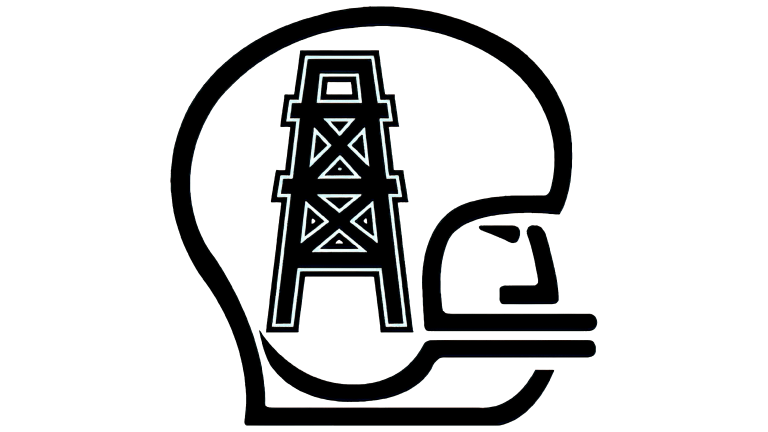
1969–1971: Helmet and Derrick Emblem
In 1969, the logo was fully abstracted. A football helmet silhouette outlined in black featured an oil derrick at its center. This marked a decisive move away from character-based imagery toward symbolic representation.
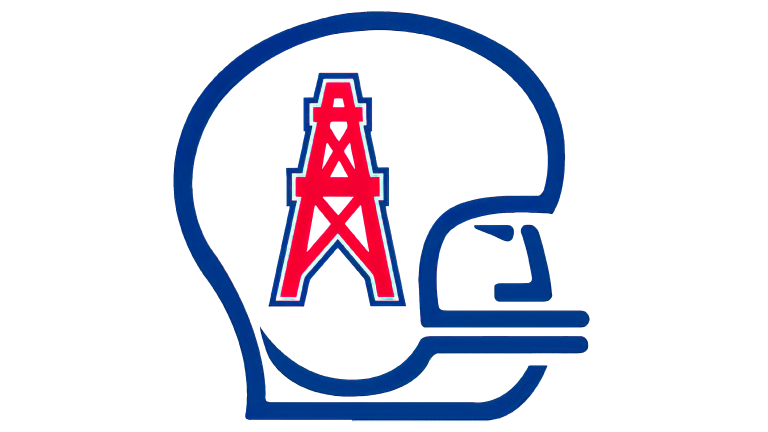
1972–1979: Color Refinement and Stronger Contrast
The oil derrick changed color from black to red and gained a blue outline. The helmet outline also turned blue, improving contrast and visual balance. This version reinforced brand clarity during a period of league consolidation.
1980–1996: Minimalist Derrick Identity
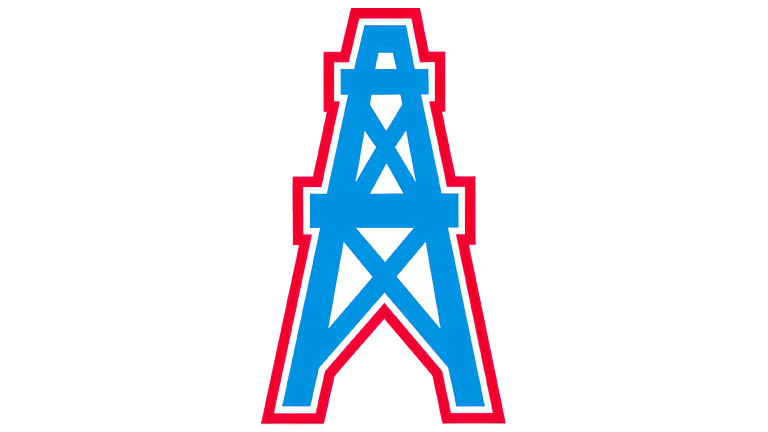
The 1980 redesign eliminated the helmet entirely, leaving a standalone oil derrick rendered in blue with a red outline on a white background. This minimalist emblem became one of the longest-running Oilers logos, symbolizing stability and brand recognition.
1997–1998: Transitional Tennessee Oilers Phase
During the relocation period, the same oil derrick emblem was retained with slightly darker tones. This version served as a visual bridge between the Houston Oilers and the forthcoming Titans identity.
1999–Today: The Tennessee Titans Emblem
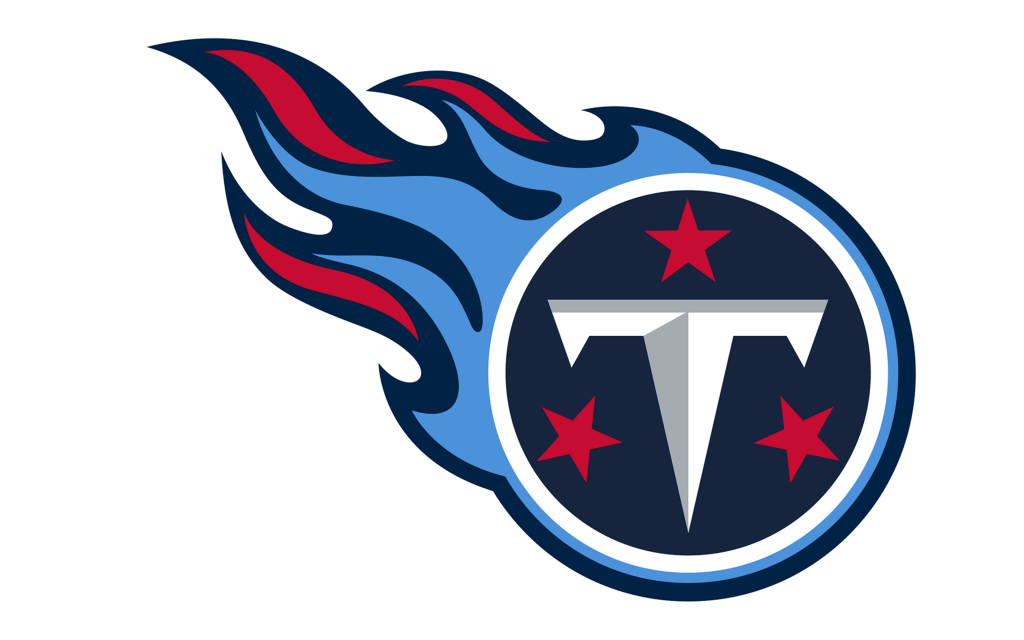
The adoption of the Titans name required an entirely new logo. The current emblem features a circular form often interpreted as the sun, containing three red stars derived directly from the Tennessee state flag. A sharp, sword-like “T” dominates the center, trailing flames that give the impression of a comet in motion.
The logo meaning combines mythology and motion. The “T” functions as both a letter and a weapon, while the flame references power, speed, and the divine fire associated with Greek Titans.
Logo Symbolism: Mythology, Motion, and State Identity
The Tennessee Titans logo symbolism operates on multiple levels. The circular element represents the sun, energy, and eternity. The three stars symbolize the state of Tennessee and its three grand divisions, directly mirroring the state flag. The flame reinforces aggression and momentum, while the sharp geometry of the “T” evokes both offense and defense.
Unlike the Oilers’ industrial symbolism, the Titans logo embraces abstraction and narrative depth. This shift allowed the franchise to establish a unique identity distinct from its past while remaining respectful of its origin.
Visual System: Helmets, Uniforms, and Consistency
The Titans helmet design prominently features the emblem on dark navy shells, with silver, red, and light blue accents. The flame and roundel remain the focal point, ensuring immediate recognition on the field.
Uniform designs extend the same palette across home, away, and alternate sets, balancing light blue, navy, white, and silver. This cohesive system reinforces the logo’s modern and powerful character.
Tennessee Titans Logo Heritage and Cultural Impact
The Titans logo heritage represents one of the most successful full rebrands in modern NFL history. While many franchises struggle to redefine themselves after relocation, Tennessee managed to create a symbol that resonated instantly with fans and carried long-term relevance.
When examined alongside Seattle Seahawks logo history or Washington Commanders logo heritage, the Titans stand out for the clarity of their transformation. Their logo did not evolve gradually but arrived fully formed, supported by strong symbolism and cultural alignment.
Conclusion: Tennessee Titans Logo Heritage and a Successful Reinvention
The Tennessee Titans logo history demonstrates how thoughtful design, rooted in mythology and regional identity, can redefine a franchise without erasing its past. From oil derricks to flaming symbols of power, the Titans’ visual evolution reflects both geographical change and strategic branding. Within NFL logo history and the broader American sports logo heritage, the Titans remain a benchmark for purposeful reinvention.
FAQ: Tennessee Titans Logo Meaning and History
What does the Tennessee Titans logo represent?
It represents power, motion, and state pride through a mythological “T,” flame, and three stars from the Tennessee flag.
When did the Tennessee Titans logo debut?
The current logo debuted in 1999, following the team’s relocation and renaming.
Has the Titans logo changed since 1999?
No. The logo introduced in 1999 has remained unchanged.
Why are there three stars in the Titans logo?
They represent the three grand divisions of Tennessee, as shown on the state flag.