
Tampa Bay Buccaneers Logo History: Meaning, Symbolism & Brand Heritage
When the Tampa Bay Buccaneers entered the National Football League in 1976, they arrived with a visual identity unlike anything seen before in professional football. While many expansion teams opted for conservative branding, the Buccaneers embraced personality and narrative from the very beginning. Their original logo, affectionately known as “Bucco Bruce,” introduced a playful pirate figure that instantly separated the franchise from its peers and anchored its early logo history in character-driven design.
Within NFL logo history, the Buccaneers occupy a fascinating middle ground. They share the bold experimentation of early-era expansion teams, yet their later identity aligns more closely with disciplined modern branding, similar to the transitions seen in Seattle Seahawks logo heritage and Tennessee Titans logo history. As part of the wider American sports logo heritage archive, Tampa Bay stands out as a franchise whose visual evolution mirrors its journey from struggling newcomer to championship contender.
Meaning and History: The Origin of the Buccaneers Identity
The Tampa Bay Buccaneers were founded in 1976, representing Florida’s Gulf Coast and drawing inspiration from the region’s maritime history. The team’s name and early logo meaning were deeply rooted in the idea of freedom, adventure, and defiance, traits traditionally associated with pirates.
Color played a central role from the start. Bright orange and red reflected Florida’s citrus industry and tropical climate, while red also conveyed passion, courage, and competitive fire. These choices gave the Buccaneers an instantly recognizable look, even during years when on-field success proved elusive.
The franchise’s logo heritage evolved alongside its competitive identity. As the team matured and sought a more intimidating presence, the playful pirate imagery gave way to a darker, more aggressive symbol that aligned better with modern NFL aesthetics.
Tampa Bay Buccaneers Logo History Timeline
1976–1996: The “Bucco Bruce” Era
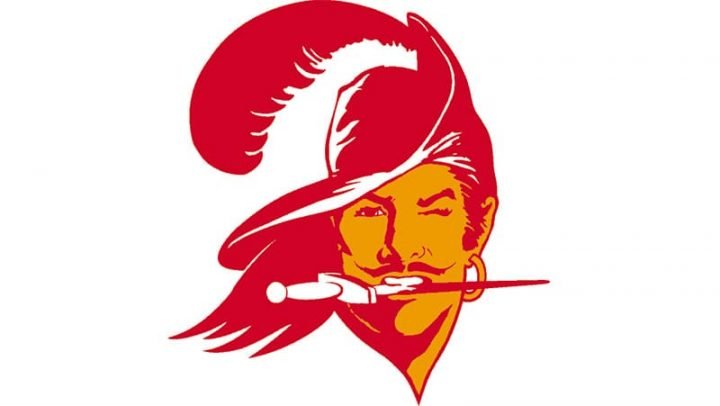
The first Tampa Bay Buccaneers logo was designed by cartoonist Lamar Sparkman shortly before the team’s debut season. It featured a winking pirate with a knife clenched in his teeth, a plumed hat topped with a large feather, and a gold hoop earring. Rendered in shades of orange, red, yellow, and white, the emblem blended danger with charm, projecting confidence without overt menace.
This logo remained in use for two decades, becoming one of the most memorable symbols of early NFL expansion branding.
1997–2013: The Jolly Roger Flag Identity
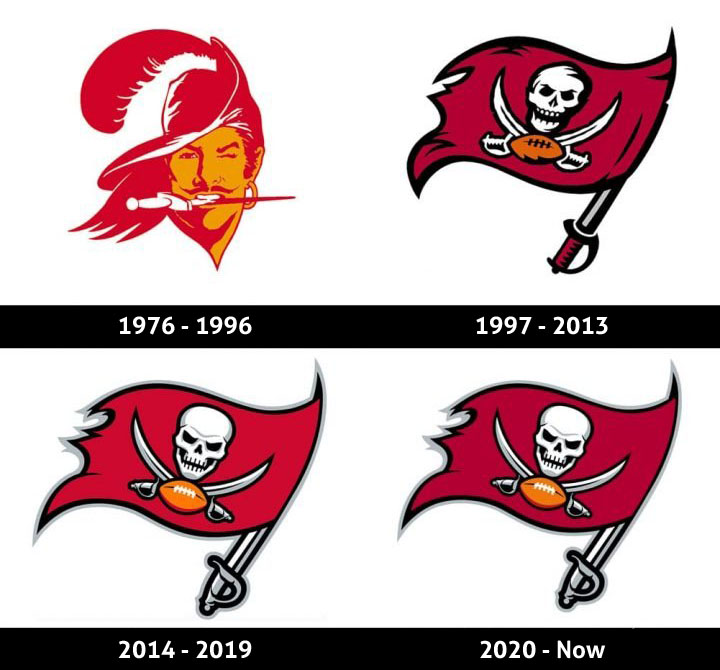
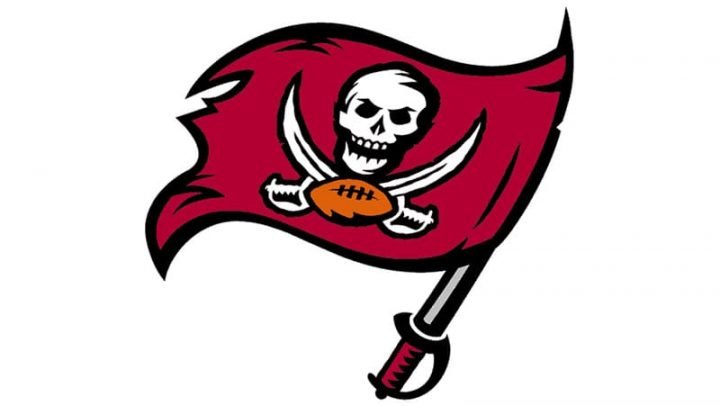
In 1997, the Buccaneers underwent the most dramatic redesign in their history. The pirate character was replaced by a burgundy flag featuring a white skull and crossed sabers, inspired by the Jolly Roger. A yellow football with black stitching was placed beneath the skull, grounding the imagery firmly in football culture.
The flagpole itself resembled a sword, reinforcing themes of battle and conquest. This redesign marked the franchise’s shift toward a more intimidating and competitive visual identity.
2014–2019: Sharpened Details and Modern Refinement
The 2014 update refined the existing flag concept. The skull became smoother and more menacing, the football stitching changed from black to white, and the red tone shifted to a brighter shade. Outlines were thinned, and metallic silver-gray replaced earlier red accents on the saber handle.
These refinements resulted in a cleaner, more professional emblem that translated better across digital platforms and modern uniforms.

2020–Today: Return to Burgundy and Visual Balance
In 2020, the Buccaneers restored the deeper burgundy color of the flag while retaining the structural refinements introduced in 2014. The skull, sabers, football, and silver-gray handle remained unchanged, creating a balanced emblem that combined tradition with contemporary polish.
Logo Symbolism: Freedom, Power, and Maritime Heritage
The Tampa Bay Buccaneers logo symbolism has always revolved around independence and fearlessness. The original pirate represented rebellion and individuality, while the modern Jolly Roger emphasizes dominance and readiness for battle.
The skull and crossed sabers reference historic pirate flags, while the football positioned beneath the skull grounds the imagery in the sport itself. Red and burgundy symbolize courage and intensity, yellow suggests energy and success, and silver-gray adds authority and refinement.
Unlike many animal-based logos in NFL logo heritage, the Buccaneers rely on narrative symbolism rather than raw aggression, making their identity both distinctive and timeless.
Tampa Bay Buccaneers Logo Heritage and Cultural Impact
The Buccaneers’ logo heritage reflects one of the clearest visual transformations in the league. Few franchises have moved so decisively from playful illustration to intimidating symbolism while maintaining strong brand recognition.
This evolution mirrors the team’s broader trajectory, from early struggles to championship success. When compared with franchises explored in Green Bay Packers logo history or Detroit Lions logo heritage, Tampa Bay demonstrates how embracing change can strengthen long-term identity when executed thoughtfully.
Today, the Buccaneers logo stands as a symbol of resilience, reinvention, and competitive legitimacy within American sports logo heritage.
Tampa Bay Buccaneers Logo Heritage and the Power of Reinvention
The Tampa Bay Buccaneers logo history tells a story of transformation guided by identity rather than trends. From the charming defiance of Bucco Bruce to the commanding presence of the modern Jolly Roger, the franchise has reshaped its visual language without losing its core spirit. Viewed alongside NFL logo history and other landmark evolutions across American sports branding, the Buccaneers stand as a prime example of how logo heritage can grow stronger through reinvention.
FAQ: Tampa Bay Buccaneers Logo Meaning and History
What does the Tampa Bay Buccaneers logo represent?
The logo represents freedom, courage, and competitive power, inspired by pirate symbolism and maritime heritage.
Who designed the original Buccaneers logo?
The original “Bucco Bruce” logo was designed by cartoonist Lamar Sparkman.
When did the Buccaneers change their logo?
The major redesign occurred in 1997, with refinements in 2014 and 2020.
Why is red the primary color of the Buccaneers logo?
Red symbolizes passion, courage, and strength, core traits of the franchise’s identity.