
Saint Laurent Logo History: Meaning, Symbolism & Brand Heritage

Few fashion houses have defined modern elegance with the same authority as Saint Laurent. Founded in Paris in the early 1960s, the brand reshaped the relationship between luxury and youth culture, introducing a new language of sophistication that felt sharp, confident, and unmistakably modern. From tailoring that challenged gender norms to a visual identity that balanced refinement with restraint, Saint Laurent became a reference point for contemporary luxury.
Within the wider landscape of high fashion, Saint Laurent’s identity evolved alongside other maisons that treated branding as an extension of creative philosophy rather than decoration. The disciplined consistency behind the Gucci logo history and the typographic authority associated with the Alexander McQueen logo heritage offer a useful context for understanding how Saint Laurent’s visual language matured over time. In each case, the logo functions not as an accessory, but as a statement of intent.
At the heart of Saint Laurent’s brand power lies a logo system that has shifted subtly yet decisively across decades. The Saint Laurent logo heritage reflects the tension between continuity and reinvention, capturing the spirit of its founder while adapting to changing cultural and commercial realities.
Meaning and History: The Origin of the Saint Laurent Identity
The house was established in 1961 by Yves Saint Laurent, one of the most influential designers of the 20th century. From the outset, the brand carried the founder’s name as a mark of authorship, positioning the designer himself as both creator and symbol. This decision anchored the logo meaning in personal identity, authority, and creative control.
Saint Laurent’s early years were defined by innovation. The designer challenged conventions of haute couture by introducing ready-to-wear collections that retained luxury standards while embracing accessibility. This philosophy extended naturally to the brand’s visual identity, which favored clarity, balance, and timelessness over decorative excess.
For decades, the brand’s logo system revolved around two complementary elements: a refined wordmark and the iconic YSL monogram. Together, they created a flexible identity capable of functioning across garments, accessories, fragrances, and packaging. This dual structure became a cornerstone of the Saint Laurent logo heritage until a major conceptual shift in the early 2010s.
Saint Laurent Logo History Timeline
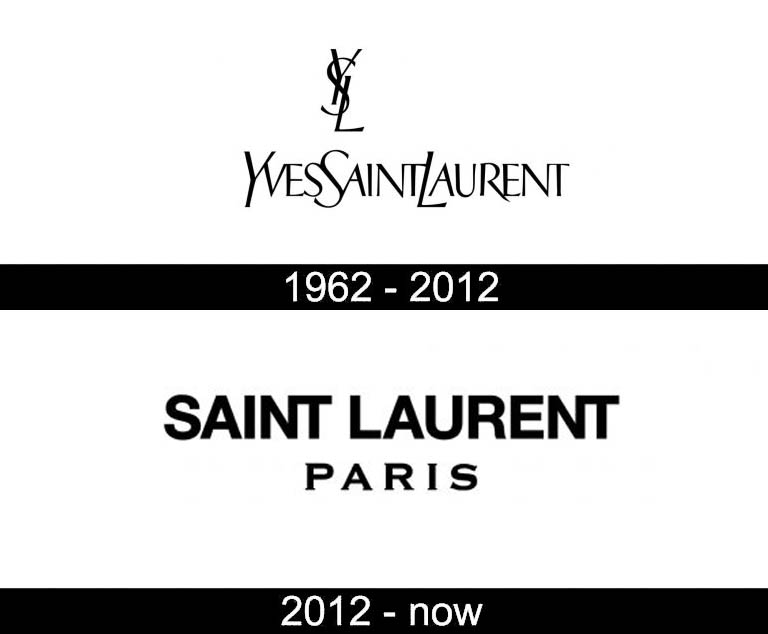
1962 – 2012: The Yves Saint Laurent Era
The original Yves Saint Laurent logo, introduced in the early 1960s, featured a sophisticated monochrome composition combining a wordmark with a monogram. The wordmark displayed the full designer name in uppercase letters, with subtle emphasis on the initials of each word. The typography was custom-built, drawing inspiration from classic sans-serif forms while elongating lines to convey elegance and modernity.
The YSL monogram, composed of three intertwined capital letters, quickly became one of the most recognizable symbols in fashion history. Its vertical structure and flowing connections expressed harmony and refinement, while its adaptability allowed it to appear independently on perfume bottles, labels, and accessories.
Color played a restrained yet powerful role during this period. While gold variations were occasionally used for prestige applications, the black-and-white version remained the definitive expression of the brand’s identity.

2012 – Today: The Saint Laurent Repositioning
In 2012, the brand underwent a significant visual transformation following the appointment of a new creative director and the decision to shorten the name to Saint Laurent. The redesign marked a clear departure from the previous identity while preserving the brand’s core values.
The new logo abandoned the YSL monogram in favor of a typographic composition. “Saint Laurent” appeared in bold uppercase sans-serif lettering, while the word “Paris” was introduced beneath it in a contrasting serif typeface. The generous spacing and sharp geometry of the letters conveyed confidence and modernity, aligning the brand with contemporary cultural references.
This shift reflected a broader strategy to reconnect the house with its youthful, rebellious roots while maintaining its luxury status. The redesign did not erase the past; instead, it reframed the brand’s heritage through a modern lens.
Logo Symbolism: Authority Through Typography
The symbolism of the Saint Laurent logo lies primarily in its typographic choices. The original YSL monogram symbolized unity between designer and brand, functioning as a personal seal of craftsmanship. Its interwoven letters suggested continuity, balance, and creative harmony.
The post-2012 logo communicates authority through simplicity. By relying solely on typography, the brand asserts confidence and clarity, allowing form and spacing to carry meaning. The contrast between the bold sans-serif name and the refined serif “Paris” reinforces the dialogue between modernity and tradition that defines Saint Laurent’s identity.
Typography and Color Palette
Typography has always been central to the Saint Laurent visual language. From the custom sans-serif forms of the original wordmark to the contemporary use of Neue Helvetica-inspired lettering, the brand consistently favored precision and legibility.
The color palette remains intentionally minimal. Black and white dominate, ensuring maximum versatility across products and environments. This restraint reinforces the brand’s position within the luxury segment, where understatement often signals confidence and control.
Saint Laurent Logo Heritage and Cultural Impact
The Saint Laurent logo heritage illustrates how a luxury brand can evolve without losing its essence. By respecting the foundational principles established by its founder while adapting to new cultural contexts, the brand has maintained relevance across generations.
This balance mirrors patterns seen throughout luxury fashion logo history, where the most enduring identities rely on refinement rather than reinvention. As Saint Laurent continues to operate under the ownership of Kering, its logo remains a powerful expression of authorship, elegance, and modernity.
For readers interested in how typographic restraint shapes lasting luxury identities, further insight can be found across the designer fashion logo heritage archive and the broader collection of global luxury brand logo history case studies.
Yves Saint Laurent Logo and Modern Fashion Identity
The YSL monogram helped redefine fashion branding by merging art and typography. Its cultural significance fits into the larger narrative outlined in Luxury Fashion Logos Explained: Brand Origins and Meaning.
FAQ: Saint Laurent Logo Meaning and History
What does the Saint Laurent logo represent?
The logo represents authorship, elegance, and authority, expressed primarily through refined typography.
Why did Yves Saint Laurent change to Saint Laurent?
The name was shortened in 2012 as part of a strategic repositioning that emphasized modernity while honoring the brand’s origins.
What is the significance of the YSL monogram?
The YSL monogram symbolized the unity between the designer and the brand and became one of the most iconic fashion emblems in history.
Has the Saint Laurent logo changed significantly over time?
Yes. While the original identity remained consistent for decades, the 2012 redesign marked a deliberate conceptual shift toward typographic minimalism.