
Rakuten Logo History: Meaning, Symbolism & Brand Heritage
Rakuten, founded in 1997 by Hiroshi Mikitani, has grown into one of the world’s most influential e-commerce ecosystems. Operating in nearly 30 countries and serving more than one billion users globally, the company represents a modern extension of Japan’s entrepreneurial and technological strength. At the heart of its identity is a logo heritage deeply connected to Japanese tradition, simplicity, and cultural symbolism. Over the years, Rakuten has refined its visual presence while maintaining an unmistakable connection to its origin story.
Rakuten Meaning and Symbolism
Rakuten’s visual identity has always drawn from the colors and forms associated with Japanese culture. The brand frequently uses a red circle, echoing the rising sun on Japan’s national flag. This emblem is a powerful symbol of renewal, optimism, and forward movement—values that align perfectly with Rakuten’s vision of innovation and global expansion.
The transition from a circular emblem to the current typographic design symbolizes the company’s shift from a marketplace rooted in tradition to a modern digital powerhouse. The angled, arrow-like underline introduced in 2018 emphasizes speed, progress, and the relentless drive toward growth. It functions both as a directional cue and a metaphor for momentum.
Rakuten Brand Heritage
Rakuten’s heritage is anchored in Japanese values of craftsmanship, trust, and service. From the beginning, the company positioned itself not merely as an online marketplace but as a curated ecosystem designed to uplift merchants and enhance customer experience. Its early logo expressed reverence for national identity, blending traditional scripts and cultural symbolism into one unified mark.
As Rakuten expanded, its identity matured. The evolution of its logo reflects this growth, moving from a culturally rich emblem to a globally streamlined design without abandoning its foundational red palette. The brand’s heritage remains inseparable from its Japanese roots, while its increasingly modern identity communicates ambition and international reach.
Rakuten Logo History & Evolution Timeline
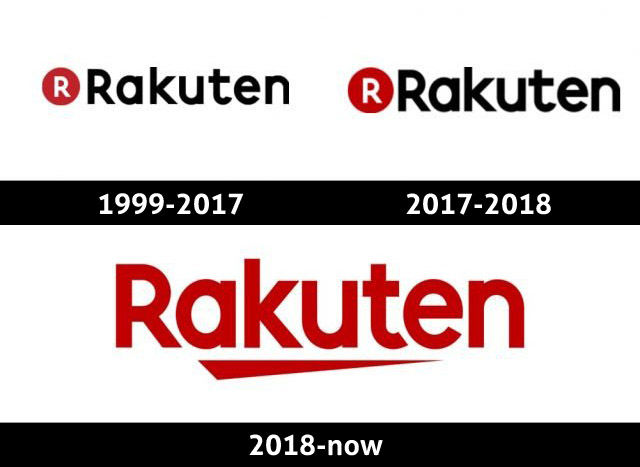
1999 – 2017: A Tribute to Tradition
Rakuten’s original logo consisted of a solid red circle placed on a white background, a direct reference to the Japanese flag. Inside the circle, delicate white lettering reading “Rakuten Ichiba” appeared in a hieroglyphic-style typeface, split across two lines. Additional Japanese characters in black framed the emblem on either side, reinforcing the brand’s cultural authenticity.
This design exuded elegance and heritage. It stood as a tribute to Rakuten’s origins while portraying the company as serious, grounded, and respectful of its national legacy. For nearly two decades, this emblem represented one of Japan’s most successful digital enterprises.
2017 – 2018: Modernization and Global Recognition
In the early 2000s, Rakuten began transitioning toward a more contemporary visual language. The 2017 redesign introduced a black wordmark paired with a red circular emblem featuring a bold white “R” at its center. This “R-in-a-circle” icon quickly became associated with Rakuten’s mobile apps, international operations, and digital services.
The simplicity of the mark ensured high visibility across screens and devices. The bold sans-serif “R” communicated strength and modernity, while the red circle preserved a connection to Japanese identity. This logo struck a balance between heritage and global accessibility.
2018 – Today: A Forward-Driving Identity
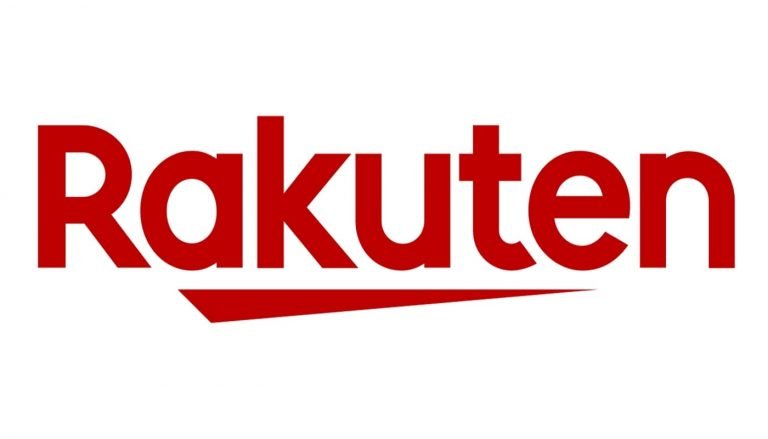
Rakuten’s current logo represents its boldest transformation yet. The brand removed black from the palette entirely, opting for a vibrant red wordmark accompanied by a dynamic triangular underline. This underline begins thick and tapers into a sharp, elongated point, emphasizing acceleration and progress.
The redesign reflects a company that has fully embraced global digital commerce. The shape below the wordmark resembles both a directional arrow and an energetic brushstroke, blending motion with artistic expression. With the shift to a clean typographic identity, Rakuten positioned itself as a modern, confident leader in international e-commerce.
Typography and Color
Rakuten’s typography is a custom bold sans-serif typeface reminiscent of QUARVIC, defined by strong lines, solid strokes, and harmonious proportions. The typeface conveys reliability and protection—crucial qualities for a brand handling transactions, data, and customer trust across global markets.
Red remains the centerpiece of Rakuten’s identity. The color represents passion, determination, and vitality, all deeply rooted in both Japanese culture and modern branding psychology. White is used sparingly to create balance and clarity, ensuring the red elements stand out with precision.
Together, these typographic and color choices create a striking identity rooted in heritage yet designed for contemporary digital environments.
Conclusion: The Enduring Legacy of the Rakuten Logo
The Rakuten logo tells a story of cultural pride, digital innovation, and strategic evolution. From its traditional Japanese emblem to its modern typographic expression, the brand has preserved the spirit of its origins while adapting to global commerce. Each redesign reflects a new chapter in Rakuten’s journey—respecting heritage while pursuing progress across borders. Today, the logo stands as a symbol of resilience, ambition, and the fusion of tradition with technological advancement.
Rakuten Logo FAQ
What does the Rakuten logo symbolize?
The Rakuten logo symbolizes progress, cultural pride, and speed, with its red palette referencing the Japanese flag and its modern underline representing forward movement.
Why is the Rakuten logo red?
Red reflects Japan’s national identity and symbolizes energy, determination, and innovation—qualities closely tied to the brand.
What did the original Rakuten logo represent?
The original logo showcased a red circle with traditional Japanese lettering, paying tribute to the company’s origins and cultural heritage.
When was the Rakuten logo last redesigned?
The most recent redesign occurred in 2018, introducing the red wordmark and dynamic triangular underline.
What does the underline in the new Rakuten logo mean?
The angled underline represents acceleration, growth, and the brand’s commitment to moving forward in global markets.