
Pontiac Logo History: Meaning, Symbolism & Brand Heritage
Pontiac occupies a distinctive place in the visual and industrial history of American automotive culture. Established in 1926 as a companion marque to Oakland Motor Car Company and later absorbed into General Motors, Pontiac quickly evolved into a brand known for performance, style, and an unmistakable personality. Though the marque was discontinued in 2010, its legacy continues to resonate across classic car communities, motorsport culture, and design circles fascinated by its powerful symbols and identity.
The story of Pontiac is inseparable from its namesake: Chief Pontiac, a powerful 18th-century Native American leader known for resilience and rebellion. The use of his name, and later his symbolic arrowhead, created a deep visual heritage rooted in North American history. Pontiac’s logos evolved across nearly a century, shifting from literal representations of Indigenous imagery to streamlined, modernist interpretations aligned with the brand’s focus on speed, precision, and power.
The evolution of Pontiac’s badge is a chronicle of American industrial design, marking the brand’s journey from early regional automobile production to becoming one of GM’s most culturally influential divisions. Its visual identity ultimately became one of the most recognizable in the automotive world, embodying both its heritage and its forward-looking philosophy.
Pontiac Meaning and Symbolism
Pontiac’s visual identity was always anchored in themes of heritage, speed, and direction. Early emblems prominently featured the profile of a Native American man, underscoring a deep cultural reference that communicated strength and lineage. As decades passed, the imagery transitioned toward geometric minimalism, culminating in the iconic downward-pointing arrowhead known as the “Dart.”
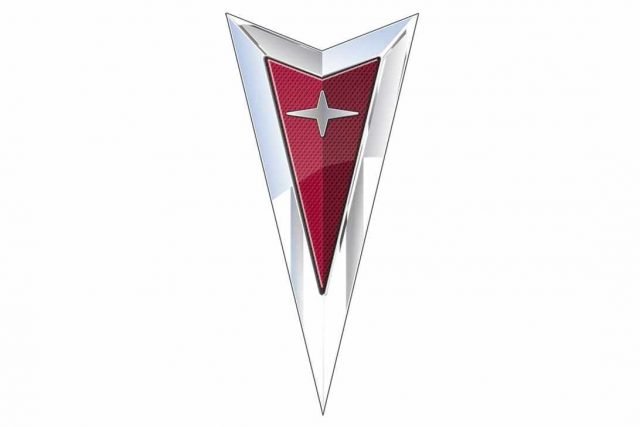
The arrowhead symbolized precision, movement, and bold intent. It carried a sense of direction—quite literally pointing forward while honoring the brand’s namesake. The four-point star positioned at the arrowhead’s top added refinement and a streamlined visual mark of identity. Together, these elements created a recognizable emblem built on heritage yet styled for modernity.
Brand Heritage: A Legacy Shaped by American Automotive Culture
Pontiac entered the automotive industry during a period of rapid expansion, aiming to deliver performance-oriented vehicles at accessible price points. By the mid-20th century, Pontiac had transformed into a powerhouse of American muscle, producing classics such as the GTO, Firebird, Trans Am, and Bonneville. The brand became synonymous with youth culture, motorsport ambition, and bold automotive styling.
Throughout its existence, Pontiac maintained a commitment to expressing its identity through a distinctive visual language. From early badges echoing the cultural figure of Chief Pontiac to later high-contrast red and silver geometric marks, the brand emphasized clarity, dynamism, and symbolism in its evolving design. Although GM discontinued Pontiac in 2010 due to financial restructuring and market shifts, the brand’s legacy remains firmly embedded in both automotive heritage and graphic design history.
Pontiac Logo History & Evolution Timeline
1926 – 1930: The First Shield and Chief Pontiac
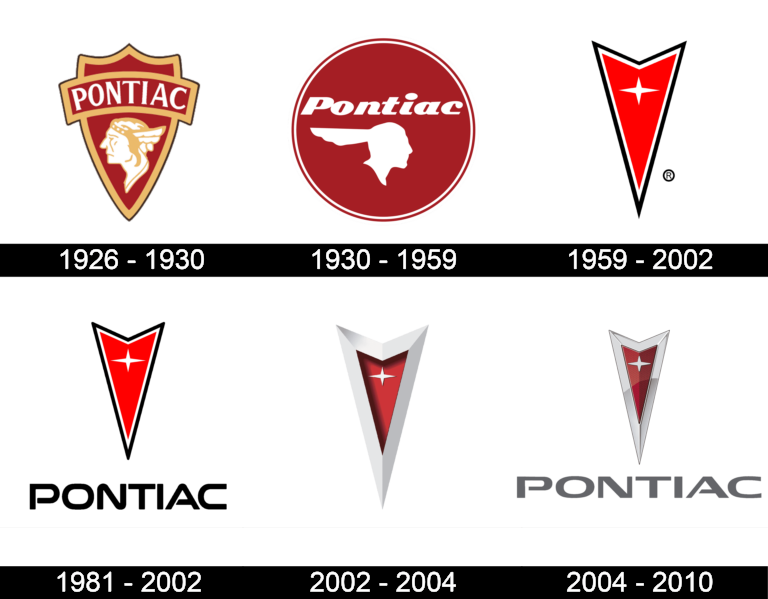
The earliest Pontiac emblem featured a decorative shield framed in gold with red and blue accents, accompanied by the “Oakland” wordmark, linking the brand to its origin city. This version lacked distinctiveness, prompting a more focused redesign the same year. The redesigned 1926 badge introduced the profile of a Native American chief in white and gold set against a vibrant red shield. This became the brand’s first truly emblematic identity, firmly grounded in heritage and symbolism.
1930 – 1959: Modernization of the Native American Silhouette
During the 1930s, the portrait of Chief Pontiac was simplified and stylized with broader, more modern lines. The brand alternated between red and silver versions depending on application—red appearing in marketing materials and silver on vehicle emblems. The focus shifted toward a cleaner, more contemporary representation of the cultural symbol.

1959 – 2002: Introduction of the Dart Arrowhead
A dramatic transformation arrived in the late 1950s. Pontiac introduced the now-legendary Dart emblem, a tall triangular arrowhead pointing downward with a white four-point star near its tip. Rendered in deep red with a fine black border, this sleek geometric shape represented speed, precision, and modernity. It became one of the most iconic automotive symbols of the twentieth century.
1981 – 2002: Pairing the Arrowhead with a Wordmark
The Dart was accompanied by a refined sans-serif wordmark during the 1980s. The custom typography featured open characters and modern geometric forms, positioned in black beneath the red arrowhead. This pairing created a balanced identity that connected Pontiac’s heritage to its aspirational future.

2002 – 2004: Three-Dimensional Refinement
Pontiac’s early-2000s redesign added depth to the Dart symbol. The frame became metallic and thicker, enhancing the emblem’s visual weight. The brand embraced the early digital era’s preference for glossy, dimensional surfaces.

2004 – 2010: Final Emblem and Modern Wordmark
The final iteration integrated a polished silver frame, deep red inner field, and a crisp four-point star. A new uppercase wordmark in a contemporary sans-serif typeface appeared alongside the emblem, with open-form letters such as the “P” and “A” giving the mark a futuristic tone. This final design represented Pontiac until the brand’s discontinuation, embodying more than eight decades of evolving visual heritage.
Typography and Color
Pontiac’s typographic choices consistently favored bold, geometric sans-serif styles, especially in its modern era. The final wordmark resembled type families such as Vast XXL Medium or Doublewide Medium, though with custom adjustments to create unique letterforms.
Color played a vital symbolic role. The dominant palette—red, silver, black, and white—evoked passion, power, precision, and strength. Red referenced the brand’s historical roots and spirited performance, while silver added a metallic, technological dimension aligned with automotive design.
The Enduring Legacy of Pontiac’s Visual Identity
Pontiac’s visual heritage reflects the broader arc of American automotive evolution. From cultural symbolism to modernist abstraction, the brand’s logo journey reveals a continuous effort to honor its origins while moving decisively toward the future. The iconic arrowhead, born mid-century and refined through multiple decades, stands as one of the most recognizable marks in automotive history—an emblem of motion, heritage, and identity.
Even after the brand’s discontinuation in 2010, Pontiac’s logos remain deeply embedded in car culture, design history, and the emotional memory of an era defined by performance, innovation, and bold visual expression.
Pontiac FAQ
What does the Pontiac symbol mean?
The Pontiac emblem represents an elongated arrowhead with a four-point star, symbolizing speed, direction, heritage, and the brand’s connection to its Native American namesake.
Why was Pontiac discontinued?
Pontiac was discontinued by General Motors in 2010 as part of corporate restructuring following financial challenges and decreased market demand.
What is the Pontiac Firebird logo called?
The Pontiac Firebird logo is commonly known as the “Firebird” itself—a stylized flaming bird emblem deeply associated with American muscle car heritage.
Is Pontiac owned by General Motors?
Yes. Pontiac operated as a division of General Motors from 1931 until its discontinuation in 2010.
What did the earliest Pontiac logos depict?
Early Pontiac logos depicted the profile of a Native American chief, paying tribute to Chief Pontiac and grounding the brand’s identity in historical symbolism.