
Panda Express Logo History: Meaning, Symbolism & Brand Heritage
Panda Express occupies a unique place in global food culture, standing at the intersection of Chinese culinary tradition and American fast-casual dining. Founded in Southern California, the brand transformed familiar Chinese flavors into a format tailored to speed, consistency, and accessibility. Over the decades, Panda Express has grown from a single concept into an international chain, while maintaining a visual identity that feels warm, recognizable, and culturally rooted.
The Panda Express logo history reflects this journey with remarkable clarity. From its earliest incarnations to the modern badge used today, the logo meaning has remained centered on approachability, heritage, and trust. Its logo symbolism relies on one of the most universally loved animals—the panda—used not as decoration, but as a cultural bridge between East and West. This consistency has allowed Panda Express to build a strong and enduring logo heritage.
Meaning and History: The Origin of the Panda Express Logo
Panda Express was founded in 1983 by Andrew Cherng and Peggy Cherng, expanding from their earlier restaurant concept, Panda Inn. Their vision was to present Chinese-inspired dishes in a format compatible with American lifestyles, without losing the emotional warmth associated with traditional family dining.
The logo origin is closely tied to this philosophy. From the beginning, the panda was chosen as the central symbol, representing friendliness, cultural identity, and calm strength. Unlike abstract marks common in fast-food branding, Panda Express embraced illustration and narrative. The logo was designed to feel welcoming rather than corporate, reinforcing the idea of food prepared with care rather than mass production.
As the brand expanded nationally and internationally, the logo evolved subtly to match its growing confidence, while preserving its core elements.
Panda Express Logo History Timeline
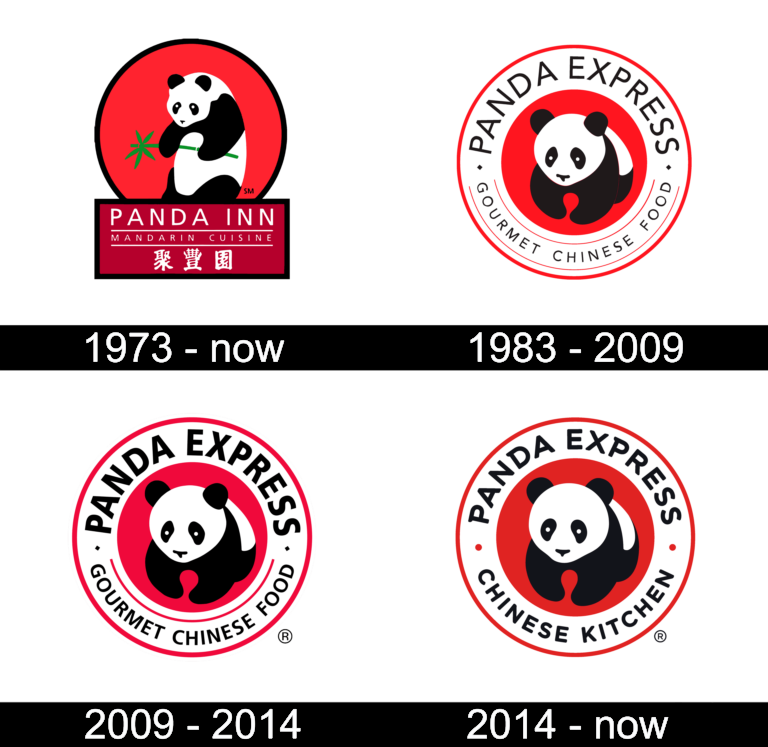
1973–1983: Panda Inn and the Foundational Identity
Before Panda Express officially launched, the Cherng family operated Panda Inn restaurants. The early logo featured a stylized panda enclosed within a bold red circular frame. The panda was shown holding bamboo, symbolizing freshness, prosperity, and Chinese heritage. Accompanying text included “PANDA INN” and “MANDARIN CUISINE,” reinforcing authenticity and tradition.
This emblem established the visual language that Panda Express would later refine rather than abandon.
1983–2009: The Birth of Panda Express
With the launch of Panda Express in 1983, the logo was adapted for a faster, more scalable dining concept. The panda illustration became simpler and more playful, seated at the center of a red ring. The words “PANDA EXPRESS” wrapped around the top of the circle, while “GOURMET CHINESE FOOD” appeared along the bottom.
This circular seal format conveyed quality and reliability, similar to traditional food stamps or certifications. The red-and-white color palette ensured high visibility and emotional warmth, while the panda remained the unmistakable focal point.
2009–2014: Brand Maturity and Trademark Presence
As Panda Express solidified its position as a market leader, the logo received minor refinements. The registered trademark symbol was added, signaling brand maturity and legal protection. Typography became slightly bolder and more uniform, improving legibility across signage, packaging, and digital platforms.
The panda illustration remained largely unchanged, reinforcing continuity and brand trust.
2014–Today: “Chinese Kitchen” and Authentic Positioning
The current logo introduced a key textual shift: “GOURMET CHINESE FOOD” was replaced with “CHINESE KITCHEN.” This change signaled a move away from upscale terminology toward warmth, craft, and authenticity. The phrase suggests a real cooking environment rather than a marketing concept.
The circular red emblem and panda illustration were preserved, but refined for balance and scalability. This version reflects Panda Express’s confidence in its heritage while appealing to modern consumers seeking authenticity and familiarity.
Logo Symbolism: The Panda as Cultural Ambassador
The panda is the heart of Panda Express logo symbolism. Universally associated with China, the animal represents peace, balance, and friendliness. In the context of the brand, the panda serves as a cultural ambassador, making Chinese cuisine feel approachable and inviting to a broad audience.
The circular frame symbolizes unity and continuity, while red—a color associated with luck, celebration, and prosperity in Chinese culture—reinforces positive emotional associations. Together, these elements create a logo that communicates warmth rather than speed, a notable distinction in the fast-food industry.
Typography and Color in the Panda Express Logo
Typography in the Panda Express logo is bold, rounded, and legible. The sans-serif lettering conveys stability and clarity, avoiding sharp edges that might feel aggressive or overly modern. The consistent use of uppercase letters reinforces confidence and brand authority without sacrificing friendliness.
Color is central to the logo meaning. Red dominates the palette, symbolizing joy, energy, and good fortune. White provides contrast and clarity, while black accents in the panda illustration add definition and personality. This restrained palette ensures strong recognition across cultures and media formats.
Panda Express Logo Heritage and Brand Identity
Panda Express has demonstrated exceptional discipline in its visual identity. Rather than frequent rebranding, the company refined a single, recognizable concept over time. This approach has allowed generations of customers to associate the panda emblem with reliability, comfort, and consistent flavor.
The logo functions not just as a brand mark, but as an emotional signal. It reassures customers that, regardless of location, the experience will feel familiar. This consistency has been critical to Panda Express’s international success.
A Logo That Balances Tradition and Accessibility
The Panda Express logo history illustrates how thoughtful symbolism and restrained evolution can create a powerful brand identity. By anchoring its visual language in cultural meaning and emotional warmth, Panda Express built a logo heritage that transcends trends.
The panda emblem remains a trusted guidepost, signaling food that is approachable, comforting, and rooted in tradition—yet adapted for modern life. In the crowded fast-casual landscape, Panda Express stands as a model of how heritage-driven design can scale globally without losing its soul.
FAQ: Panda Express Logo Meaning, Symbolism, and History
What does the Panda Express logo represent?
The logo represents friendliness, cultural heritage, and accessibility through the panda symbol and circular seal.
Who founded Panda Express?
Panda Express was founded in 1983 by Andrew and Peggy Cherng.
Why is a panda used in the logo?
The panda symbolizes Chinese heritage, peace, and approachability.
What does “Chinese Kitchen” mean in the logo?
It emphasizes authenticity and a home-style cooking philosophy rather than upscale dining.
Has the Panda Express logo changed much over time?
The logo has evolved subtly, refining typography and messaging while preserving its core design.
What colors define the Panda Express logo?
Red and white dominate the palette, symbolizing luck, warmth, and clarity.