Nutella Logo History: Meaning, Symbolism & Brand Heritage
Few brands in the world evoke as much instant warmth and nostalgia as Nutella. Born in Italy and adored globally, Nutella represents far more than a hazelnut and cocoa spread—it is a cultural symbol of comfort, childhood memories, and Italian confectionery mastery. Officially launched in 1964 under the Ferrero Group, Nutella evolved from humble post-war improvisations into one of the most recognizable food brands on the planet. Its logo, instantly identifiable on supermarket shelves from Rome to Rio, is a triumph of simplicity, approachability, and timeless design.
The history and symbolism of the Nutella logo reflect the brand’s heritage as well as Ferrero’s remarkable ability to transform scarcity into creativity. From the early days of Giandujot and Supercrema to the refined and modern Nutella wordmark, the brand’s visual identity tells a story of evolution, craftsmanship, and global influence. Understanding the meaning embedded in the Nutella logo helps illuminate why this brand has become such a lasting cultural and commercial phenomenon.
Nutella Meaning and Symbolism
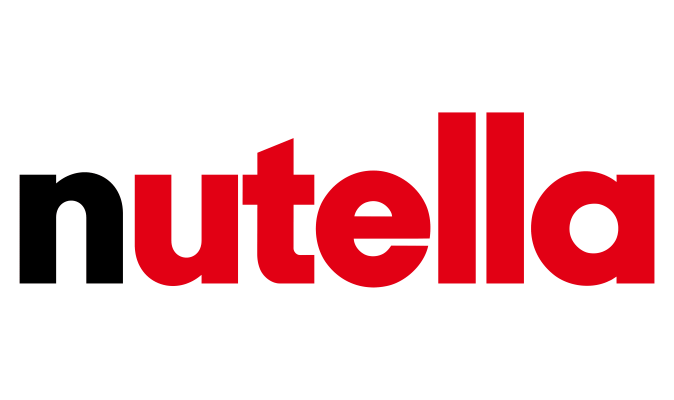
The Nutella logo is built on clarity, friendliness, and delicious familiarity. Its lowercase lettering conveys warmth and accessibility, while the contrasting colors—black for the initial “n” and bright red for the remaining letters—create a simple yet emotionally expressive identity.
Red represents joy, appetite, and energy; black anchors the design with balance and seriousness. Together, they form a visual contrast that has become iconic in global packaging design.
The decision to use all lowercase letters further symbolizes Nutella’s approachable brand personality. Unlike many confectionery logos that lean toward playful or ornate aesthetics, the Nutella wordmark relies on straightforward geometric forms. This minimalism reflects Ferrero’s philosophy of authenticity—allowing the product, not the logo, to carry emotional weight.
Brand Heritage
Nutella’s heritage traces back to post-war Italy, when cacao shortages forced bakers and confectioners to innovate. Pietro Ferrero’s invention of Giandujot in 1946 introduced a sweet paste made of hazelnuts—an ingredient abundant in Piedmont—mixed with a small amount of precious cocoa. The success of this creation led to refined versions, eventually becoming Supercrema in the early 1950s.
As Ferrero expanded into European markets, the product took its modern form and name. In 1964, Nutella officially debuted, marking the beginning of one of the most influential branding journeys in food history. The logo played a central role in this expansion: simple, modern, unmistakable. The consistency of Nutella’s visual identity continues to reinforce its heritage of quality and authenticity across generations.
Nutella Logo History & Evolution Timeline
1951: Giandujot Supercrema
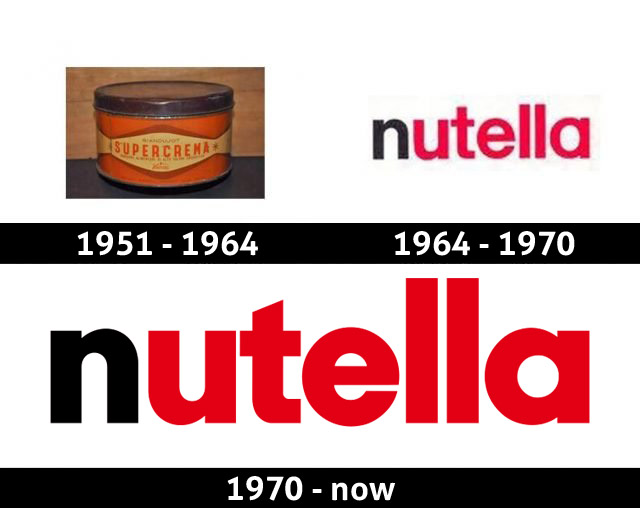
Before the Nutella brand existed, Supercrema served as the product’s commercial identity. The labels featured an ivory background with warm orange “Supercrema” lettering and “Giandujot” in a lighter, smaller script above. Beneath, the Ferrero logo affirmed the company’s growing reputation.
While modest, this design represented the early heritage of Ferrero’s hazelnut creations and the post-war ingenuity that sparked the Nutella legacy.

1964: The Birth of Nutella
As Ferrero prepared to distribute the product across Europe, both the recipe and name changed. The new wordmark, “Nutella,” introduced a fresh, modern identity that looked nothing like Supercrema.
Lowercase letters created a friendly tone, while the bold black “n” paired with red lettering established a distinctive color strategy. The minimal sans-serif typeface was legible, confident, and surprisingly elegant for a food product.
This design marked a turning point in the brand’s history, becoming one of the most recognizable logotypes in global packaging.
1970: Refinement and Subtle Evolution
The 1970 update retained the essence of the original Nutella logo but added refinement to improve visibility and contemporary appeal. The letters became slightly bolder—suggesting richness and thickness, subtly echoing the product’s texture.
The shade of red brightened, making the logo more eye-catching on store shelves. The “t” was adjusted to be shorter relative to the “ll,” and its top was cut diagonally, adding movement and visual rhythm.
This evolution preserved the heritage and meaning of the original logo while optimizing it for mass-market impact across Europe and beyond.
Typography and Color
Nutella’s logotype is crafted in a bold, extra-thick sans-serif typeface. The closest modern equivalent appears to be Neue Singular H Black, modified with a diagonal cut on the vertical of the “t.”
The font’s chunky proportions convey friendliness, fullness, and the indulgent nature of the product. The use of lowercase enhances approachability, while the weight ensures the wordmark remains instantly visible in any context.
The iconic black-red-white palette is one of the most effective color systems in global branding. Black provides structure, red provides emotion, and white offers clarity and purity. This tricolor combination reinforces trust, appetite, and timeless simplicity.
The Cultural Symbolism of the Nutella Logo
The Nutella logo is a masterclass in enduring design—simple yet expressive, modern yet deeply tied to its Italian heritage. Through slight refinements over decades, it has remained consistent enough to evoke nostalgia while fresh enough to feel contemporary.
More than a wordmark, the logo symbolizes Ferrero’s ingenuity, the post-war roots of Italian confectionery tradition, and the emotional warmth associated with Nutella worldwide.
It stands as a timeless emblem of deliciousness, comfort, and cultural continuity, enriching kitchen tables across generations.
Nutella Logo FAQ
What does the Nutella logo symbolize?
It symbolizes approachability, joy, and product richness through its friendly lowercase letters and bold red-and-black palette.
Why is the “n” black in the Nutella logo?
The black “n” anchors the design, creating contrast and helping the rest of the red letters stand out.
Has the Nutella logo changed much over time?
No. While refined subtly, the logo has remained remarkably consistent since 1964 to preserve brand heritage and global recognition.
Who created Nutella?
Nutella was developed by Pietro Ferrero, who refined earlier hazelnut cocoa creations into the modern spread.
What font does the Nutella logo use?
A bold sans-serif similar to Neue Singular H Black, featuring a custom diagonal cut on the “t.”