Nokia Logo History: Meaning, Symbolism & Brand Heritage
Nokia is one of the rare global brands whose identity stretches across more than a century and multiple industries. Founded in 1865 as a small paper mill on the banks of the Nokianvirta River in Finland, the company gradually evolved through rubber manufacturing, cables, electronics, and ultimately telecommunications. Each of these transformations left a visible mark on Nokia’s visual identity, making its logo history one of the richest examples of logo history in the technology sector.
From a naturalistic symbol rooted in geography to a sharply abstract wordmark built for the digital era, the Nokia logo reflects the company’s ability to reinvent itself without losing continuity. Few technology brands can claim such a long and documented evolution of logo meaning, closely aligned with industrial progress and cultural change.
Nokia Logo History Timeline
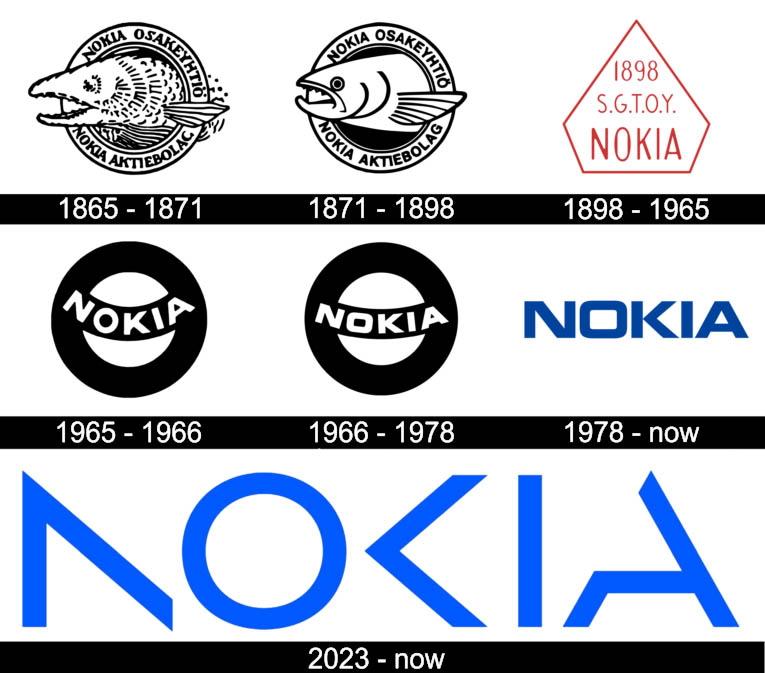
1865–1871: The Salmon of Nokianvirta
The first Nokia logo appeared shortly after the company’s founding. It depicted a salmon, a reference to the Nokianvirta River, where the original paper mill operated. This emblem emphasized local roots, natural resources, and craftsmanship. At a time when corporate branding was rare, the fish symbol acted as a territorial and economic identifier rather than a marketing device.

1871–1898: Refinement and Authority
In the following redesign, the salmon became more stylized and contained within a solid black background. Decorative water splashes were removed, and the fish gained a more serious, authoritative appearance. The logo began shifting from illustrative storytelling toward symbolic representation, signaling Nokia’s growing industrial confidence.

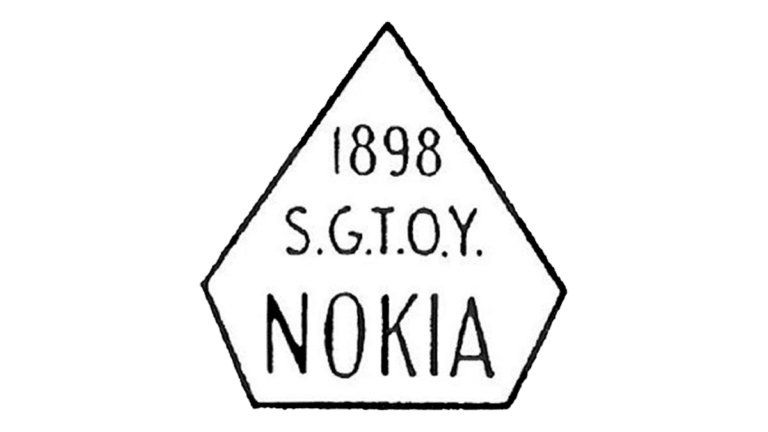
1898–1965: The Diamond Badge Era
By the end of the 19th century, Nokia introduced a diamond-shaped badge featuring a three-line handwritten wordmark. This emblem stayed in use for nearly seventy years, making it the longest-lasting logo in the company’s history. Its endurance reflects a period of stability, during which Nokia expanded into rubber and cable manufacturing. The logo meaning during this era was rooted in reliability and industrial permanence.
1965–1966: The Transitional Roundel
In 1965, Nokia Osakeyhtiö adopted a minimalist black-and-white round emblem containing the company name. This short-lived design represented a break from ornamental heritage and a step toward modern corporate identity. Though visually modest, it marked Nokia’s readiness to reposition itself.

1966–1978: The Arrow Concept Emerges
Following the merger with Finnish Cable Works and Finnish Rubber Works in 1966, Nokia introduced the Arrows logo. This symbol laid the foundation for Nokia’s future visual language. The arrow shape conveyed motion, progress, and technological advancement—core values for a company entering the telecommunications industry.
1978–2023: The Iconic Nokia Wordmark
The 1978 redesign produced one of the most recognizable logos in tech history. The bold blue sans-serif wordmark featured a distinctive arrow-shaped “K,” echoing the earlier arrows emblem. This logo became synonymous with mobile phones, innovation, and global connectivity. During the 1990s, when Nokia dominated the mobile market, this logo achieved iconic status.
The introduction of the “Connecting People” slogan in 1992 reinforced the logo’s human-centric meaning. Minor refinements followed in 2006, and the slogan was removed entirely in 2011, allowing the wordmark to stand on its own.
2023–Today: Digital Minimalism and Strategic Repositioning
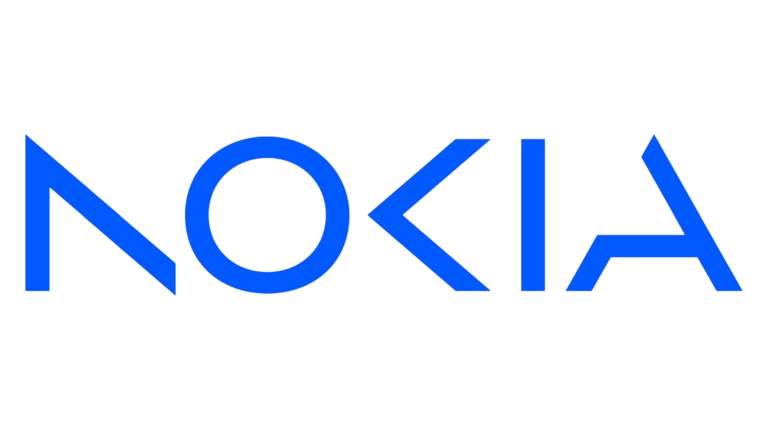
In 2023, Nokia unveiled a radical redesign aligned with its transformation into a business technology and network infrastructure company. The new logo uses fragmented uppercase lettering, with incomplete strokes in the “N,” “K,” and “A.” This deliberate abstraction symbolizes openness, digital flow, and modular networks. Only the “O” and “I” remain fully enclosed, grounding the identity in continuity amid change.
Logo Symbolism and Meaning
Throughout its evolution, the Nokia logo has consistently mirrored the company’s strategic direction. The salmon symbolized nature and locality, the diamond badge conveyed industrial stability, the arrows represented progress, and the modern wordmarks emphasized connectivity and speed.
The arrow-shaped “K” in the classic logo and the fragmented strokes of the 2023 redesign both reinforce a forward-looking mindset. Nokia’s use of blue—a color associated with trust, technology, and clarity—has remained a constant, strengthening brand recognition and emotional continuity.
Typography and Color
Nokia’s typography has evolved from handwritten scripts to geometric sans-serif forms. The current typeface is bold, angular, and deliberately incomplete, reflecting innovation and digital transformation. While inspired by earlier designs, it signals a clear break from consumer electronics toward enterprise technology.
The brand’s signature vivid blue continues to anchor the visual identity. Historically associated with reliability and professionalism, the color now also represents energy, innovation, and global connectivity—core elements of Nokia’s modern positioning.
Nokia Logo Heritage: A Century of Reinvention
Nokia’s logo history stands as a textbook example of how visual identity can evolve alongside a company’s mission without losing coherence. From riverbanks to global networks, the brand’s symbols have adapted to new realities while preserving recognizable DNA. This balance between reinvention and continuity is what makes Nokia’s visual identity one of the strongest cases of logo heritage in the technology world.
FAQ: Nokia Logo Meaning and History
What did the original Nokia logo represent?
The original logo featured a salmon from the Nokianvirta River, symbolizing the company’s geographic roots and reliance on natural resources.
Why does the classic Nokia logo feature an arrow-shaped “K”?
The arrow-shaped “K” represents progress, motion, and technological advancement, echoing the earlier arrows emblem from the 1960s.
Why did Nokia redesign its logo in 2023?
The 2023 redesign reflects Nokia’s shift from consumer mobile phones to business technology, networks, and cloud infrastructure.
What does the fragmented lettering in the new Nokia logo mean?
The incomplete strokes symbolize openness, modularity, and the dynamic nature of digital networks.