
Nike Logo History: Meaning, Symbolism & Brand Heritage

The Nike Swoosh is one of those rare symbols that doesn’t need a caption. A single curved tick is enough to trigger a universe of associations: speed, victory, competition, culture, and cool. It is a perfect case study in logo heritage – how a simple graphic, born from a student project, becomes one of the most powerful brand marks in history.
This is the story of how Nike went from Blue Ribbon Sports to a global cultural force, how a $35 logo became a multi-billion-dollar asset, and how the brand built an entire ecosystem of sub-logos, athlete marks and slogans around a single, elegant Swoosh.
From Blue Ribbon Sports to Nike: The Brand Before the Swoosh
The Nike story starts long before the Swoosh appears on a shoe. In the late 1950s, Phil Knight – a middle-distance runner – meets Bill Bowerman, the legendary track and field coach at the University of Oregon. Bowerman believes performance comes from training the whole athlete, not just the body, and he obsessively experiments with ways to improve running shoes.
Knight, equally passionate about sport but with a strong entrepreneurial streak, studies the athletic footwear market and discovers Japanese Onitsuka Tiger sneakers: high quality, competitive prices. In 1962 he travels to Japan, negotiates a deal, and needs a company name on the spot to sign the contract. He improvises: Blue Ribbon Sports. That small import company would eventually become Nike.
At first, Blue Ribbon Sports sells Japanese sneakers to athletes and coaches Knight knows personally. Feedback from this close circle – detailed, practical, demanding – shapes the brand’s early product decisions. In 1965, Jeff Johnson joins the team. He is as obsessed with running as Bowerman and Knight, and he also happens to be the one who will give the company its future name.
One night, Johnson dreams of the Greek goddess of victory: Nike. The name is short, sharp, and full of meaning. The future brand identity is suddenly loaded with mythology, symbolism and, crucially, room for a powerful logo.
The Birth of the Swoosh: Carolyn Davidson’s $35 Idea
By 1971, Blue Ribbon Sports is transitioning into something bigger and more independent. The company needs its own visual identity – a logo that will work on shoes, boxes, ads, and eventually on anything related to sport.
Phil Knight is teaching accounting at Portland State University when he meets Carolyn Davidson, a design student. She mentions she doesn’t have enough money for art supplies, and Knight offers her a small freelance job: create a logo for his growing company.
The brief is simple but ambitious: the symbol must suggest movement, speed, and dynamism, and connect in spirit to the goddess Nike. Davidson experiments with several ideas before arriving at a clean, curved form that feels like a wing and a motion line at the same time.
The result is the Swoosh – a minimal tick-like shape with a forward-leaning energy. For this work, Davidson is paid just $35. No one in the room knows that this graphic will become one of the most recognizable marks in modern logo history.
Over time, that shape acquires its own myth. The word “swoosh” evokes the sound of something moving quickly through the air. In combination with the future slogan “Just Do It”, it becomes a visual and verbal command to act: run, jump, compete, push your limits.
Early Nike Logo Heritage: From BRS Monogram to Swoosh
Nike’s logo heritage actually starts under another name.
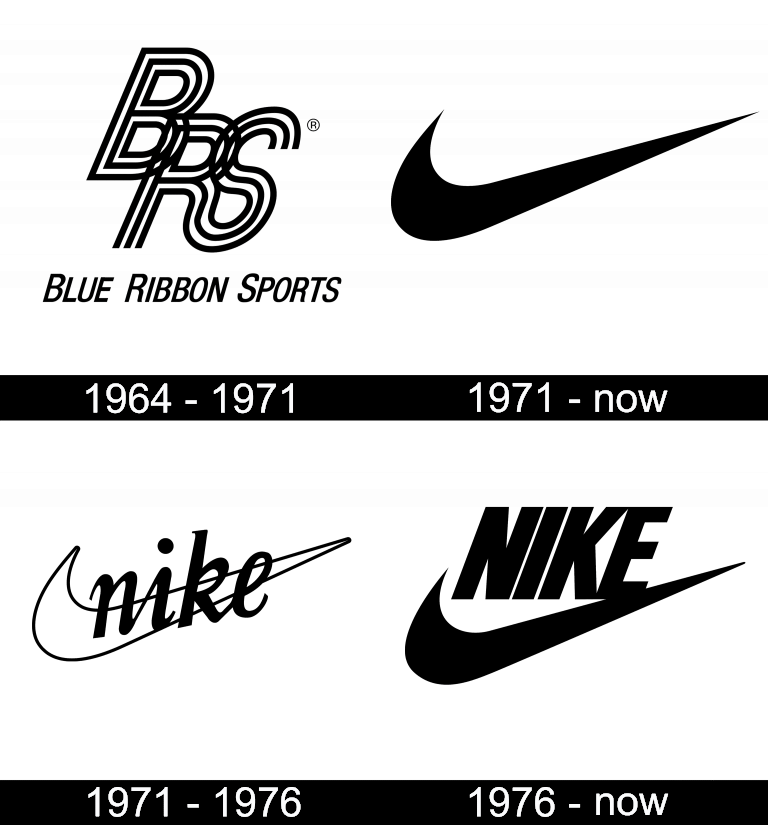
1964–1971: Blue Ribbon Sports
Before Nike existed as a brand, Blue Ribbon Sports used a logo built around a BRS monogram. The three letters were interlaced and slanted to the right, creating a sense of motion. Underneath, a simple italic sans-serif wordmark spelled out the company name.
Although executed in black and white, the composition was fairly complex visually. The B overlapped the R, the R flowed into the S, and the whole mark leaned forward. It hinted at speed but lacked the clarity and memorability of a great global symbol.
1971: The First Swoosh Logos
In 1971, with the shift from Blue Ribbon Sports to Nike, the Swoosh appears. There are two key versions:
-
A solid black Swoosh on a white background – the pure, standalone symbol created by Carolyn Davidson.
-
A version where the Swoosh is outlined and overlapped by a bold, diagonal cursive wordmark. The dynamic script placed directly over the curve reinforces movement and has a distinctly 1970s feel.
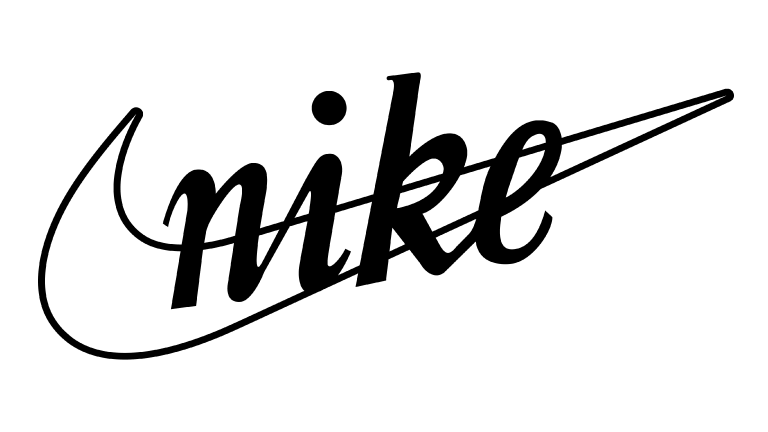
This second logo is short-lived but memorable. It reflects its era and now feels “retro”, echoing the old-school vibe of some Nike sneakers that still use it as a nod to brand heritage.
1976–Today: The Classic Nike Lockup
In 1976, Nike simplifies the composition. The Nike wordmark moves above the Swoosh instead of sitting on top of it, and the typography changes dramatically:
-
The cursive script disappears.
-
A bold, geometric uppercase sans-serif appears instead.
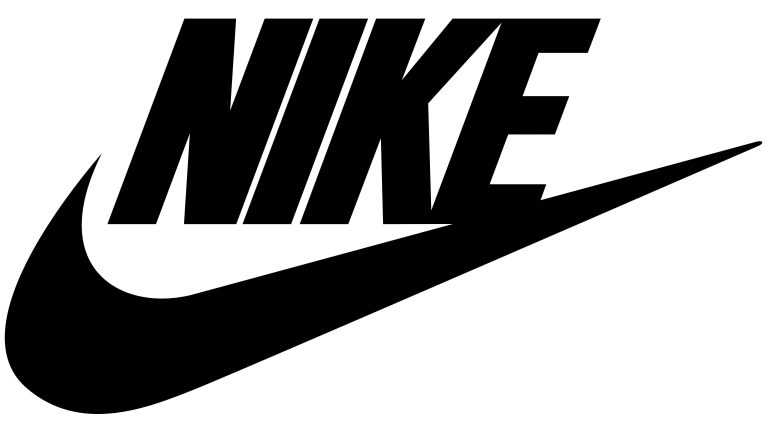
The Swoosh itself returns to a solid black shape, echoing Davidson’s original concept. The result is a balanced lockup: the heavy, straight lines of the wordmark ground the fluid, sharp curve of the Swoosh. This combination projects stability, confidence and power, while keeping the logo agile and modern.
By 1995, Nike is so widely recognized that the wordmark becomes optional. The Swoosh alone is enough. That is the ultimate milestone in logo heritage: when your symbol can stand completely on its own.
“Just Do It”: The Slogan That Became a Second Logo
If the Swoosh is the visual heart of Nike, “Just Do It” is its verbal core.
In the early 1980s, Nike faces strong competition from Reebok, which leans into the booming fitness and aerobics trend. Nike realizes it must speak to a broader audience – not just elite athletes, but people of all ages, genders and fitness levels.
The company turns to its agency, Wieden+Kennedy, to develop a campaign that can reposition Nike as a brand for everyone who moves. Co-founder Dan Wieden proposes a simple, punchy tagline: “Just Do It”.
The line is famously inspired by the last words of convicted criminal Gary Gilmore (“Let’s do it”). Nike strips the phrase of its dark context and reframes it as a pure call to action. Designer Ron Dumas later gives the slogan a graphic form using Futura Bold Condensed, pairing it seamlessly with the Swoosh.
From 1988 onward, Nike invests heavily in this message. The first “Just Do It” commercial stars 80-year-old marathon runner Walt Stack, embodying the idea that sport is for everyone who dares to start. The slogan becomes almost a logo in itself: recognisable even when seen alone, strongly associated with speed, effort and determination rather than its original source.
“Just Do It” doesn’t just sell shoes. It summarizes Nike’s brand philosophy: direct, fearless, competitive, and relentlessly forward.
The Primary Nike Logo: More Than a Fashion Symbol
Today, the primary Nike logo – the Swoosh, with or without the wordmark – is far more than a sign on apparel. It signals:
-
A cultural phenomenon, not just a sportswear brand.
-
A success story, from a small importer to a global powerhouse.
-
An invitation to achievement, worn by professionals and everyday athletes alike.
The visual identity that began with Blue Ribbon Sports in 1964 finds its definitive form in the early 1970s. Shoes bearing the Swoosh reshape the sports industry, but they also influence streetwear, music, pop culture and design.
In terms of logo heritage, Nike is a perfect example of how a minimalist mark can grow in meaning as it appears again and again in different contexts, on different people, and within different stories.
Athlete Collaborations: Building a Galaxy Around the Swoosh
One of Nike’s greatest branding strengths is how it uses collaborations to expand its logo ecosystem without diluting its core identity. The Swoosh remains the anchor, while new marks express the personality of star athletes and specific product lines.
Air Jordan and the Wings of a Legend
In 1984, Nike signs basketball star Michael Jordan to a five-year deal. The Air Jordan 1 launches in 1985, featuring the now-classic Jordan Wings logo – a basketball framed by wings and a banner. Creative director Peter Moore sketches the design on a napkin after meeting Jordan’s agent, capturing flight, status and swagger in a compact emblem.
In 1988, the Jumpman logo appears on the Air Jordan 3. Based on an image of Jordan soaring through the air, ball in hand, the silhouette becomes an icon of its own. Today, the Jumpman is one of the most recognizable sports logos in the world, effectively a sub-brand within Nike’s wider logo heritage.

Bo Knows, Diamond Turf and Multi-Sport Energy
In 1989, the “Bo Knows” campaign showcases multi-sport star Bo Jackson, supported by a clean, bold “BO” logotype. Minimal but strong, it adds another facet to Nike’s identity, emphasizing versatility and crossover appeal.
A few years later, the Diamond Turf logo (1993) reflects Deion Sanders’ rare dual career in football and baseball. The emblem integrates references to both sports and his jersey numbers 21 and 24, placed on the tongue of cleats – a small but powerful storytelling device.
Tennis, Baseball, Golf and Beyond
The Nike logo universe continues to expand through the 1990s and 2000s:
-
Challenge Court (1991): a tennis line for Andre Agassi, with branding based on an ink blot that accidentally resembles a tennis ball – turning a design “mistake” into a memorable symbol.
-
Swingman (1998): a logo for baseball star Ken Griffey Jr., featuring his swinging silhouette with a bold arched stroke, instantly recognizable thanks to his trademark backward cap.
-
Tiger Woods (2003): a sharp monogram built from Woods’ initials, becoming a signature mark in golf and a staple on his apparel and gear.

-
LeBron James (from 2003): multiple logos built around his initials, number and “king” symbolism (crowns, lions), visually matching his dominant, regal playing style.
-
Cristiano Ronaldo (CR7): a minimalistic CR7 monogram paired with the Swoosh, supporting a lifetime partnership and extending Nike’s presence in global football.

-
Carmelo Anthony, Serena Williams, Kobe Bryant and others: each given a bespoke emblem that fits within the Nike design language but reflects the athlete’s unique personality and story.
These marks enrich Nike’s logo heritage. They prove that a strong core identity can support many sub-logos, as long as the visual language – bold, clean, athletic – remains consistent.
Nike Logo Variations: SB, Air, Air Force and More
Alongside athlete-driven marks, Nike also develops a family of product-line logos, all orbiting around the Swoosh.
-
Nike SB (Skateboarding): Introduced in 2002, this logo keeps the classic Nike wordmark and Swoosh but adds “SB” underneath. It’s almost a typographic tweak, yet it gives the skateboarding division its own identity while staying unmistakably Nike.
-
Nike Air: The Nike Air logo appears in 1982, shortly after Air cushioning goes mainstream. The standard emblem is paired with a thinner, all-caps “AIR” beneath it, often positioned at the heel of sneakers. For many fans, this small word is a promise of comfort and bounce.
-
Air Force 1: Launched in 1982, Air Force 1 develops into its own visual family, with a geometric abbreviation and strong, rectilinear forms reflecting the shoe’s iconic, robust profile.
-
Nike Force: Designed in the late 1980s for basketball sneakers, the Nike Force logo places a basketball front and center, backed by bold lettering. It speaks directly to the court culture of the era.
-
Air Huarache: Created in 1993 by John Norman, the Huarache logo is built around a circular medallion with thin lines and compact text, often in a black, white and blue palette. It feels technical yet mysterious, matching the innovative design of the shoe.
-
Air Elements family (1999): A series of icons inspired by the periodic table, with abbreviations in divided squares representing different Air technologies. It’s a smart visual metaphor for a “science of cushioning”.
All these variations show how a brand can evolve and diversify without losing coherence. The Swoosh may shrink, move, or share space with new symbols, but its presence unifies the entire visual system.
Typography and Color: Quiet Choices, Big Impact
For more than two decades, the Nike logo typically includes the company name. The wordmark is most often set in Futura Bold or a similar all-caps geometric sans-serif. This choice is not accidental:
-
The typeface is straightforward and energetic.
-
Its geometry aligns with the precision and performance of sport.
-
It provides a strong, stable counterweight to the fluid Swoosh.
By the mid-1990s, Nike no longer needs its name to be spelled out. The Swoosh alone can carry the identity, but the wordmark remains part of the brand’s visual heritage and still appears in many lockups.
Color also plays a subtle yet important role. Historically, Nike often uses red and white, signaling energy, movement and urgency. Today, the most common version of the logo is black on white, a timeless choice that maximizes versatility and contrast across products and media.
However, the Swoosh adapts constantly: it appears in different colors depending on collections, collaborations and campaigns. This flexibility is key to keeping the logo fresh while preserving its core shape and meaning.
The Value of the Swoosh: From $35 to Brand Equity
One of the most famous anecdotes in logo history is how little Carolyn Davidson was paid for the Swoosh: $35. At the time, she was a student, Nike was an up-and-coming company, and no one could predict how iconic the mark would become.
But the story doesn’t end there. In 1983, as a gesture of gratitude, Nike invites Davidson to a company event. Phil Knight presents her with:
-
A diamond ring featuring the Swoosh.
-
An envelope with Nike shares.
Those shares, worth only a modest sum at the time, would eventually grow to a value in the hundreds of thousands of dollars. Davidson has said she is not a millionaire, but she lives comfortably – and she is permanently tied to one of the greatest logo heritage stories of all time.
From a design perspective, the Swoosh proves that:
-
A logo doesn’t need to be complex to be powerful.
-
Meaning accumulates over time through use, not just through concept.
-
Consistent, strategic deployment across decades can turn a simple shape into an asset worth billions.
What the Nike Swoosh Really Means
The Swoosh has always been more than a decorative tick. It represents:
-
The wing of the goddess Nike, referencing victory, speed and divine favor in battle and sport.
-
The motion line of an athlete in action, capturing momentum with a single stroke.
-
A sound – the “swoosh” of air when something moves fast.
Paired with “Just Do It”, the Swoosh becomes a complete story: an image and a command, a promise and a challenge. It is a logo that does not just identify the brand; it motivates the wearer.
Nike’s Logo Heritage: Why It Still Matters
Nike is one of the clearest examples of how logo heritage can shape modern brand identity. From a complicated BRS monogram to a single curved line, from student work to global symbol, the Nike logo shows that:
-
Strong ideas often start simple.
-
Consistency over decades creates recognition and trust.
-
Smart extensions – athlete logos, product-line marks, slogans – can enrich a brand without breaking it.
In a world full of visual noise, the Swoosh remains clean, bold and relevant. It is a reminder that the most enduring logos are not just designed – they are lived, worn, and experienced across generations.
FAQ – Nike Logo, Meaning and History
Why is the Nike logo called the Swoosh?
The name “Swoosh” comes from the sound of something moving quickly through the air. It captures the sense of speed and motion that the logo is meant to convey, while also echoing the wing of the goddess Nike. Over time, “the Swoosh” has become almost as famous as the brand name itself.
What does the Nike logo symbolize?
The Swoosh symbolizes the wing of Nike, the Greek goddess of victory, and by extension represents speed, power and forward momentum. It also embodies the brand’s core idea: constant movement and the drive to go further, faster, and higher.
What was Nike’s first logo?
Before the Swoosh, the company operated as Blue Ribbon Sports and used a logo built around a slanted BRS monogram with an italic wordmark underneath. It suggested motion but lacked the clarity and impact that the later Swoosh would bring.
Who designed the Nike Swoosh and how much was she paid?
The Nike Swoosh was designed in 1971 by Carolyn Davidson, then a design student at Portland State University. She was initially paid $35 for the work, later receiving a diamond Swoosh ring and company shares as a thank-you from Nike.
Why did Nike stop using its name in the logo?
By the mid-1990s, the Swoosh had become so widely recognized that Nike no longer needed to include its name for people to identify the brand. Removing the wordmark in many applications simplified the logo and underlined the strength of its visual heritage.
How did Nike’s “Just Do It” slogan become part of its logo identity?
“Just Do It” was introduced in 1988 by agency Wieden+Kennedy and quickly became inseparable from the Swoosh. Set in bold condensed type, it appears alongside the logo in campaigns and on products, turning a tagline into a second visual signature that reinforces Nike’s philosophy of decisive action.
What are some famous Nike sub-logos and collaborations?
Some of the most famous sub-logos in Nike’s portfolio include the Jordan Wings and Jumpman marks for Michael Jordan, the CR7 monogram for Cristiano Ronaldo, the LeBron emblems built around royal symbolism, and dedicated marks for stars like Tiger Woods, Serena Williams and Kobe Bryant. These extend Nike’s logo heritage while keeping the Swoosh at the center.