NHL Logo History: Meaning, Symbolism & Brand Heritage
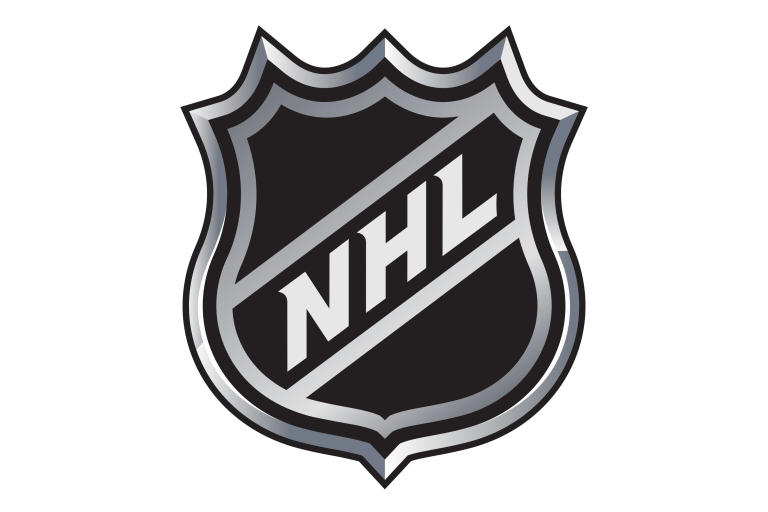
In the world of professional sports, few leagues have cultivated an identity as disciplined and enduring as the National Hockey League. Founded in 1917, the NHL has grown from a small Canadian competition into a binational powerhouse spanning the United States and Canada, representing the highest level of ice hockey in the world.
Unlike leagues that have repeatedly reinvented their visual language, the NHL chose another path. Its logo heritage is built on restraint, continuity, and authority. From its earliest days, the league adopted a crest-like emblem that communicated seriousness, governance, and permanence—values deeply aligned with hockey’s culture and physical intensity.
Meaning and History: The Origin of the NHL (National Hockey League) Logo
The NHL logo origin dates back to the league’s foundation era, when professional sports organizations sought legitimacy and institutional recognition. Rather than opting for playful imagery or literal representations of the sport, the NHL embraced a heraldic shield—an unmistakable symbol of protection, order, and hierarchy.
This choice positioned the league not merely as an entertainment product, but as a governing body with rules, tradition, and authority. The diagonal placement of the “NHL” lettering further reinforced motion and competitiveness, subtly echoing the speed and physicality of the game without depicting players or equipment.
From the outset, the logo was designed to represent the league as a whole, not individual franchises. This neutrality would become a defining strength of the NHL’s visual identity.
NHL Logo History Timeline: Evolution Without Disruption
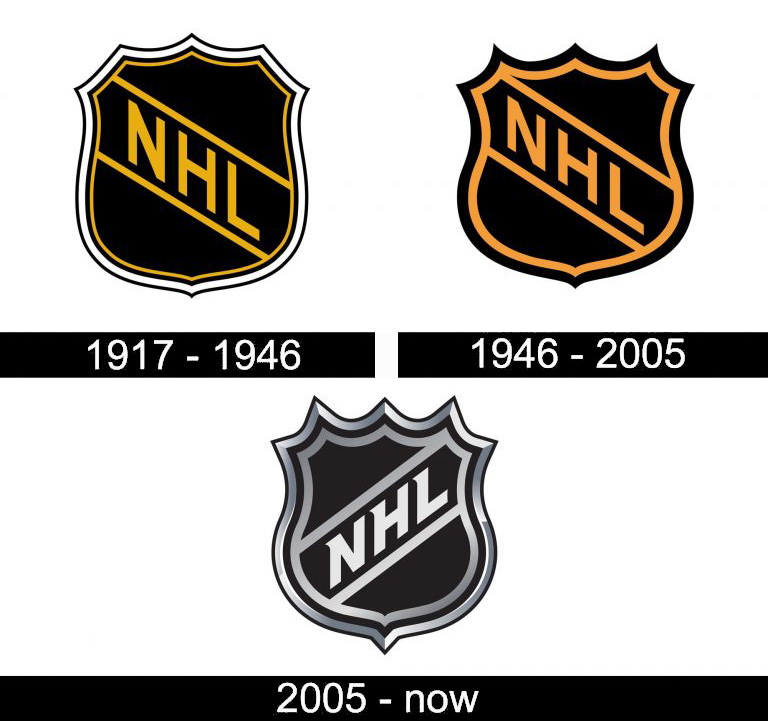
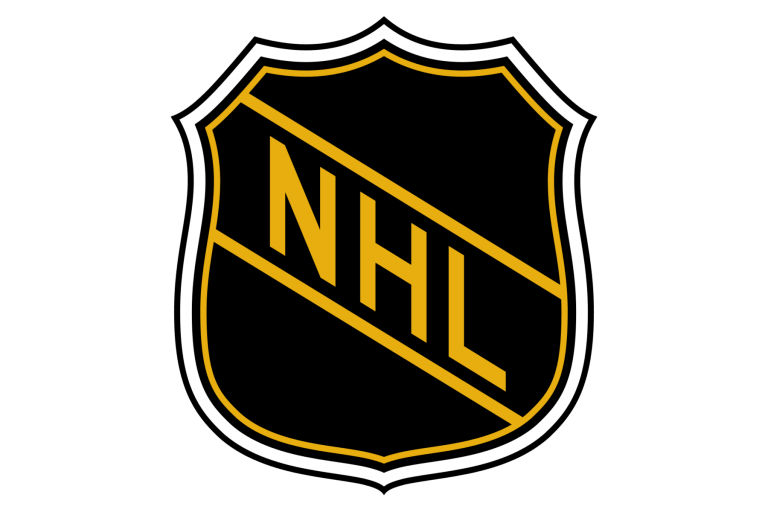
1917–1946: The Foundational Crest
The earliest NHL logo introduced a black shield outlined in white and yellow, with the league’s initials placed diagonally across its face. The wordmark was rendered in yellow, set against a black background, and framed by parallel lines that emphasized structure and order.
The typography was simple and solid, favoring clarity over expression. This version established the core elements that would define the NHL logo for more than a century: the shield, the diagonal lettering, and a restrained color palette.
1946–2005: Strengthened Identity
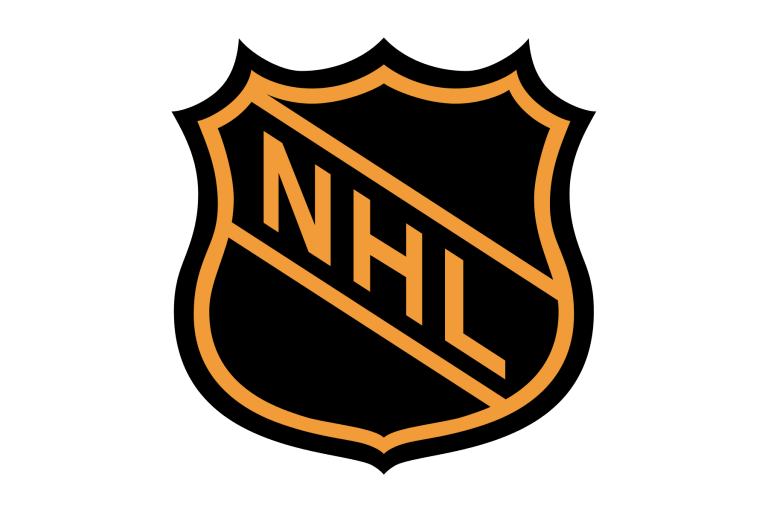
In 1946, the logo underwent its first major refinement. The shield became wider and more compact, while the white outline was removed. The yellow deepened into a richer, almost orange tone, creating a warmer yet more confident contrast against the black background.
The lettering grew bolder and more extended, improving balance and legibility. These changes reflected the league’s post-war growth and its increasing prominence in North American sports, while preserving the emblem’s institutional character.
2005–Today: Modern Authority
The 2005 rebrand marked the most visible evolution in NHL logo history. The traditional yellow was replaced with silver-gray tones, introducing a modern, metallic aesthetic that aligned with contemporary sports branding.
The diagonal direction of the lettering was reversed, now rising from bottom left to top right—a subtle but meaningful change symbolizing progress, momentum, and upward movement. Gradient effects added depth and dimension, giving the shield a glossy, three-dimensional presence suitable for digital and broadcast environments.
Despite these updates, the logo’s core metaphor remained untouched. The shield still dominates. The initials still stand alone. The identity still prioritizes authority over decoration.
National Hockey League Logo Symbolism: The Power of the Shield
The symbolism of the NHL logo is rooted in heraldry. Shields have long represented defense, governance, and legitimacy—qualities essential to a league that oversees competition across borders, franchises, and generations.
The diagonal “NHL” inscription introduces motion and tension, visually cutting across the rigid structure of the shield. This contrast mirrors hockey itself: a fast, aggressive sport governed by strict rules and discipline.
The absence of literal hockey imagery is intentional. By avoiding sticks, pucks, or players, the NHL logo transcends eras and stylistic trends, reinforcing its role as an institution rather than a spectacle.
Typography and Color: Controlled Aggression
The NHL wordmark uses a custom typeface that sits between serif and sans-serif traditions. Each letter features a single serif-like detail, while the remaining strokes remain clean and angular. This hybrid construction reflects hockey’s dual nature—raw physicality contained within precise structure.
Color plays a crucial role in the logo’s meaning. The modern monochrome palette of black, white, and silver communicates seriousness, professionalism, and neutrality. The metallic gray gradients add a contemporary edge without compromising the emblem’s gravitas.
This restrained palette ensures the logo remains adaptable across jerseys, ice surfaces, broadcast graphics, and digital platforms.
NHL Logo Heritage and Institutional Identity
The NHL logo heritage stands as a masterclass in disciplined brand evolution. By committing early to a strong symbolic foundation and refining it carefully over time, the league avoided the pitfalls of over-design and trend chasing.
In a sporting landscape increasingly driven by spectacle and short-term visual reinvention, the NHL logo remains steadfast—a shield that has protected the league’s identity for more than a century. It is not flashy, but it is authoritative. Not decorative, but unmistakable.
FAQ: NHL Logo Meaning and History
What does the NHL logo symbolize?
The NHL logo symbolizes authority, governance, and competitive discipline through its shield-based design.
Why does the NHL logo use a shield?
The shield represents protection, tradition, and institutional legitimacy.
Has the NHL logo changed significantly?
No. The logo has evolved through refinements, but its core structure has remained consistent since the early 20th century.
Why is the NHL logo monochrome today?
The black, white, and silver palette reinforces professionalism, neutrality, and modernity.