
Nestlé Logo History & Bird Symbol Meaning
Few corporate emblems in the world carry as much history, symbolism, and emotional warmth as the Nestlé logo. What began as a simple reference to founder Henri Nestlé’s family name—literally meaning “little nest” in German—has evolved into one of the most recognizable symbols in global food culture. Blending heritage, storytelling, and modern design, the Nestlé logo demonstrates how a visual identity can preserve its soul across nearly 160 years while continually adapting to the digital age.
Today, Nestlé is the world’s largest food and beverage company, with hundreds of brands and a presence in nearly every country. But at the heart of that vast empire remains a comforting image: a mother bird feeding her chicks. This timeless visual—an embodiment of care, nourishment, and family—anchors the company’s rich logo history and enduring brand identity.
A Legacy Begins: Henri Nestlé and the Origins of the Logo
The Nestlé story began in 1867 when Henri Nestlé, a Swiss-German pharmacist, developed “Farine Lactée Henri Nestlé,” an innovative infant cereal that saved the life of a premature child who could not tolerate traditional milk. The success of this formula soon spread across Europe, cementing Nestlé’s reputation for quality and life-saving nutrition.
Inspired by his family coat of arms, Henri Nestlé chose the symbol of a nest with birds as his company’s official emblem. Not only was it a direct reference to his surname—but it was also the perfect metaphor for nourishment, care, and safety, aligning beautifully with a brand built on feeding families.
From the very beginning, Nestlé understood the branding power of emotional symbolism—a principle that shaped the company’s entire logo heritage.
Nestlé Logo Evolution: A Timeline of Meaning and Modernization
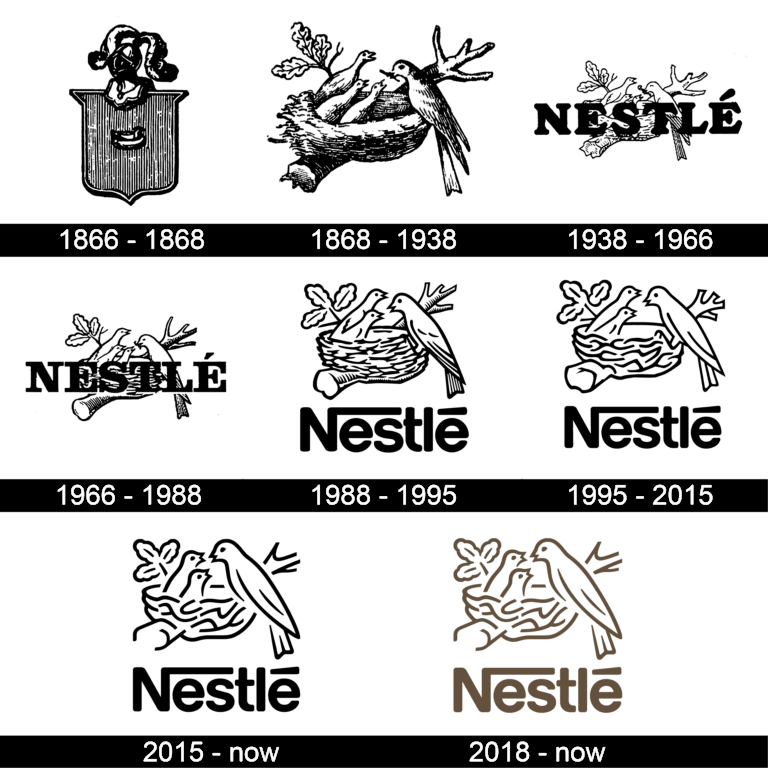
1866–1868: The Original Family Crest
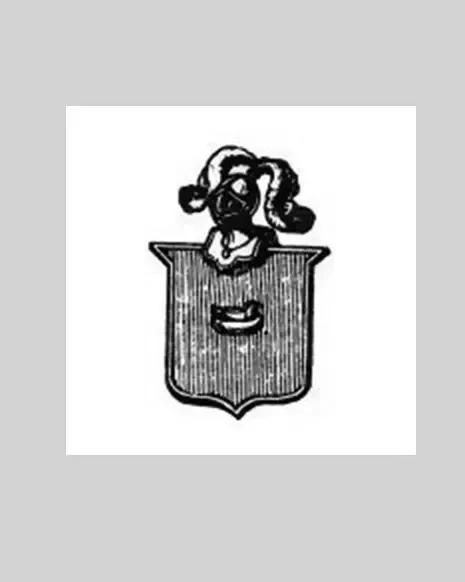
The first Nestlé logo closely resembled the Nestlé family coat of arms:
-
a shield with extended top edges
-
a bird resting in a nest
-
a decorative helmet replacing the traditional crown
This emblem felt formal and heraldic—perfect for its era—but lasted only two years as Nestlé prepared to simplify its identity.
1868–1938: The Nest With Four Birds
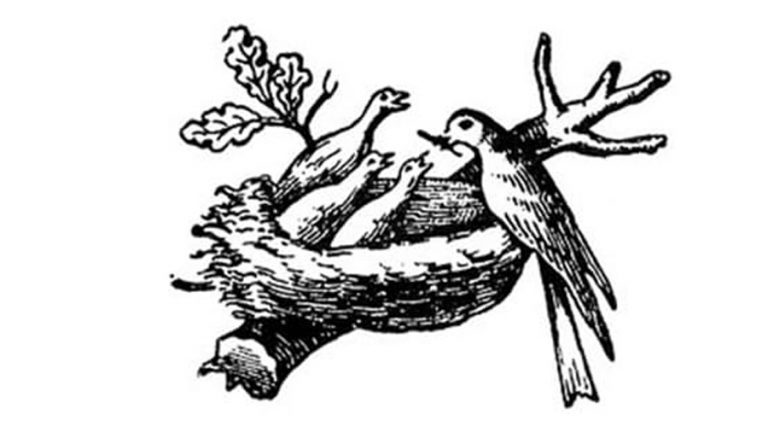
In 1868, Nestlé introduced its first true brand emblem: a detailed illustration of a nest containing a mother bird feeding three chicks. The scene included oak leaves and intricate branches, creating a natural, wholesome aesthetic.
This design remained for seventy years, becoming one of the earliest examples of long-term brand consistency.
1938–1966: The First Modern Wordmark
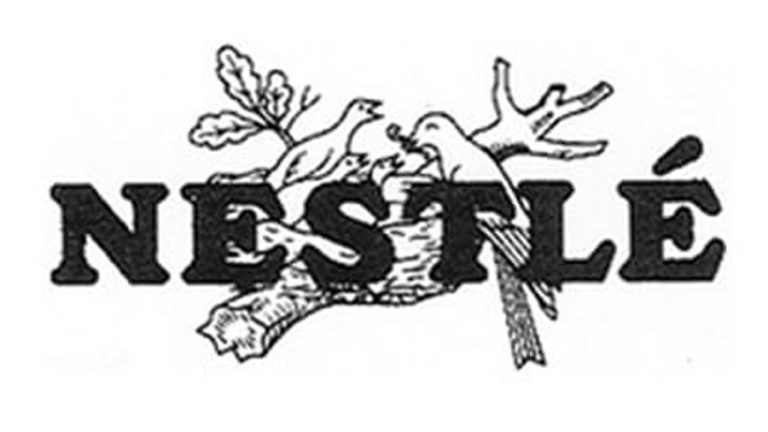
As Nestlé expanded internationally, the logo evolved into a simpler, more versatile form. The company added a bold, clean “Nestle” wordmark above a simplified nest illustration—reducing artistic detail and improving clarity for packaging and print.
This version marked the beginning of Nestlé’s transition from artisanal family brand to global corporation.
1966–1988: Precision and Geometry
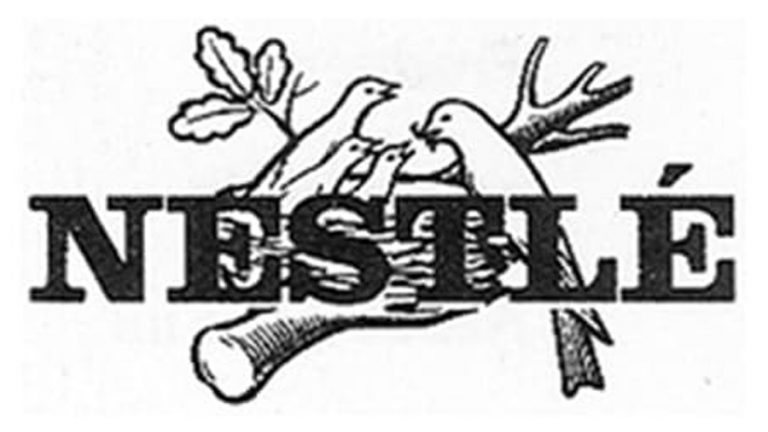
Nestlé refined its typeface again, adopting a sharper, geometric design that reflected the growing scientific and nutritional side of the business. The nest illustration was redrawn with crisp, efficient lines, aligning the brand with modern corporate aesthetics of the 1960s.
1988–1995: Streamlined and Symbolic
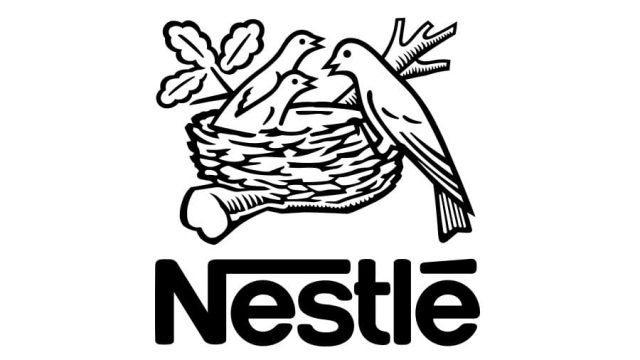
The 1988 redesign stripped away one baby bird, leaving only two chicks and a mother bird. The illustration became more stylized and minimal. The wordmark also evolved:
-
the “N” gained an extended horizontal bar stretching across the top of the word
-
the accent on the final “é” was emphasized using the same bar
This version strengthened brand distinctiveness and modernity.
1995–2015: Cleaner, Bolder, Digital-Ready
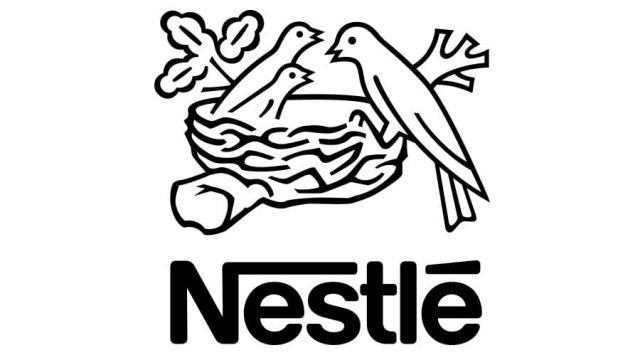
Nestlé refined both the nest and lettering once more in 1995. Lines became smoother, thicker, and more intentional. The birds, branches, and nest were simplified, making the logo easier to reproduce across global packaging and early digital platforms.
This redesign strengthened the logo’s visibility in a fast-expanding global market.
2015–Today: A Balanced, Confident Identity

The 2015 refresh preserved the beloved elements but enlarged the emblem relative to the text, balancing proportions and improving legibility—especially on small screens.
2018–Today: The Chocolate-Toned Evolution
In 2018, Nestlé introduced a warm brownish-gold color palette—a nod to chocolate, cocoa, and the comforting nature of food. The entire logo took on a softer, more emotional tone while remaining crisp and modern.
This latest version seamlessly blends tradition with digital elegance.
Design Analysis: Why the Nestlé Logo Works So Well
The Nest Symbolism
At its core, the Nestlé emblem represents:
-
family
-
nourishment
-
trust
-
care
-
growth
It communicates the company’s mission in one glance: feeding and supporting families worldwide.
The Birds: A Story of Connection
The mother bird feeding her chicks symbolizes nurturing, responsibility, and generational care—values deeply embedded in Nestlé’s brand identity.
Interestingly, the bird is believed to be a thrush (or blackbird), consistent with the Nestlé family’s historical lineage.
The Font: Simple and Recognizable
Nestlé uses a custom sans-serif font that balances friendliness with professionalism.
The stylized “N”—with its extended horizontal bar—creates immediate brand recognition.
The Color Palette: Warm, Trustworthy, Timeless
-
Brown-gold: warmth, flavor, tradition
-
Black-white variants: neutrality, clarity, versatility
Nestlé’s colors embody reliability and comfort.
Consistency With Modern Adaptability
Over nearly 160 years, Nestlé has shown that a logo can evolve repeatedly without losing its core identity—an exemplary case of well-managed logo heritage.
Why the Nestlé Logo Endures
-
Universally understandable symbolism
-
Emotional resonance across cultures
-
A balance of history and innovation
-
Adaptability across packaging, digital media, and global markets
-
A visual narrative aligned with its mission to nourish families
Nestlé’s logo tells a story that transcends language, geography, and time—making it one of the most effective brand emblems ever created.
Conclusion
The Nestlé logo is a masterclass in timeless visual identity. Rooted in the founder’s family crest and imbued with emotional symbolism, it remains one of the most enduring emblems in global branding. Each redesign honors the past while embracing modern design principles, resulting in a logo that feels both historic and forward-looking.
For brands seeking lasting resonance, few examples illustrate logo history and brand storytelling better than the Nestlé emblem—proof that when a symbol reflects authentic values, it can thrive for generations.
FAQ
1. What does the Nestlé logo symbolize?
It represents nourishment, family, and care through the imagery of a mother bird feeding her chicks.
2. Why does Nestlé use birds in its logo?
Because “Nestlé” means “little nest” in German, and the founder’s family crest featured a nest and birds.
3. Why did Nestlé remove one of the baby birds in 1988?
To simplify the design and modernize the emblem for global use, making it cleaner and easier to reproduce.
4. What inspired the brown-gold palette introduced in 2018?
The colors evoke chocolate, warmth, and culinary comfort—core elements of Nestlé’s product universe.
5. Is Nestlé a Swiss or French company?
Nestlé is Swiss, founded by Henri Nestlé—a Swiss-German citizen. Today, it operates as a global corporation.