Motrin Logo History: Meaning, Symbolism & Brand Heritage

In the field of over-the-counter pain relief, visual identity must communicate effectiveness without aggression and reassurance without clinical coldness. Motrin has built its branding around this balance for decades. Known as an ibuprofen-based medication used to treat pain, inflammation, fever, and migraines, Motrin presents itself as reliable, energetic, and approachable. These qualities are clearly reflected in the Motrin logo history, where color and typography work together to soften the perception of pain treatment while maintaining medical credibility.
Unlike strictly prescription-focused pharmaceuticals, Motrin operates in a consumer healthcare space where emotional comfort matters almost as much as efficacy. Its logo meaning aligns with accessibility and everyday relief, positioning the brand alongside identities such as Advil logo history and Tylenol logo heritage, where clarity and warmth play a central role in consumer trust.
Meaning and History: The Origin of the Motrin Identity
Motrin is based on ibuprofen, a nonsteroidal anti-inflammatory drug widely used for pain management and inflammation control. Over time, Motrin became associated with relief from headaches, muscle pain, arthritis, and fever, making it a staple in household medicine cabinets.
The brand is manufactured and distributed by Johnson & Johnson, a company with deep roots in consumer healthcare and pharmaceutical manufacturing. This corporate background shaped Motrin’s identity strategy. The brand needed to feel medically reliable while remaining friendly and non-intimidating for everyday users.
From its early years, Motrin adopted a text-based logo that avoided complex symbolism. Instead, it relied on color psychology and typographic clarity to communicate its purpose quickly and effectively.
Motrin Logo History Timeline
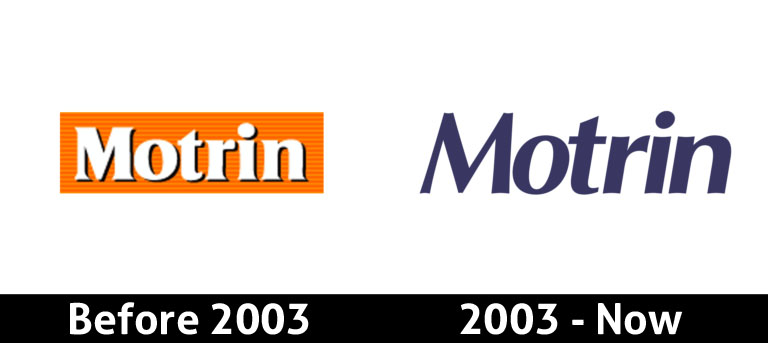
Before 2003: Functional Simplicity and Early Recognition.
Prior to 2003, Motrin’s logo followed a straightforward pharmaceutical approach. The wordmark appeared in a clean sans-serif style, focusing on legibility and practicality rather than emotional expression. Color usage during this period varied across applications, but the identity remained restrained and utilitarian, reflecting Motrin’s positioning as a dependable pain relief option.
This early phase prioritized function over brand personality, aligning with the expectations of consumers seeking proven medication rather than lifestyle branding.
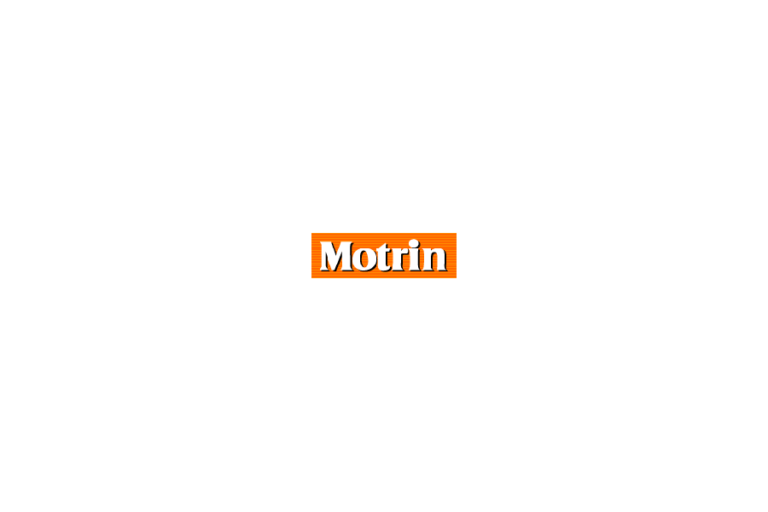
2003–Today: Energy, Warmth, and Consumer Accessibility.
In 2003, Motrin introduced a refreshed logo that added emotional clarity without abandoning simplicity. The updated wordmark adopted a slightly italicized sans-serif typeface, introducing a sense of motion and forward momentum that subtly suggests fast-acting relief.
Color became a defining feature of the new identity. Orange and white emerged as the core palette, symbolizing energy, optimism, and approachability. In packaging applications, the logo often appears in bright blue lettering with white or silver taglines, depending on the product variation. This flexibility allows Motrin to adapt visually across different formulations while maintaining brand consistency.
The spacing between letters is carefully balanced, giving the wordmark a compact yet breathable appearance. This design choice reinforces stability while keeping the logo friendly and modern.
Logo Symbolism: Relief, Energy, and Approachability
Motrin logo symbolism relies heavily on color and motion rather than imagery. The italicized letterforms introduce a sense of action and responsiveness, aligning with the brand’s promise of effective pain relief.
Orange plays a key symbolic role. Unlike the blues and greens common in pharmaceutical branding, orange conveys warmth, vitality, and positivity. It helps reduce the emotional weight often associated with pain medication, reframing Motrin as a supportive, everyday solution rather than a last resort.
The absence of icons or medical symbols reinforces simplicity and trust. The logo communicates directly, allowing the brand name itself to carry authority.
Typography and Color as Brand Signals
Typography defines the Motrin logo description. The italicized sans-serif typeface features clean, traditional letterforms with smooth contours. This ensures high legibility across packaging, advertising, and digital environments while maintaining a modern tone.
The color palette is intentionally energetic. Orange and white dominate the core identity, with blue and occasional pink accents appearing on specific product lines. Blue reinforces trust and medical reliability, while pink and other accent colors allow differentiation within the product family without diluting brand recognition.
Conclusion: Motrin Logo Heritage and Consumer Confidence
The Motrin logo history demonstrates how a pharmaceutical brand can evolve visually to meet consumer expectations without sacrificing credibility. By introducing warmth, motion, and color into a minimalist framework, Motrin strengthened its logo heritage as an approachable yet effective pain relief brand.
Within the broader landscape of consumer healthcare logo heritage, Motrin stands as an example of how thoughtful design can reduce anxiety and reinforce trust. Its logo heritage shows that in pain relief branding, reassurance is as important as efficacy. Readers interested in similar identity strategies may also explore Advil logo history and Aleve logo heritage, where color and typography play equally important roles.
FAQ: Motrin Logo Meaning and History
What does the Motrin logo represent?
The Motrin logo represents energy, relief, and approachability through italicized typography and a warm color palette.
Why does Motrin use orange in its logo?
Orange symbolizes vitality, optimism, and friendliness, helping reduce the emotional weight associated with pain medication.
Has the Motrin logo changed over time?
Yes. The logo was refreshed in 2003, introducing a more energetic color palette and italicized typography while retaining simplicity.
Who manufactures the Motrin brand?
Motrin is manufactured and distributed by Johnson & Johnson.