
McLaren Logo History: Meaning, Symbolism & Brand Heritage

Few automotive brands manage to combine motorsport heritage, cutting-edge engineering, and refined visual identity as successfully as McLaren. Founded in 1963 by legendary New Zealand racing driver Bruce McLaren, the brand has evolved from a small racing team into one of the most respected manufacturers of high-performance sports cars in the world. Today, the McLaren name is synonymous with speed, precision, innovation, and exclusivity.
Beyond its technological achievements, McLaren’s visual identity has played a crucial role in shaping the brand’s global perception. The McLaren logo history reflects the company’s journey from grassroots racing to a luxury automotive powerhouse. Each redesign captures a specific era in the brand’s evolution, carefully balancing heritage with progress. From the early kiwi-inspired crests to the modern Speedmark, McLaren’s logo heritage is a story of refinement, symbolism, and purposeful minimalism.
Meaning and History of the McLaren Logo
The history of the McLaren logo is deeply connected to the personality and origins of its founder. Bruce McLaren was not only a gifted engineer and racing driver but also a proud New Zealander, and this identity strongly influenced the earliest versions of the brand’s visual language.
In its early decades, McLaren experimented with detailed heraldic emblems that communicated racing pedigree and national pride. Over time, as the company grew internationally and entered the luxury automotive sector, the logo was simplified and modernized. The evolution reflects McLaren’s shift from a racing-focused organization to a global brand where clarity, recognizability, and aerodynamic symbolism became essential.
McLaren Logo Evolution Timeline
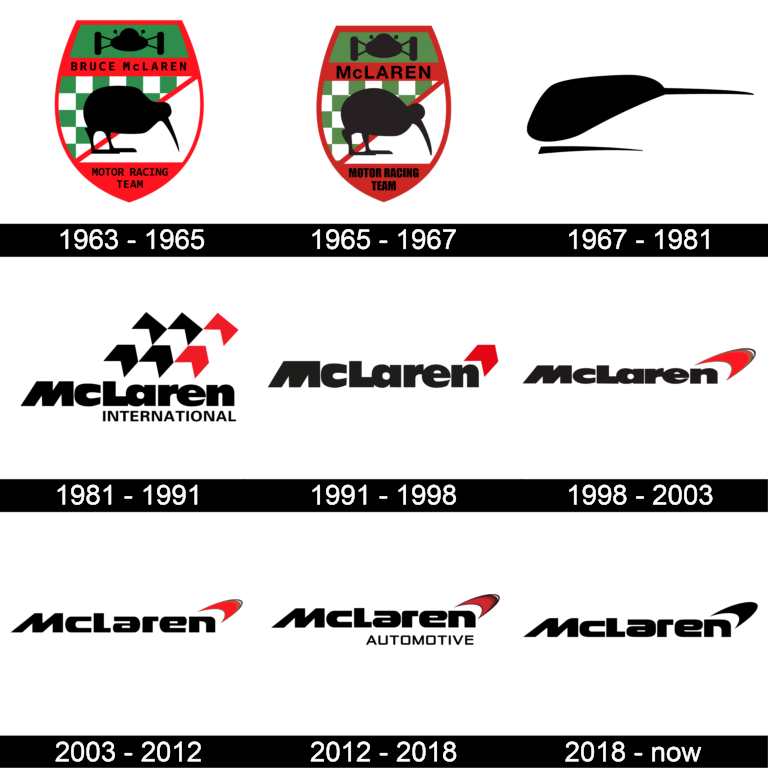
1963–1965: The Heraldic Racing Crest
The original McLaren logo, introduced in 1963, featured a traditional shield-shaped emblem rich in detail and symbolism. The design included a black kiwi bird silhouette, a direct reference to Bruce McLaren’s New Zealand roots. The crest also incorporated racing elements such as a checkered flag motif and a stylized race car silhouette at the top, reinforcing the brand’s motorsport origins.
This logo reflected the aesthetics of classic racing teams of the era, emphasizing craftsmanship, tradition, and competitive spirit.
1965–1967: Refinement of the Crest Identity
In the mid-1960s, the McLaren logo retained its crest-based structure but underwent refinement. The colors became more balanced, and the overall composition appeared cleaner and more confident. The kiwi bird remained central, continuing to symbolize national pride and the founder’s identity, while the emblem increasingly emphasized professional motorsport credibility.
1967–1981: The “Speedy Kiwi” Era
A major shift occurred in 1967 with the introduction of the iconic “Speedy Kiwi” emblem. The detailed crest was replaced by a stylized, abstract kiwi bird rendered in a minimalist and aerodynamic form. This design marked McLaren’s transition into a more modern visual language.
The Speedy Kiwi became a powerful symbol of speed, agility, and innovation. Its sleek silhouette worked exceptionally well in racing contexts and established a strong emotional link between McLaren’s heritage and its competitive ambition.
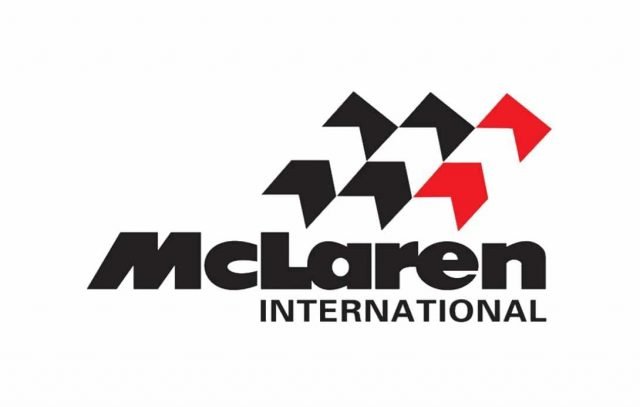
1981–1991: Wordmark and Checkered Flag Influence
In 1981, McLaren introduced a bold wordmark combined with a stylized checkered flag emblem. Designed during a period of strong commercial growth and sponsorship influence, this logo reflected professionalism and global expansion.
The checkered flag symbolized racing victory and endurance, while the heavy wordmark projected authority and confidence. This era coincided with McLaren’s rise as a dominant force in Formula One.
1991–1998: The Red Chevron Transition
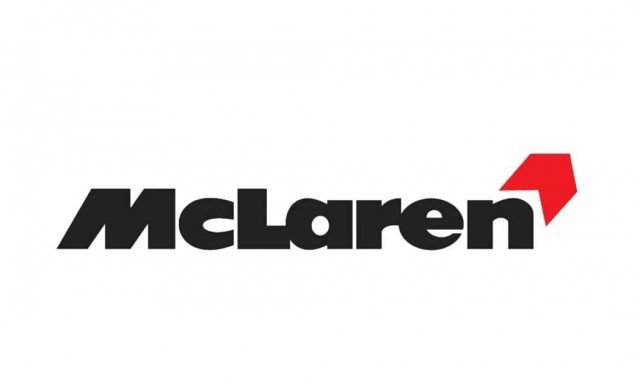
The early 1990s saw the replacement of the checkered flag with a sharp red chevron. This simplified geometric shape introduced a sense of forward motion and aggression, aligning with McLaren’s competitive mindset during a highly successful period in motorsport.
The chevron also marked a visual bridge between the heritage-driven logos and the modern Speedmark that would follow.
1998–2003: Birth of the Speedmark
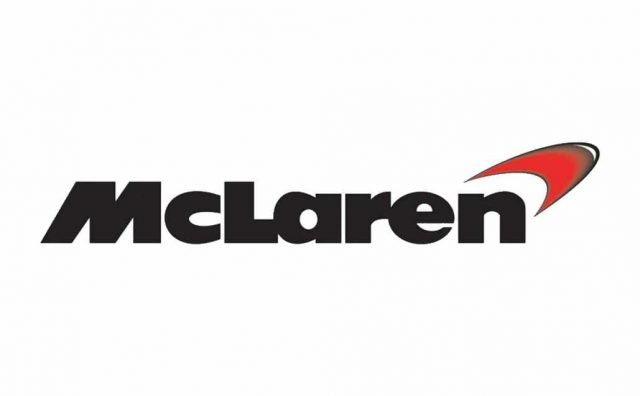
In 1998, McLaren unveiled the Speedmark, a smooth, swooping symbol that replaced the rigid chevron. This design emphasized fluidity, aerodynamics, and speed. The Speedmark quickly became one of the most recognizable automotive emblems in the world.
Paired with a refined wordmark, the logo achieved a balance between technological sophistication and visual elegance.
2003–2012: Typography-Driven Modernization
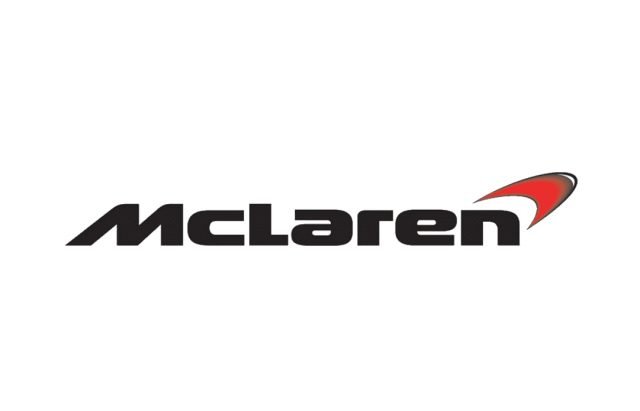
The 2003 update focused primarily on typography. The wordmark adopted a more futuristic sans-serif style, with subtle motion implied through letterforms. The Speedmark remained intact, reinforcing brand continuity while allowing the typography to evolve.
This period coincided with McLaren’s expansion into road cars and the development of its luxury automotive identity.
2012–2018: Framed Precision and Brand Discipline
In 2012, McLaren introduced a rectangular framing system around the logo in certain applications. This refinement added structure and consistency across digital and physical environments, reinforcing the brand’s premium positioning.
The visual identity during this era emphasized restraint, precision, and technological excellence.

2018–Today: Pure Speedmark Minimalism
The current McLaren logo represents the culmination of decades of refinement. The wordmark is clean, confident, and modern, while the Speedmark hovers above the lettering as a symbol of motion and innovation.
The minimalist approach reflects McLaren’s maturity as a luxury performance brand, where every line serves a purpose and nothing is decorative without meaning.
McLaren Logo Symbolism
At the heart of the McLaren logo meaning lies the Speedmark. This abstract shape has multiple interpretations, all connected to speed, motion, and engineering excellence. Some see it as a stylized kiwi bird in flight, preserving a subtle link to Bruce McLaren’s heritage. Others interpret it as an aerodynamic vortex, inspired by airflow patterns studied in McLaren’s wind tunnels.
The Speedmark also resembles a dynamic arc or a racing trajectory, symbolizing forward momentum and constant innovation. Its placement above the wordmark reinforces the idea of performance leading identity, not the other way around.
Typography and Color in the McLaren Logo
The McLaren wordmark is executed in a custom sans-serif typeface designed to convey speed, precision, and modernity. The letterforms are confident and balanced, avoiding unnecessary embellishments while remaining distinctive.
Color plays a restrained yet powerful role in McLaren’s visual identity. Black and white dominate the core logo, emphasizing sophistication, focus, and technical clarity. The occasional use of papaya orange pays homage to McLaren’s racing heritage and adds emotional warmth without compromising elegance.
This controlled palette ensures maximum versatility across racing liveries, luxury showrooms, and digital platforms.
A Logo Built for Speed and Legacy
The McLaren logo heritage is a masterclass in evolutionary branding. Rather than reinventing itself with every era, McLaren has refined a core idea rooted in speed, innovation, and respect for its origins. From the early kiwi crests to the modern Speedmark, each version of the logo reflects the brand’s ability to adapt without losing its identity.
Today, the McLaren logo stands as a symbol of engineering excellence, racing DNA, and timeless design. It is not merely a badge but a visual expression of motion, ambition, and precision—qualities that define McLaren both on the track and on the road.
FAQ: McLaren Logo Meaning and History
What does the McLaren logo mean?
The McLaren logo represents speed, motion, and innovation. Its iconic Speedmark symbolizes aerodynamic efficiency and forward momentum, while subtly referencing the brand’s racing heritage.
Is the McLaren logo based on a kiwi bird?
Yes, the earliest McLaren logos featured a kiwi bird in honor of founder Bruce McLaren’s New Zealand origins. The modern Speedmark is often seen as an abstract evolution of that symbol.
When was the Speedmark introduced?
The Speedmark first appeared in 1998, evolving from earlier chevron-based designs and becoming the defining element of McLaren’s modern visual identity.
Why is the McLaren logo so minimal today?
Minimalism reflects McLaren’s focus on performance, engineering precision, and luxury. A clean logo ensures clarity and timelessness across all platforms.
Is McLaren related to Ferrari?
No, McLaren and Ferrari are separate companies. McLaren is a British brand founded in 1963, while Ferrari is an Italian manufacturer established earlier.