
Lufthansa Logo History: Meaning, Symbolism & Brand Heritage
Within global aviation logo history, few identities are as enduring and instantly recognizable as that of Deutsche Lufthansa AG. As Europe’s largest airline by fleet size and one of the founding members of Star Alliance, Lufthansa has built its reputation on precision, reliability, and disciplined continuity. Unlike airlines that frequently reinvent their visual language, Lufthansa’s identity has evolved through refinement rather than reinvention, preserving one of the most iconic symbols in commercial aviation.
Much like the consistency-driven evolution seen in United Airlines logo history and the heritage-focused restraint explored in Alaska Airlines logo heritage, Lufthansa demonstrates how long-term trust can be built through visual stability. Within airline logo heritage, the Lufthansa crane stands as a rare example of a symbol that transcended generations, technologies, and branding trends without losing relevance.
Meaning and History: The Origin of the Lufthansa Logo
The Lufthansa logo traces its origin back to 1918, when German graphic designer Otto Firle created a stylized crane emblem for Deutsche Luft-Reederei, the first German airline. The crane was chosen deliberately, symbolizing elegance, vigilance, and longevity—qualities associated with both aviation safety and cultural symbolism across Europe and Asia.
Although Deutsche Luft Hansa was liquidated in 1951, its name and emblem were acquired in 1954 by Luftag, a newly founded German airline. The adoption of the crane and the Lufthansa name was a strategic decision, designed to establish continuity with Germany’s aviation heritage even though Luftag was not the legal successor. This act cemented the crane as the foundation of Lufthansa’s logo meaning and long-term brand identity.
Lufthansa Logo History Timeline
1953–1963: Postwar Identity and National Confidence
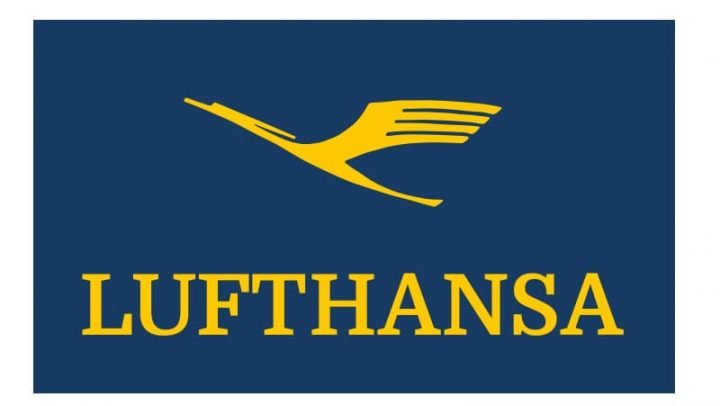
Lufthansa officially formed in 1953 and introduced its first logo that same year. The design featured a yellow crane positioned above a matching yellow wordmark, both placed on a dark blue rectangular background. The typography appeared in all capitals and employed a strong serif typeface with elongated serifs and confident strokes.
The color palette carried deep symbolism. Yellow communicated progress, creativity, and optimism, while dark blue conveyed reliability, calmness, and authority. This logo description reflected postwar Germany’s ambition to reestablish trust and technical excellence in civil aviation.
1963–2018: Corporate Modernism and Global Authority
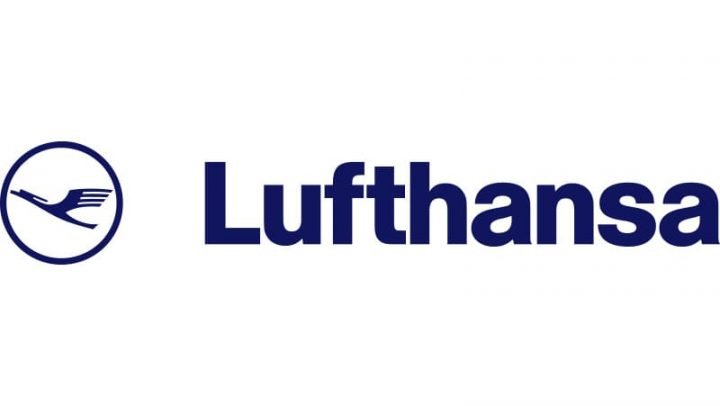
The 1963 redesign marked a significant structural refinement while preserving the iconic crane. The bird was enclosed within a circular frame and positioned to the left of the wordmark, which now appeared in title case. The palette shifted decisively to blue and white, creating a cleaner and more international appearance.
Typography transitioned to a bold sans-serif typeface resembling Helvetica and Sequel Sans, emphasizing clarity, neutrality, and professionalism. This period solidified Lufthansa’s visual authority and aligned the brand with modernist corporate design principles, reinforcing its reputation for German engineering and operational precision.
2018–2025: Precision Refinement and Contemporary Elegance
In 2018, Lufthansa introduced a subtle yet highly deliberate update designed by Ronald Wild. The circular frame became thinner, while the crane’s lines were refined for greater elegance and legibility in digital environments. The wordmark shifted from Helvetica to a custom sans-serif typeface, maintaining familiarity while adding a distinct proprietary character.
The traditional blue-and-yellow combination was retired in favor of blue-on-white, monochrome, and white-on-yellow variants. This change modernized the brand while preserving its disciplined visual language.

2025–Today: Symbol Autonomy and Unified Brand System
The most recent update removed the circular frame entirely, allowing the crane to stand alone. This decision simplified application across aircraft liveries, mobile interfaces, airport signage, and partner services. While the crane itself remained unchanged, its newfound autonomy reflects Lufthansa’s confidence in the symbol’s standalone recognition.
This evolution supports a unified visual system across Lufthansa Group’s airlines and services, reinforcing cohesion while maintaining heritage.
Logo Symbolism: The Crane as an Aviation Icon
The symbolism of the Lufthansa logo is inseparable from the crane. Universally associated with longevity, wisdom, and vigilance, the bird embodies the airline’s commitment to safety and reliability. Its upward flight posture suggests progress and aspiration, while its restrained execution reflects discipline and precision.
Unlike literal aviation imagery, the crane operates as a metaphor rather than an illustration. Within logo symbolism analysis, it represents one of the earliest and most successful examples of abstract branding in aviation history.
Lufthansa Logo History and Enduring Visual Authority
The Lufthansa logo history demonstrates the power of disciplined continuity. Across more than seven decades, the airline refined its visual identity without compromising its core symbol. Each update responded to technological and cultural shifts while preserving the crane’s integrity and meaning.
Today, the Lufthansa logo stands as a benchmark in airline logo heritage. Its timeless symbolism, restrained typography, and strategic evolution reflect an airline that understands branding not as decoration, but as a long-term expression of trust, responsibility, and excellence.
FAQ: Lufthansa Logo Meaning and History
Why is the Lufthansa logo a crane?
The crane symbolizes elegance, vigilance, and longevity, qualities associated with safety and reliability in aviation.
Who designed the Lufthansa crane logo?
The crane was designed in 1918 by German graphic designer Otto Firle.
Has the Lufthansa logo changed often?
No, Lufthansa has maintained its core symbol with only a few refinements over decades.
What does the removal of the circle mean in the current logo?
It reflects confidence in the crane as a standalone symbol and improves adaptability across digital and physical platforms.