
Lipton Logo History: Meaning, Symbolism & Brand Heritage
Lipton is one of the most globally recognized tea brands, a name that has become synonymous with warmth, comfort, and everyday ritual. Founded in the early 1870s by Sir Thomas Lipton, the company began as a grocery business before introducing its first branded tea in 1890. From that moment on, Lipton reshaped how tea was marketed, packaged, and perceived, transforming a simple beverage into a universal symbol of relaxation and connection.
The Lipton logo history reflects more than a century of branding discipline. Few consumer brands have managed to preserve such a consistent visual identity while continuously adapting to new eras, technologies, and consumer expectations. Through color, typography, and symbolism, Lipton has built a powerful logo heritage rooted in optimism, accessibility, and trust.
Meaning and History of the Lipton Logo
From its earliest days, Lipton understood the emotional power of branding. Sir Thomas Lipton was one of the first entrepreneurs to recognize that typography, color, and packaging could influence consumer trust and loyalty. This insight placed Lipton at the forefront of modern marketing long before branding became a formal discipline.
The Lipton logo meaning has always revolved around warmth, joy, and stability. The consistent use of yellow and red established an immediate emotional connection, evoking sunshine, hospitality, and energy. Over time, the logo evolved in form, but its underlying message remained unchanged. Lipton’s logo heritage is defined by continuity, clarity, and emotional resonance.
Lipton Logo Evolution Timeline

1890 – A Bold Banner for a New Kind of Tea Brand
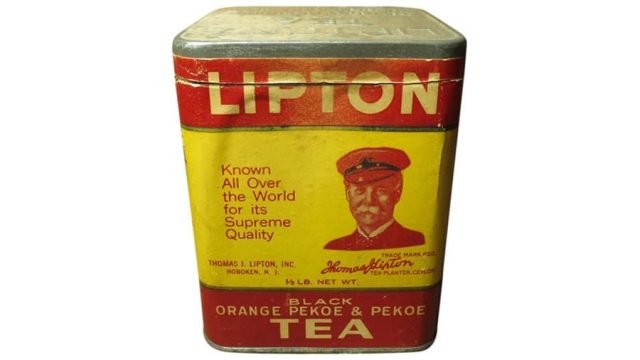
The first Lipton logo, introduced in 1890, featured a red rectangular banner with yellow uppercase sans-serif lettering. The typeface was bold and geometric, ensuring strong legibility on packaging and storefronts. The banner was placed on a yellow background, reinforcing warmth and visibility.
On early tea packages, the logo was often accompanied by a red portrait of Sir Thomas Lipton and additional text highlighting product quality. This design reflected both trust and innovation, marking one of the earliest examples of deliberate brand identity in the food industry.
1972 – The Birth of the Iconic Curved Medallion
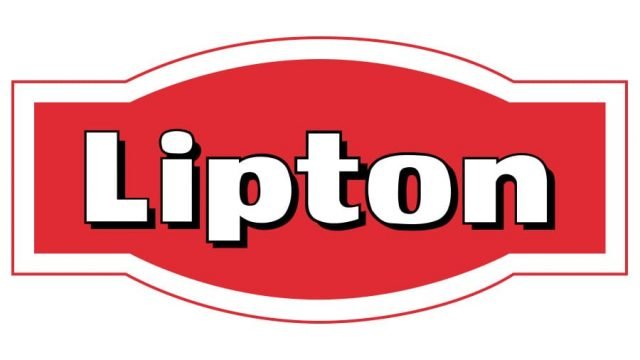
In 1972, Lipton introduced the logo that would define the brand for generations. The rectangular banner evolved into a horizontally stretched red medallion with gently arched top and bottom edges. A double outline framed the shape, consisting of a thick white border enclosed by a thin red line.
The wordmark was rewritten in title case, rendered in a clean sans-serif typeface with black outlines and subtle shadowing. Although yellow no longer appeared directly within the badge, the logo was consistently placed on bright yellow packaging, preserving the brand’s established color identity.
1992 – Softer Typography and Internal Yellow Accents
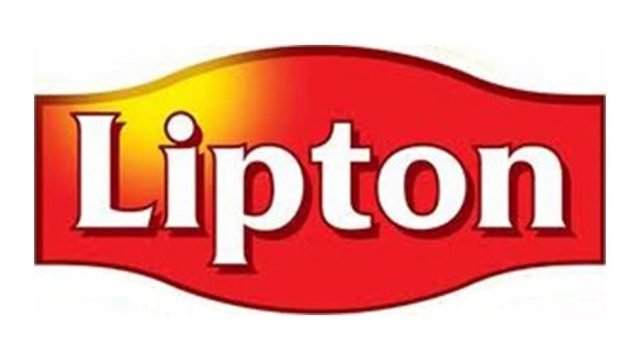
The 1992 refinement focused on softening the logo’s appearance. The white space around the red medallion was removed and replaced with a yellow outline inside the badge. The typography adopted smoother curves, giving the wordmark a friendlier and more approachable feel.
Black outlines were minimized in favor of gentle shading, reducing visual harshness while maintaining clarity. This iteration reinforced the Lipton logo meaning by emphasizing warmth and familiarity.

2002 – A Glossy, Dimensional Update
In 2002, the Lipton logo gained a more contemporary and polished look. The double outline was replaced with a thin black contour, and the red background introduced subtle gradient shading, creating a three-dimensional, glossy effect.
Both the wordmark and medallion were refined, balancing sleek curves with sharp angles. When placed on packaging, the logo was often underlined by a smooth gold curve that echoed the shape of the emblem, adding a sense of premium quality while remaining accessible.
2014 – A Sunlit Identity Focused on Emotion
The 2014 redesign introduced notable changes to both typography and structure. The wordmark adopted a typeface with faint, delicate serifs combined with rounded strokes, blending tradition with softness.
The black outline around the red badge was replaced with white, and the logo was placed on a gradient yellow circular background resembling a radiant sun. This update strengthened Lipton’s emotional branding, reinforcing associations with warmth, friendship, and optimism.
2025 – Today: A Progressive Yet Familiar Evolution
The 2025 redesign modernized the Lipton logo while carefully preserving its iconic elements. The red banner became sleeker, featuring brighter and more dynamic gradient tones. The most significant change occurred in the typography, which was rewritten in uppercase using a more geometric sans-serif typeface.
This update gave the logo a more contemporary and professional appearance while maintaining instant recognizability. The result is a refined expression of Lipton’s logo heritage, balancing progress with emotional continuity.
Lipton Logo Symbolism
Symbolism has always been central to the Lipton logo meaning. Early brand imagery featured yellow silhouettes of tea clippers, the sailing ships that transported tea from Ceylon to the United Kingdom, alongside a small sun symbol. These elements represented freshness, global trade, and optimism.
Over time, the sun evolved into the brand’s dominant symbol. Today, the radiant solar disc behind the logo has soft, diffused boundaries that blend into the packaging itself. For consumers, especially in regions with colder or cloudier climates, this imagery evokes warmth, comfort, and reliability. The sun remains the emotional anchor of Lipton’s logo heritage.
Typography and Color
Typography has played a crucial role in Lipton’s identity since its inception. Sir Thomas Lipton was among the first brand founders to commission a custom typeface specifically for packaging. The goal was to achieve a balance between conservatism and modernity, avoiding both rigidity and excessive ornamentation.
While the Lipton typeface has evolved over more than a century, its character has remained consistent. Rounded forms, confident strokes, and high legibility define the wordmark across generations.
Color is equally fundamental. Yellow symbolizes sunshine, joy, and warmth, while red conveys energy, passion, and confidence. Together, these colors form one of the most emotionally powerful palettes in consumer branding, making Lipton instantly recognizable worldwide.
Lipton and the Power of Timeless Logo Heritage
The Lipton logo history demonstrates how visual consistency can build extraordinary global recognition. By evolving carefully rather than reinventing aggressively, Lipton preserved its emotional core while remaining relevant across generations.
As a masterclass in logo heritage, Lipton proves that color psychology, thoughtful typography, and symbolic clarity can create a brand identity that transcends markets and cultures. Its logo continues to represent warmth, trust, and everyday comfort on a truly global scale.
Lipton Logo FAQ
What does the Lipton logo represent?
The Lipton logo represents warmth, joy, and reliability, using sun-inspired symbolism and vibrant colors to evoke positive emotion.
Why does Lipton use red and yellow in its logo?
Red symbolizes energy and passion, while yellow represents sunshine, warmth, and happiness.
When was the first Lipton logo introduced?
The first Lipton logo was introduced in 1890, alongside the brand’s initial tea products.
What is the sun symbol in the Lipton logo?
The sun symbolizes warmth, comfort, and optimism, reflecting the emotional experience of drinking tea.
Has the Lipton logo changed much over time?
While the logo has been refined several times, its core colors, symbolism, and emotional meaning have remained consistent.