LEGO Logo History: Meaning, Symbolism & Brand Heritage
Few marks in modern branding carry as much emotional weight and cultural permanence as the LEGO logo. Synonymous with imagination, modular play, and the universal joy of creative building, LEGO’s iconic red square and rounded lettering stand among the most recognizable symbols in global consumer culture. Yet this timeless emblem is not the product of a single design decision, but rather the culmination of nearly a century of refinement, experimentation, and an unwavering commitment to the spirit of “Leg Godt”—the Danish phrase meaning “play well,” from which the brand takes its name.
Founded in 1932 in Billund, Denmark, LEGO began as a humble workshop making wooden toys. By 1949, the company shifted toward the plastic interlocking bricks that would transform it into a worldwide cultural phenomenon. Throughout this evolution, the LEGO logo served as the thread stitching together eras of craft, creativity, and innovation, capturing the brand’s identity with extraordinary consistency and charisma.
What follows is a detailed exploration of the LEGO logo’s evolution: its shifting shapes, typography, color systems, and the deeper meaning woven through each design.
Logo History and Evolution Timeline: LEGO’s Visual Identity Through the Decades
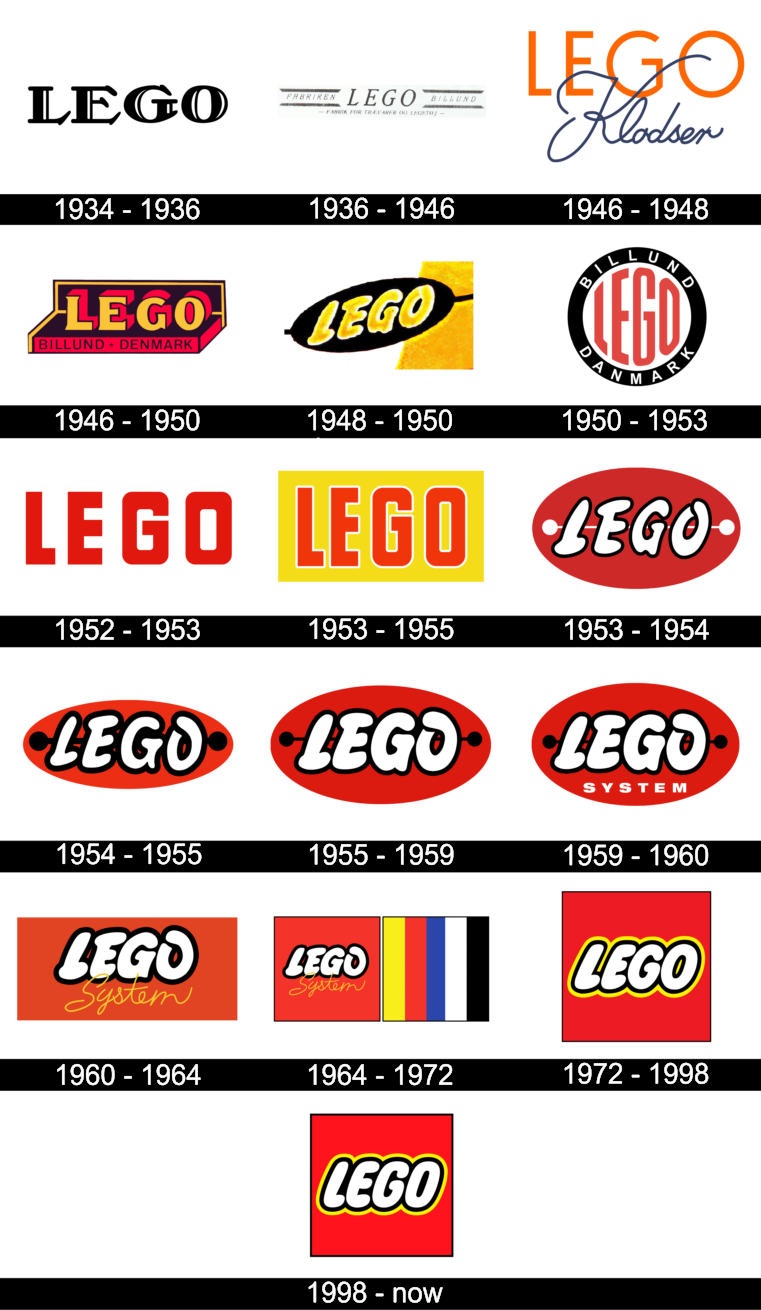
1934–1936: The First Official LEGO Wordmark
The first formal LEGO logo emerged as a bold, serif wordmark set in all capitals. Sculpted with thick vertical strokes and distinctly angled serifs, it announced the company with confidence and craftsmanship, reflecting the precision of traditional woodworking. This monochrome insignia appeared primarily on official documentation and business materials, hinting at a young company establishing its footing but not yet focused on retail presence.

1936–1946: A Delicate Script for Wooden Toys
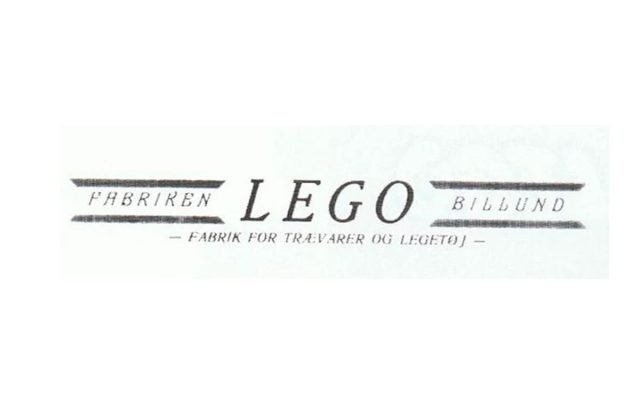
As LEGO began marking its wooden toys, the logo shifted into a light, italic script positioned between two fine horizontal lines. The words “Fabriken Billund” anchored the mark, tying the brand to its modest factory roots. The softened, handwritten style embodied warmth and artisanal touch—qualities essential during the brand’s early years.
1946–1950: Introducing Color and Modernity
With the post-war diversification of products, LEGO introduced its first color logo in 1946. Set in orange and black, the new emblem distinguished “LEGO” in clean sans-serif lettering, accented by a flowing cursive “Klodster.” The pairing of typography signaled the company’s transition toward more sophisticated industrial production.
During this same period, LEGO also experimented with a three-dimensional wordmark displayed atop a stylized pedestal in brown and black. Designed specifically for wooden toys, it resembled packaging signage and reflected LEGO’s growing ambition in retail design.
1948–1950: The First Rounded LEGO Letters
By 1949, LEGO unveiled a crucial precursor to its modern identity: a bold yellow wordmark contained within a black oval. Although simple, its thick rounded letters established a typographic direction that would eventually define the brand for generations.
1950–1953: Embracing the Block Era
With plastic bricks entering the product line, LEGO’s logo transformed once again. The 1950s emblem introduced a white circular medallion with “Billund Denmark” around the edge and a lively red “LEGO” wordmark at its center. This marked the company’s shift from wooden toys to modular plastic play—and brought the brand closer to the aesthetic we know today.
1952–1955: Toward a Friendlier, Rounder LEGO
In the early fifties, LEGO tested several geometric sans-serif interpretations of its name. Some versions were stark red wordmarks; others featured yellow rectangles or more stylized italic letterforms placed on red ellipses. These experiments in weight, shape, and outline reflect a company seeking visual clarity and universal appeal without losing charm.
1955–1959: The Birth of an Iconic Emblem
A pivotal moment arrived with the 1955 redesign. LEGO introduced its now-classic white letters outlined in black, resting inside a bright red horizontal oval. To each side of the main wordmark sat a thin line ending in circular dots—an abstract detail often interpreted as a toy button or connector. This was the first truly iconic LEGO logo: bold, playful, instantly identifiable.
By 1959, the addition of “System” beneath the main wordmark reflected LEGO’s strategic shift to modular construction sets, reinforcing the idea of interconnected play.
1960–1964: From Oval to Square
Around 1960, LEGO transitioned the oval into a rectangular frame with tightly spaced letters and a yellow cursive “System” below. It was an evolutionary step toward the square badge that would ultimately define the brand.
1964–1972: The Multicolor Era
One of the most vibrant chapters in LEGO’s visual history arrived in 1964. The logo was divided into two vertical squares: one red with the LEGO wordmark and another filled with multicolored vertical stripes. It was a celebration of creativity, variety, and childhood joy—perfectly aligned with the expanding universe of LEGO bricks.
1972–1998: The Modern LEGO Square Takes Shape
In 1972, LEGO settled into the familiar red square that remains foundational today. The wordmark appeared in rounded white letters outlined in black and yellow, projecting energy and warmth. The friendly curves echoed the soft geometry of LEGO bricks themselves, creating a cohesive visual language across packaging and marketing.
1998–Today: Refinement of a Global Icon
The 1998 update was subtle but essential. The letters were tightened, the spacing refined, and the proportions balanced. The palette—red, yellow, black, and white—remained untouched, preserving the emotional resonance of a logo long rooted in childhood memory. The result is one of the most enduring and universally recognized marks in modern branding.
Meaning & Symbolism: Why the LEGO Logo Works
The LEGO logo is a masterclass in emotional design. More than a brand signature, it is a promise of imagination and play. Its rounded architecture mirrors the physical feel of LEGO bricks, while its bright color system evokes happiness, creativity, and accessibility.
At its thematic core lies the brand’s name: “Leg Godt,” or “play well.” The logo’s curves and colors embody this philosophy, communicating warmth and openness across cultures and generations. Beyond aesthetics, the logo represents precision—LEGO bricks famously operate with tolerances as tight as 0.002 millimeters, yet the logo conveys ease and delight, balancing engineering excellence with playfulness.
Font & Typography: The Signature LEGO Letterforms
The LEGO logotype has evolved gradually into a custom rounded sans-serif with generous curves, thick strokes, and warm proportions. Its earliest iterations hinted at this typography, but by the 1950s the letterforms began settling into the plump, friendly shape that defines the brand today.
Although rooted in mid-century geometric sans-serif design, the LEGO typeface is entirely proprietary. It is engineered to be legible at microscopic sizes on bricks and vibrant at giant dimensions on storefronts. Most importantly, the typography mirrors the modular, rounded geometry of LEGO bricks—creating harmony between product and brand.
Color Palette: Red, Yellow, Black, and White
LEGO’s visual identity is inseparable from its color system. The modern palette—established in the 1960s—remains one of the most recognizable in the world. Red represents energy and joy. Yellow conveys optimism and creativity. Black provides structure through outline work, while white introduces clarity and contrast.
Together, these colors evoke childhood play while maintaining visual authority on shelves crowded with competing toys. The palette mirrors the basic tones of LEGO blocks, creating seamless product-to-brand recognition.
A Logo That Builds Worlds
The LEGO logo is more than a badge; it is a cultural anchor. It has grown from a simple serif wordmark into a global symbol of creativity, engineering precision, and infinite imagination. Much like the bricks themselves, the logo is modular, evolving piece by piece while preserving the essence that generations of builders cherish.
Across nearly a century, LEGO has remained unwavering in its mission to inspire play. Its logo stands as a testament to that purpose—vibrant, welcoming, and timeless.
FAQ: LEGO Logo & Brand Identity
Why has the LEGO logo changed so many times?
Because the company evolved rapidly—from wooden toys to plastic bricks to global theme parks—each phase required a distinct yet recognizable identity. The rapid innovation of the mid-century toy industry also encouraged frequent updates.
What does the LEGO logo symbolize?
It symbolizes joy, creativity, and the brand’s commitment to high-quality play. The rounded letters and bright colors reflect the visual language of the bricks themselves.
Why is red the main color of the LEGO logo?
Red is energetic, playful, and instantly noticeable on store shelves. It became the dominant brand color in the 1950s and remains central to LEGO’s identity.
Who designed the modern LEGO logo?
The final refinements of the 1998 logo were developed internally with professional branding support, building directly on the 1972–1998 version.
Is the LEGO logo the same worldwide?
Yes. LEGO maintains a globally unified visual identity, ensuring instant recognition in every market.