
Hermès Logo History: Meaning, Symbolism & Brand Heritage

In the rarefied world of haute luxury, few names inspire more reverence than Hermès. Founded in 1837 as a humble harness workshop, the French Maison has transformed into a global symbol of elegance, artisanship, and exclusivity. Yet behind every Birkin, Kelly, silk carré, or orange box lies a visual signature instantly recognized across continents: the Hermès logo, a refined emblem rooted in equestrian tradition.
More than a design, the Hermès logo is a narrative—one that spans nobility, craftsmanship, heritage, and the long-standing philosophy that true luxury is built slowly, meticulously, and for generations. Its evolution tells the story of a brand that honors tradition while shaping modern luxury culture.
The Origins of the Hermès Logo: A Heritage Rooted in Equestrian Craft
Although Hermès was founded in 1837, its now-iconic logo didn’t appear until 1950. The design drew direct inspiration from a 19th-century painting by French artist Alfred de Dreux, titled “Le Duc Attelé, Groom à L’Attente.” The artwork depicts an elegant horse-drawn carriage waiting patiently for its aristocratic passengers—an image that perfectly captured the Maison’s equestrian beginnings.
Thierry Hermès, the brand’s founder, began as a master harness maker for European nobility. His workshop specialized in saddles, bridles, and handcrafted leather riding gear, setting standards for quality that would define Hermès for generations. The oversized horse in the painting—towering above the groom—symbolized the brand’s early focus on horse-related craftsmanship, where the animal’s power demanded impeccable leatherwork.
When adapted into the Hermès logo, the carriage scene became a distillation of the company’s origins: a marriage of elegance, utility, and noble tradition.
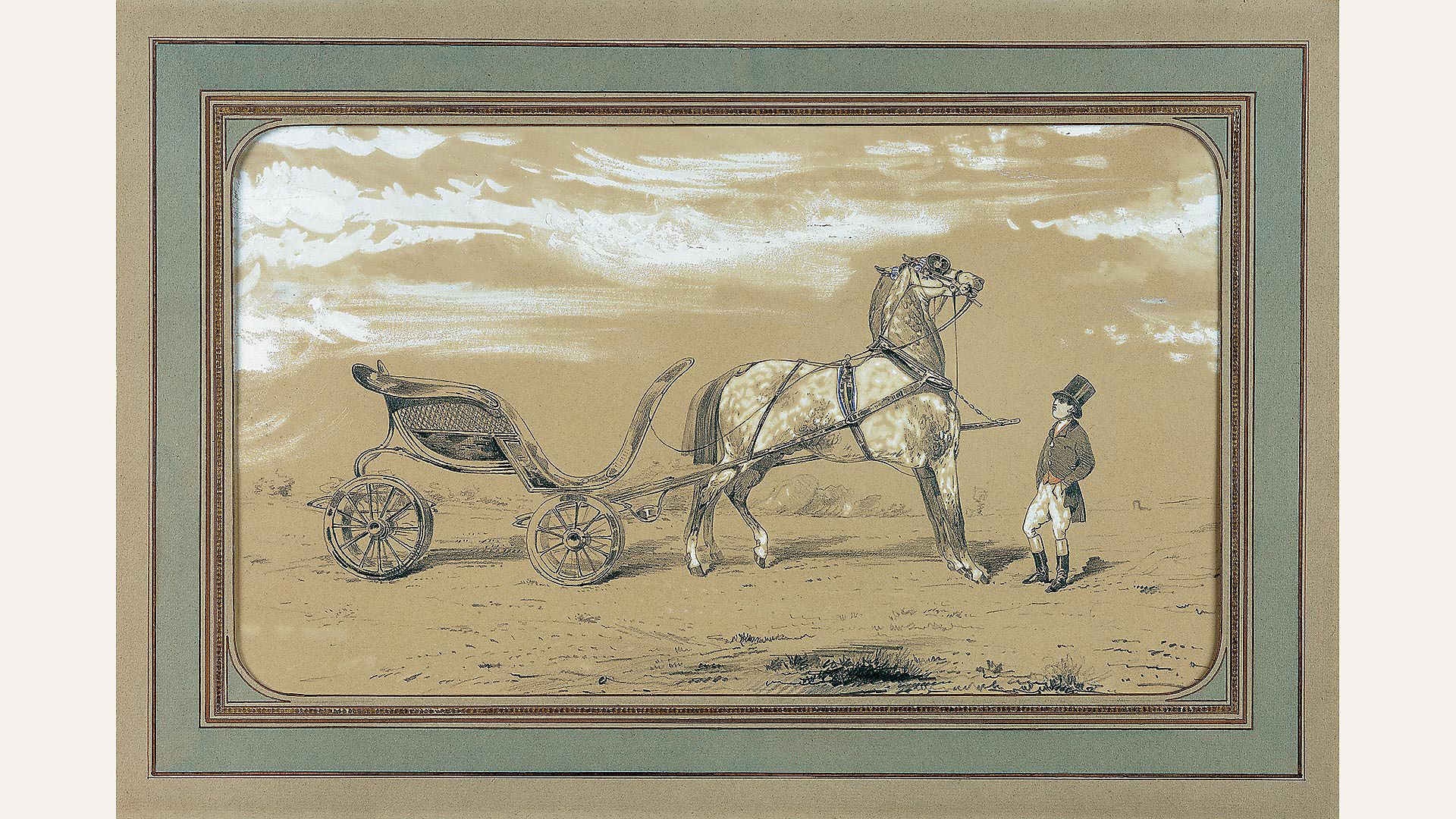
© Guy Lucas de Peslouan
Meaning & Symbolism: What the Hermès Logo Really Represents
Every element of the Hermès logo carries significance:
-
The Horse symbolizes power, grace, and the brand’s equestrian heritage.
-
The Groom represents dedication, artisanship, and attention to detail.
-
The Carriage serves as a metaphor for luxury travel and refined living.
-
The Wordmark “Hermès Paris” reflects French craftsmanship and sophistication.
The symbolism extends beyond imagery. The Maison’s famous orange box—now as iconic as the logo itself—originated during World War II, when traditional packaging materials ran out. Bright orange cardboard became the only available option. What began as necessity transformed into a cornerstone of luxury branding.
Today, the Hermès logo embodies three pillars of the brand identity:
Heritage. Craftsmanship. Prestige.
Evolution of the Hermès Logo: Subtle Refinements Across Decades
While the Hermès logo has remained remarkably consistent, it has undergone thoughtful refinements aligned with the brand’s evolution.
1950: The Carriage & Groom Debut
The first official Hermès logo appears, inspired by de Dreux’s painting. It featured intricate details and was often paired with “Hermès Paris” beneath the illustration.
1970s: Minimalist Refinement
As the Maison modernized, the logo was streamlined. Lines were simplified, the figures became sleeker, and a more contemporary serif typeface was adopted for the wordmark.
1980s–Present: The Logo Becomes a Symbol of Luxury
With Hermès expanding globally, the logo—often embossed or printed in the iconic Hermès orange—became synonymous with exclusivity. Its minimalist refinement allowed it to translate seamlessly across packaging, leather goods, accessories, and store façades.
Despite design trends shifting dramatically, the Duc Carriage with Groom remains one of the most enduring symbols in fashion history.
The Hermès Logo as a Global Status Symbol
Hermès has become more than a luxury house—it is a cultural symbol. The logo itself is an invitation into an elite world of scarcity, artisanship, and tradition.
Because Hermès maintains strict control over product availability—especially coveted items like the Birkin or Kelly—the logo embodies not just quality but access, something far rarer than wealth alone.
Celebrities, royalty, executives, and collectors showcase their Hermès pieces as markers of taste, achievement, and prestige. Pop culture has immortalized the brand further, from Sex and the City to modern music references by artists like Drake and Jay-Z.
Owning an item adorned with the Hermès logo is often seen as a life milestone—the moment one “arrives.”
Centuries of Craft: A Brief History of Hermès
Combining both article sources into one cohesive heritage timeline:
1837 — The Workshop Begins
Thierry Hermès opens his Paris workshop specializing in harnesses and saddles for French nobility. His craftsmanship earns him a reputation for quality and durability.
Late 1800s — Expansion to International Elite
Thierry’s son, Charles-Émile Hermès, expands the business globally, creating leather goods for international aristocrats. The famed Haut à Courroies bag is introduced as a practical saddle carrier.
Early 1900s — Transformation & Innovation
Under Emile-Maurice Hermès, the company embraces innovation, becoming the first in France to incorporate the zipper, discovered during a trip to North America.
Hermès expands into handbags, apparel, jewelry, footwear, and watchmaking.
1920s–1950s — The Silk Scarf, Ready-to-Wear & the Logo
The Maison introduces silk scarves, ties, perfumes, and ready-to-wear.
In 1950, the Hermès logo officially debuts, linking the brand’s modern growth to its equestrian past.
1950s–1970s — The Kelly Bag & Global Fame
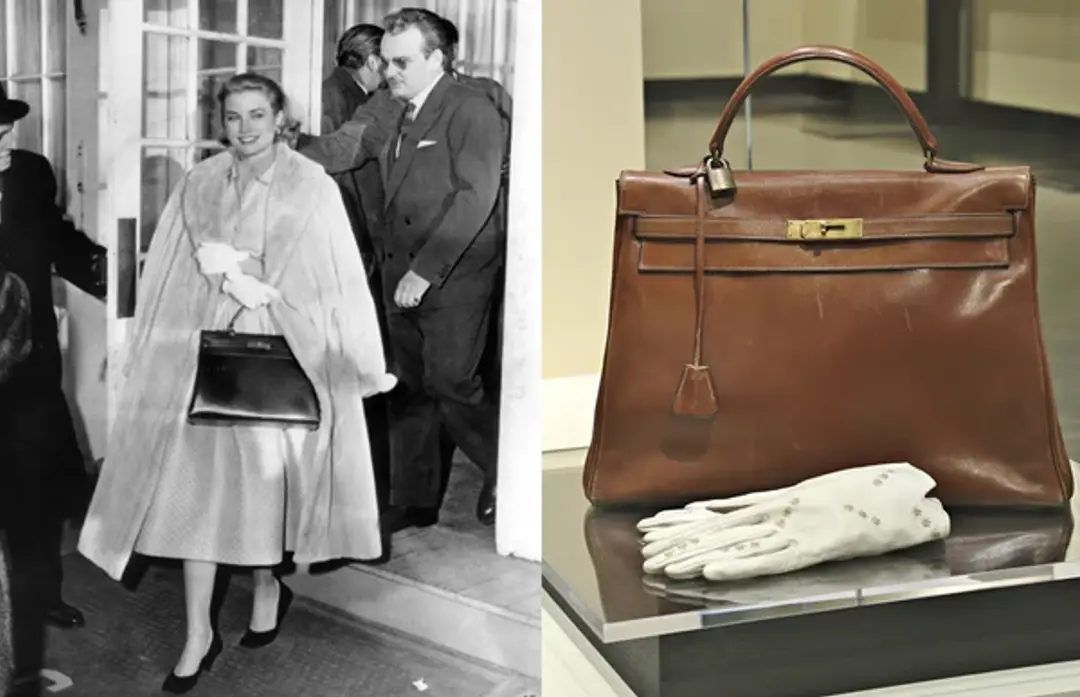
A Hermès handbag becomes world-famous when Grace Kelly uses it to hide early signs of pregnancy. The bag is later named the Kelly, cementing Hermès as the pinnacle of luxury.
1980s–2000s — The Birkin Era
Jane Birkin collaborates with Jean-Louis Dumas on a new carry-all bag. The Birkin bag becomes the crown jewel of luxury fashion, known for staggering prices, waitlists, and unparalleled craftsmanship.
2000s–Today — Digital Innovation & Continued Legacy
Hermès becomes one of the first major luxury houses to launch an e-commerce site (2001). Under successive leadership, the Maison expands globally while retaining its commitment to handcrafting techniques passed down through generations.
Fun Facts About Hermès
Presented without heavy bulleting for a smoother narrative:
Hermès was one of the earliest luxury houses to embrace e-commerce, launching its online store in 2001 long before brands like Chanel, Prada, or Fendi followed. Its iconic silk scarves require the silk of roughly 300 mulberry-fed moths, reflecting the brand’s devotion to natural materials.
Creating a single Birkin bag takes about 48 hours of artisan labor, often spread across an entire week. The Birkin name itself was almost removed in 2015 during an animal-rights dispute, though Hermès reached an agreement that preserved the bag’s legendary status.
Conclusion
The Hermès logo is not simply a design—it is an emblem shaped by nearly two centuries of craftsmanship, heritage, and prestige. Its imagery captures the Maison’s equestrian origins while symbolizing the excellence and artistry that define every Hermès creation.
In an industry driven by rapid change, Hermès stands alone: timeless, meticulous, and uncompromising. The logo endures as a quiet declaration of luxury—one recognized instantly across cultures and generations.
FAQ (Hermès Logo)
1. What does the Hermès logo symbolize?
The horse and carriage symbolize the brand’s equestrian beginnings and commitment to master craftsmanship, representing elegance, heritage, and precision.
2. Why is Hermès associated with the color orange?
During World War II, materials were scarce. The only available packaging was bright orange cardboard. Hermès adopted it out of necessity, and it became an iconic brand color.
3. When was the Hermès logo created?
The official Hermès logo debuted in 1950, inspired by Alfred de Dreux’s painting “Le Duc Attelé, Groom à L’Attente.”
4. Why are Hermès bags so rare and expensive?
Each Birkin or Kelly bag is handcrafted by a single artisan using premium materials, requiring 40–48 hours of meticulous labor. Long waitlists and limited production heighten exclusivity.
5. How is the Hermès name pronounced?
Hermès is pronounced “ehr-mez”, with a silent “h” due to its French origin.