Heineken Logo Heritage: The Evolution of a Global Brewing Icon
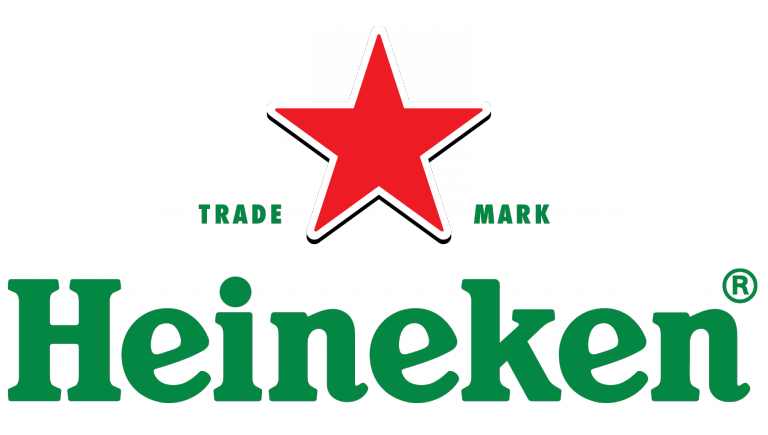
Few beer brands in the world have achieved the cultural presence, visual consistency, and international recognition of Heineken. Founded in 1864 in Amsterdam, the company has grown into one of the largest brewing empires on the planet, with over 70 production facilities and more than 250 beverages under its umbrella. Yet throughout its massive expansion, one element has remained unmistakably Heineken: its legendary green branding and the iconic red star.
Behind this distinctive identity lies a rich logo history that stretches back to the 19th century—an evolution marked by heritage, refinement, and a commitment to preserving the brand’s Dutch roots. The Heineken logo is more than a label on a bottle; it’s a symbol of quality, craftsmanship, and global beer culture.
A Brewing Legacy Begins: The Origins of the Heineken Identity
Heineken’s story starts with Gerard Adriaan Heineken, who purchased the De Hooiberg brewery in Amsterdam in 1864. By 1873, Heineken had opened a state-of-the-art brewery and pioneered a new type of beer—pilsner—that would become a hallmark of its brand. During these early decades, various versions of labels and logos appeared, each reflecting the company’s pride in its Dutch origins and its ambition to brew world-class beer.
Although the first official Heineken logo from the 1860s has not survived, it set the foundation for what followed—ovals, stars, coats of arms, ribbons, and bold typography became hallmarks that would evolve over the next 150 years.
Heineken Logo history
Heineken Logo Evolution: From Blue Oval to Green Star Power
1864–1884: The Early Blue Oval
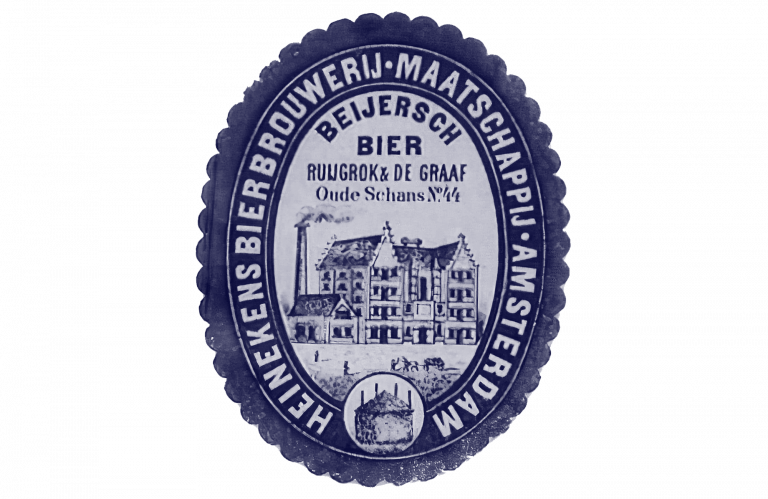
The original known logo featured a blue oval badge with “Heineken Beer-Brewing Company, Amsterdam” written in white along the perimeter. Inside the oval sat an illustration of the brewery with descriptive text. At the time, brewery illustrations were common—these visual depictions symbolized authenticity and local craftsmanship.
1873–1884: A Red Oval and Heraldic Details
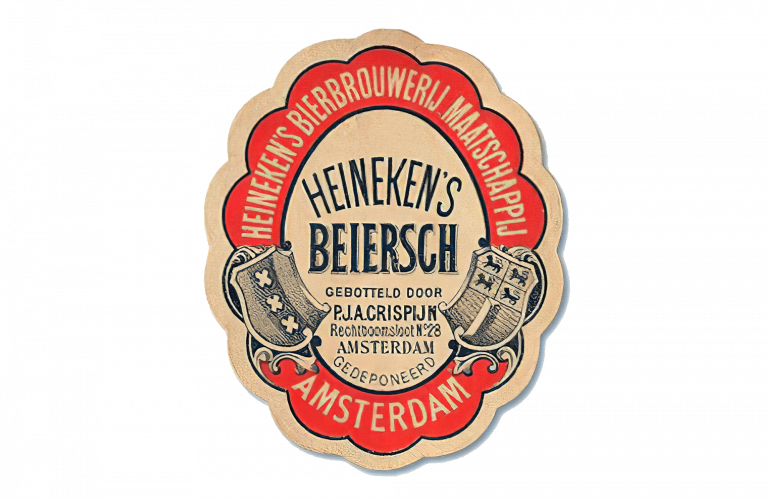
A secondary emblem from the period introduced a red oval frame with beige interior. The brewing-house illustration was removed, replaced by the word “Heineken’s” and several heraldic shields—symbols often used to convey prestige and national pride.
1884–1889: The First Modern Heineken Mark
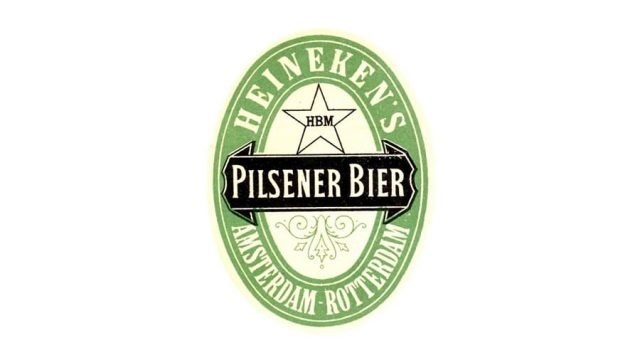
This is the oldest fully documented Heineken logo. Key elements included:
-
a thick green oval frame
-
a bold black ribbon with the product name “Pilsner Beer”
-
a five-point star
-
refined detailing
It also featured the text “Heineken’s Amsterdam–Rotterdam,” connecting the brand to its expanding Dutch heritage.
This is the moment where the green frame—now synonymous with the brand—makes its first appearance.
1889–1930s: Red Makes Its Debut
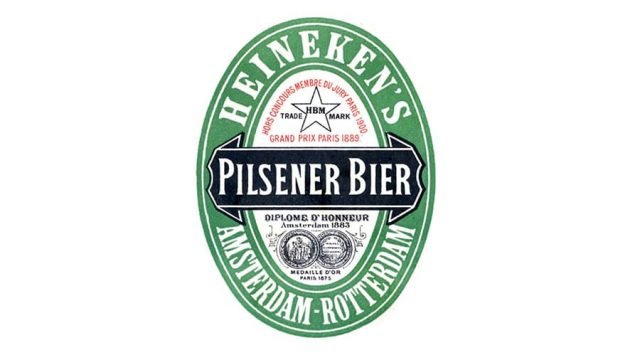
The 1889 redesign sharpened the green tones and introduced the red star—now one of the brand’s most recognized symbols. Additional elements included award medallions, referencing Heineken’s international brewing accolades.
This was the birth of the classic Heineken color trio: green, red, and black.
1930s–1951: Two Logos for Two Markets
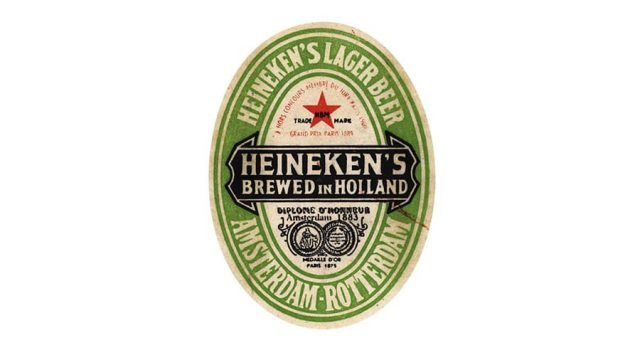
During this era, Heineken released separate logos for domestic (Dutch) and international use.
Domestic version:
-
rectangular layout with a red star
-
seals in the corners
-
elegant script for the word “Pilsener”
-
traditional “Heineken’s Bier” lettering
International version:
-
retained the oval format
-
enlarged black ribbon
-
inscription “Heineken’s Brewed in Holland”
-
red star more prominently emphasized
These logos reinforced Heineken’s growing presence in Europe and beyond.
1951–1954: A Political Change
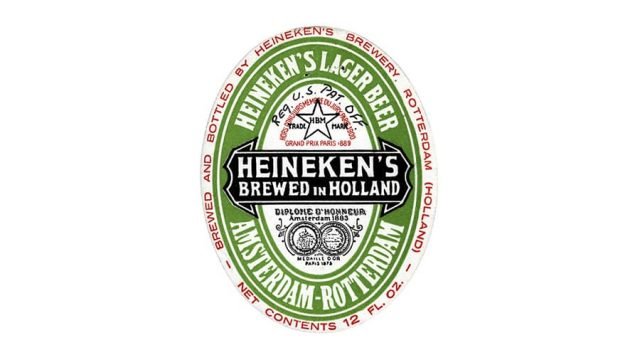
Post–World War II, Heineken temporarily turned the red star white to avoid associations with communism. Green became brighter, and the award medallions beneath the ribbon grew more ornate.
1954–1974: A More Modern Wordmark
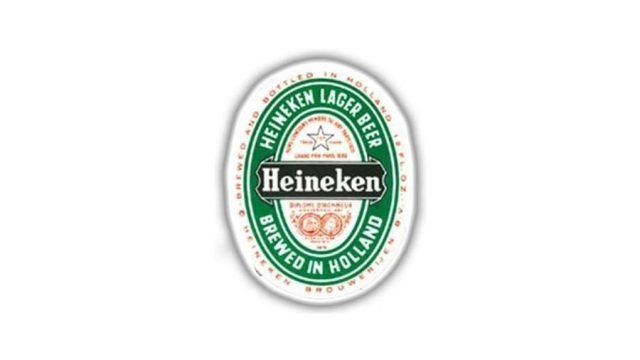
This redesign introduced a more gothic-inspired typeface and, for the first time, dropped all words except “Heineken.” The black ribbon gained importance as the main carrier of the brand name.
1974–Today: The Famous “Smiling E”
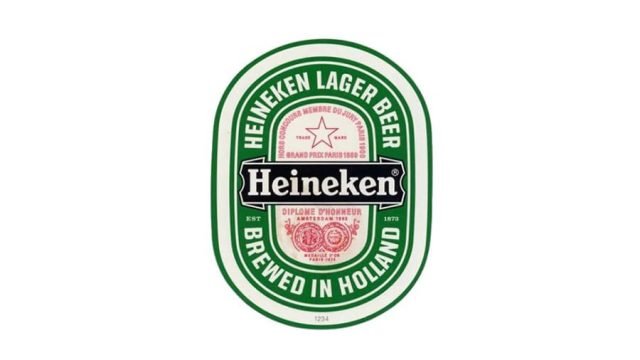
In 1974, Heineken unveiled its now-iconic wordmark:
-
soft serif letters
-
distinctive lowercase style
-
the playful “smiling e” (tilted upward for warmth and friendliness)
This design became one of the most recognizable wordmarks in the world of beer.
1991–Today: The Modern Heineken Star
By 1991, Heineken introduced the contemporary logo still used today:
-
the refined red star
-
the elegant green wordmark
-
optional black ribbon with white “Heineken” lettering
-
stylized green leaves beneath certain variants
This version is the brand’s cornerstone, appearing across packaging, advertisements, tap handles, and merchandise.
Heineken’s signature color palette and typography have become so iconic that the brand is recognizable even when only the red star is shown.
Design Breakdown: What Makes the Heineken Logo So Iconic?
1. The Green Color
Often referred to as “Heineken green,” this distinctive shade is associated with freshness, quality, and brand authenticity. It also stands out strongly in bars, supermarkets, and stadiums.
2. The Red Star
The five-point star has medieval origins—brewers historically used it as a mystical symbol representing purity and craftsmanship. Heineken continues that heritage today.
3. The Black Ribbon
This horizontal band adds balance and offers a bold space for the wordmark. Its curled ends give it a traditional, almost heraldic quality.
4. The “Smiling E”
Designed to feel warm, friendly, and confident, the upward-tilting “e” is a clever typographic signature that sets the Heineken wordmark apart.
5. A Blend of Heritage + Modernity
Heineken’s visual identity is a masterclass in maintaining brand roots while staying relevant—a true example of logo heritage in practice.
Conclusion
The Heineken logo is more than a label—it’s a visual bridge to over 150 years of brewing tradition. Whether through its signature green, its distinctive red star, or its iconic “smiling e,” the brand has achieved a balance that few companies master: evolving with the times while honoring its origins.
In every redesign, Heineken has strengthened its identity, making the logo not only recognizable but emotionally resonant across continents and generations. It’s a symbol of craftsmanship, culture, and a deep-rooted heritage that continues to shape one of the world’s most beloved beer brands.
FAQ
1. Why does Heineken use a red star?
The star dates back to medieval brewing, symbolizing purity and mastery in the craft of beer-making.
2. What does the green color in the Heineken logo represent?
It reflects freshness, quality, and tradition—and has become so iconic it’s often called “Heineken green.”
3. What is the “smiling e” in the logo?
The tilted “e” in “Heineken” conveys warmth and approachability, helping the wordmark feel uniquely friendly.
4. Why did Heineken change the star to white during the 1950s?
To avoid political associations with communism in the post-war climate.
5. Is the oval logo still used today?
Yes—many packaging and promotional materials still use oval or ribbon-based variations, especially in classic product lines.
6. What makes the Heineken logo so recognizable worldwide?
Its distinctive color palette, iconic red star, and timeless typographic details.