Golden State Warriors Logo History: Meaning, Symbolism & Brand Heritage

Few franchises in professional basketball have experienced a transformation as profound as the Golden State Warriors. Founded in 1946 and shaped by decades of geographic, cultural, and competitive change, the Warriors evolved from a regional identity into one of the most globally recognized brands in modern sports. Their rise to dominance in the 2010s did not happen in isolation. It was supported by a visual identity that gradually aligned tradition, geography, and modern design into a coherent brand system.
The Golden State Warriors logo heritage reflects this long journey. It is a story of shifting locations, changing ambitions, and a deliberate move from generic basketball imagery toward a symbol deeply rooted in place and cultural meaning. Much like other landmark franchises explored in NBA logo history and broader basketball brand heritage, the Warriors’ visual evolution mirrors the team’s transition from local relevance to global influence.
Understanding the Warriors’ logo history also helps contextualize the modern era of sports branding, where simplicity, symbolism, and geographic storytelling have replaced overly illustrative and trend-driven designs.
Meaning and History: The Origins of the Warriors Identity
The Golden State Warriors were not always associated with California, nor with the iconic bridge that defines their current emblem. Originally founded as the Philadelphia Warriors, the franchise underwent multiple relocations and identity shifts that left a lasting imprint on its visual language.
From the beginning, the name “Warriors” conveyed strength, resilience, and combat readiness. Early visual identities leaned heavily on Native American imagery, a reflection of mid-20th-century branding norms rather than a carefully considered cultural narrative. As the franchise relocated west and matured, its leadership gradually distanced the brand from figurative mascots, opting instead for symbols that communicated power through abstraction, geography, and civic pride.
This philosophical shift laid the foundation for one of the most disciplined logo evolutions in the NBA.
Golden State Warriors Logo History Timeline
1946–1951: The Philadelphia Warriors Origins
The original logo, introduced in 1946, depicted a stylized Native American figure drawn in purple lines alongside a yellow basketball. A diagonal script “Warriors” wordmark crossed the illustration, while a single feather balanced the composition.
This emblem reflected the illustrative branding norms of post-war American sports, prioritizing personality and narrative over scalability or abstraction.

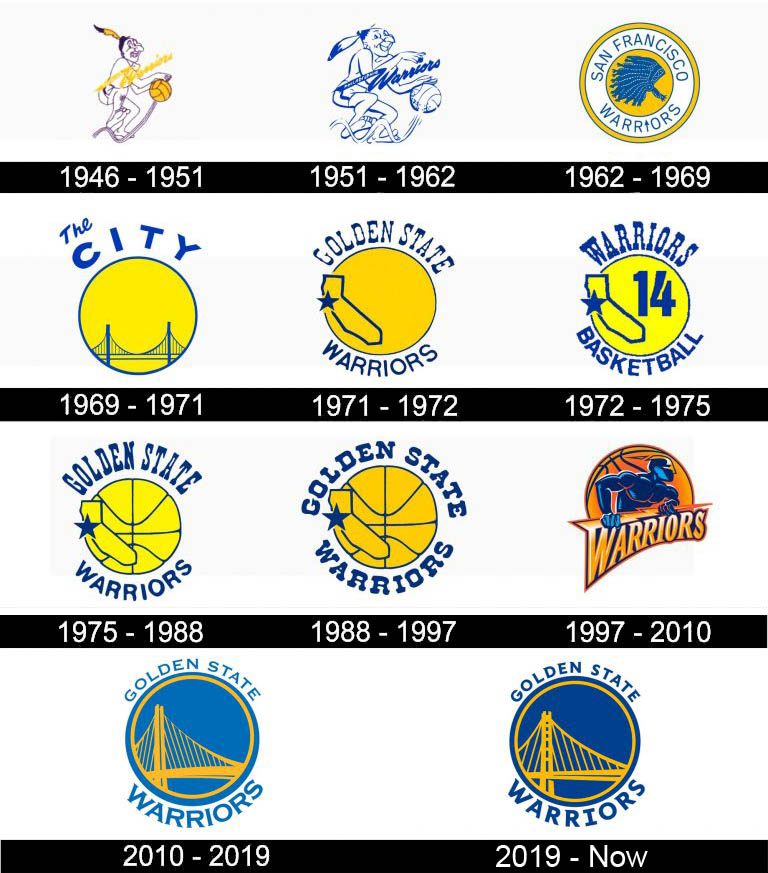
1951–1962: Stronger Lines and Growing Identity
In 1951, the logo was refined with bolder lines and a simplified blue-and-white color palette. The “Warriors” wordmark became more prominent, while the “Philadelphia” inscription was integrated into the elongated tail of the letter “W.”
This update improved legibility and visual strength, marking an early attempt to professionalize the club’s image.
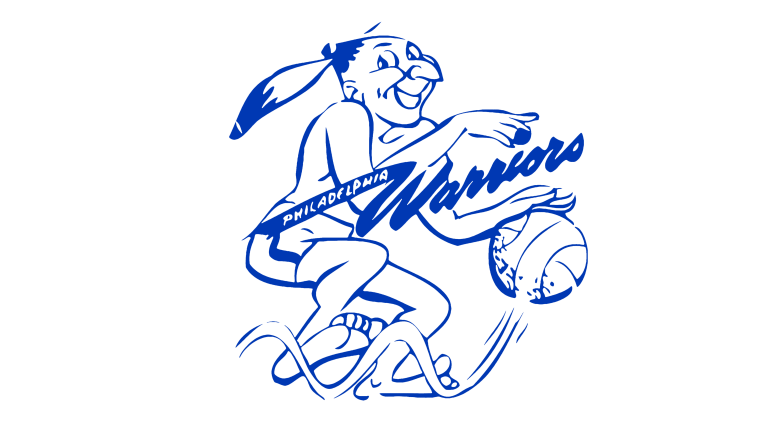
1962–1969: The San Francisco Transition
Following the team’s relocation to California, the Warriors adopted a circular emblem. The design featured a layered medallion with yellow and white frames, a small yellow center, and a blue Native American headpiece. The wordmark wrapped around the badge’s perimeter.
This logo represented a transitional phase, retaining elements of the past while introducing a more structured, emblematic format.
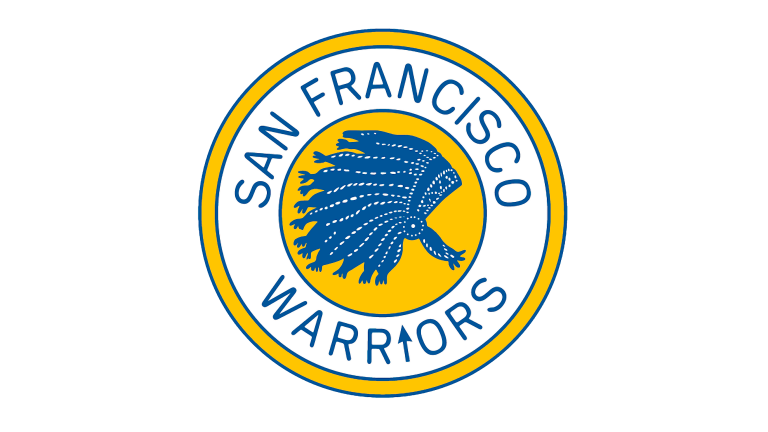
1969–1971: The Bridge Appears
The 1969 redesign marked a pivotal moment. The logo was simplified into a solid yellow circle outlined in blue, featuring a stylized blue bridge at its center. Above it, the inscription “The City” referenced San Francisco’s cultural identity.
This was the first clear indication that architecture and geography would become central to the Warriors’ visual language.

1971–1972: Birth of the Golden State Identity
When the franchise officially became the Golden State Warriors in 1971, the logo was updated accordingly. A bold yellow circle featured the outline of California with a blue star marking the Bay Area.
The typography combined a decorative “Golden State” wordmark with a modern sans-serif “Warriors,” reflecting a balance between tradition and contemporary ambition.

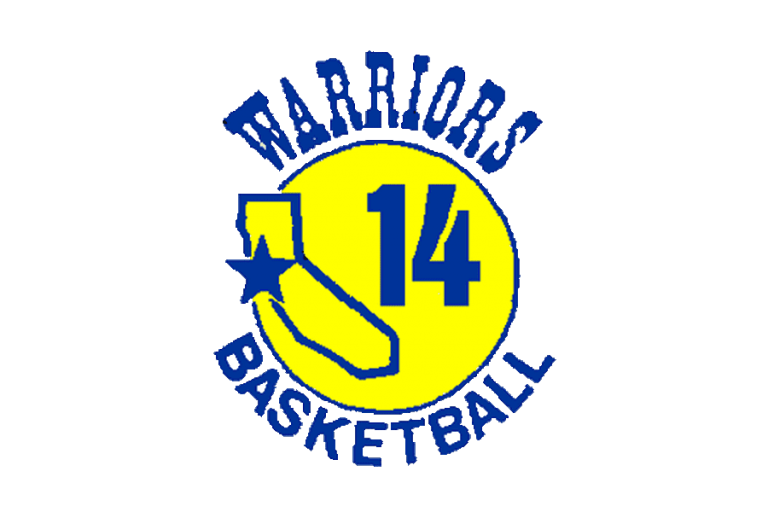
1972–1975: Simplification and Emphasis
In 1972, the palette was brightened and the composition streamlined. The text was reduced to “Warriors Basketball,” while additional numerical elements briefly appeared, referencing championship achievements.
This version emphasized confidence and visibility, even if some elements felt temporary.
1975–1988: Basketball as the Foundation
The yellow circle evolved into a basketball motif in 1975. The California silhouette was enlarged, while secondary details were removed. The result was a cleaner, more assertive emblem that reinforced the sport itself as the brand’s core symbol.

1988–1997: Refinement and Typography
In 1988, the logo underwent subtle refinements. Lines were cleaned, the yellow tone darkened slightly, and the typography softened with rounded edges. This update improved balance and legibility without altering the fundamental structure.

1997–2010: Aggression and Experimentation
The 1997 logo marked the most radical departure in Warriors history. A comic-style superhero figure emerged from a basketball backdrop, paired with a dynamic wordmark featuring lightning-bolt extensions on the letter “W.”
While visually bold, this design was heavily influenced by late-1990s trends and lacked the timeless quality of earlier and later iterations.

2010–2019: Return to Symbolic Discipline
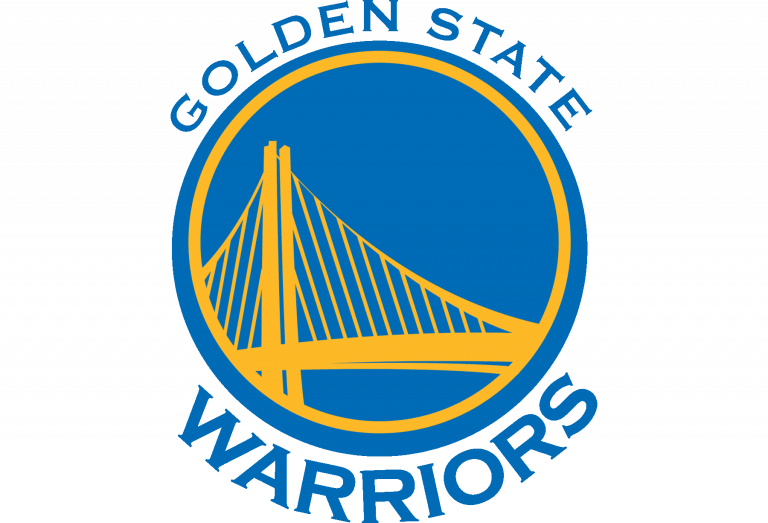
In 2010, the Warriors introduced a circular medallion centered on a simplified Golden Gate Bridge illustration. Rendered in yellow lines on a light blue background and framed by double outlines, the emblem felt refined, architectural, and confident.
Serif typography added a sense of tradition, while the overall composition embraced balance and restraint.
2019–Today: Modern Refinement
The most recent update deepened the color palette and introduced a more contemporary serif typeface. Letterforms became sleeker, with softened curves and subtle flourishes.
This iteration did not reinvent the identity, but perfected it, reinforcing the Warriors’ commitment to clarity, place-based symbolism, and long-term brand stability.
Logo Symbolism: The Power of Place
The Golden State Warriors logo symbolism is built around one central idea: place as identity. The Golden Gate Bridge is more than a landmark. It represents connection, innovation, and resilience, values that align closely with the franchise’s modern narrative.
The circular badge format suggests unity and continuity, while the absence of a mascot emphasizes abstraction over literalism. This approach allows the logo to transcend trends and remain adaptable across platforms, merchandise, and global audiences.
Color plays an equally important role. Blue conveys stability and trust, while gold represents achievement and prestige. Together, they create a visual language that feels both aspirational and grounded.
Typography and Visual Language
Typography in the Warriors’ identity evolved from expressive and aggressive letterforms to clean, geometric sans-serif designs. Modern wordmarks prioritize legibility and balance, complementing the logo’s architectural symbolism.
Rather than dominating the emblem, typography now supports it. This hierarchy reinforces the idea that the symbol itself carries the brand’s primary meaning, a hallmark of mature sports branding.
Golden State Warriors Logo Heritage and Modern Sports Branding
The Golden State Warriors logo heritage illustrates the long-term value of restraint and cultural alignment. By moving away from trend-driven aggression and toward symbolic clarity, the franchise established one of the most effective visual identities in contemporary sports.
Their journey mirrors broader shifts explored in sports logo evolution, NBA brand identity, and modern basketball logo design, where timeless symbols increasingly replace complex illustrations.
Today, the Warriors logo stands as a case study in how place, history, and disciplined design can converge into a global brand asset.
From Experimentation to Icon
The Golden State Warriors did not arrive at their current identity by chance. It was the result of decades of experimentation, relocation, and strategic reassessment. By embracing geographic symbolism and visual discipline, the franchise created a logo that reflects both legacy and modern dominance.
Within the larger conversation around NBA logo history, basketball brand heritage, and sports identity design, the Warriors represent a model of how patience and clarity can transform a team logo into a cultural icon.
FAQ: Golden State Warriors Logo Meaning and History
What does the Golden State Warriors logo represent?
The logo represents innovation, unity, and regional pride, centered around the Golden Gate Bridge as a symbol of connection and strength.
Why did the Warriors move away from mascot-based logos?
Mascot-driven designs were replaced to achieve greater timelessness, scalability, and cultural relevance.
Has the Warriors logo changed significantly in recent years?
No. Recent updates have focused on refinement rather than redesign, preserving the core symbol.
What colors define the Golden State Warriors brand?
Royal blue and golden yellow, symbolizing stability, excellence, and achievement.