Glassdoor Logo History: Meaning, Symbolism & Brand Heritage
Glassdoor emerged as a corrective force within the global job market, challenging the long-standing imbalance between employers and candidates. At a time when corporate narratives dominated recruitment, Glassdoor introduced a radically different model based on openness, anonymity, and shared experience. Its logo history mirrors this mission precisely, translating transparency and trust into a restrained but highly intentional visual identity.
Much like the credibility-driven evolution seen in LinkedIn logo history or the information-first clarity behind Indeed logo history, Glassdoor’s logo heritage is built on function rather than flair. The brand never sought visual spectacle. Instead, it developed an identity that quietly reinforces reliability, honesty, and access to information that was once hidden.
Meaning and History: The Origin of the Glassdoor Identity
Glassdoor was founded in 2007 by Robert Hohman, Rich Barton, and Tim Besse with a singular objective: bring transparency to the labor market. The platform allowed current and former employees to anonymously review companies, share salary data, and evaluate management, creating a public record of workplace realities that previously remained private.
This mission shaped the logo meaning from the very beginning. The name “Glassdoor” itself functions as a metaphor, suggesting the ability to look inside an organization without obstruction. The visual identity reinforced this idea by emphasizing openness, negative space, and structural simplicity rather than closed or fortified shapes.
As Glassdoor grew into one of the most cited sources for employment research, its logo description evolved to support a more authoritative presence while preserving the core concept of transparency. Each redesign reflected the platform’s expanding influence while maintaining symbolic continuity.
Logo Symbolism: Transparency Made Visual
Glassdoor logo symbolism is rooted in architectural and typographic metaphor. The original emblem resembled a partially open frame, suggesting both a doorway and a window. This open structure communicated access without intrusion, aligning perfectly with the platform’s promise of anonymous insight rather than exposure.
The use of green reinforces this symbolism. Traditionally associated with growth, opportunity, and progress, green positions Glassdoor as a platform for advancement rather than confrontation. Unlike warning colors or corporate blues, green suggests improvement and forward movement.
Later iterations introduced quotation-like framing, visually referencing employee reviews and direct speech. By embedding dialogue into the logo itself, Glassdoor transformed user voices into a core brand asset, reinforcing trust through participation rather than authority.
Glassdoor Logo History Timeline
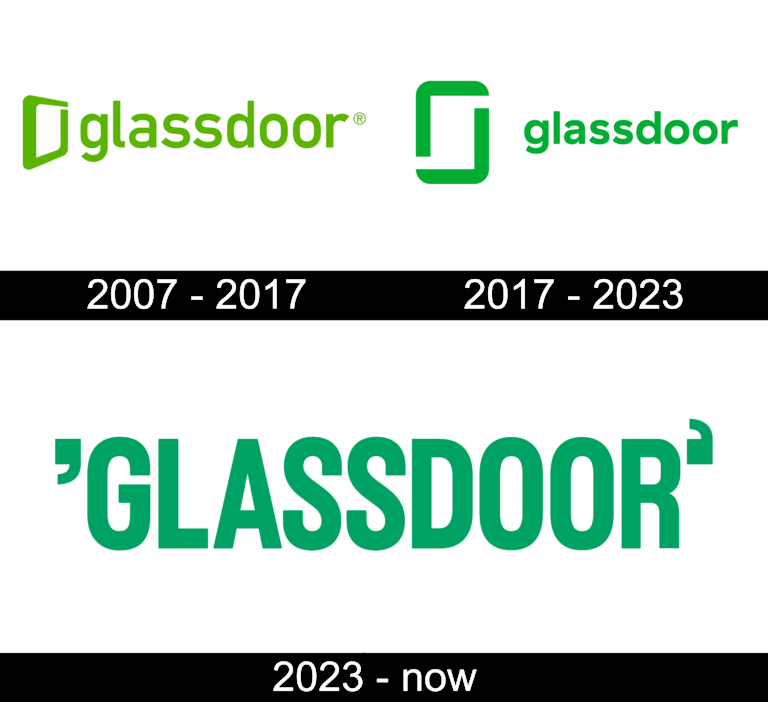
2007–2017: Foundational Transparency and Structural Metaphor
The original Glassdoor logo featured a geometric emblem positioned to the left of a lowercase wordmark. The emblem appeared as a rounded square rotated slightly, with an open corner that subtly formed the letter “G.” This opening symbolized access and visibility, while the enclosed shape maintained balance and order.
The typography was modest and narrow, ensuring legibility without visual dominance. The green-and-white palette established approachability and trust, helping Glassdoor gain credibility during its formative years.
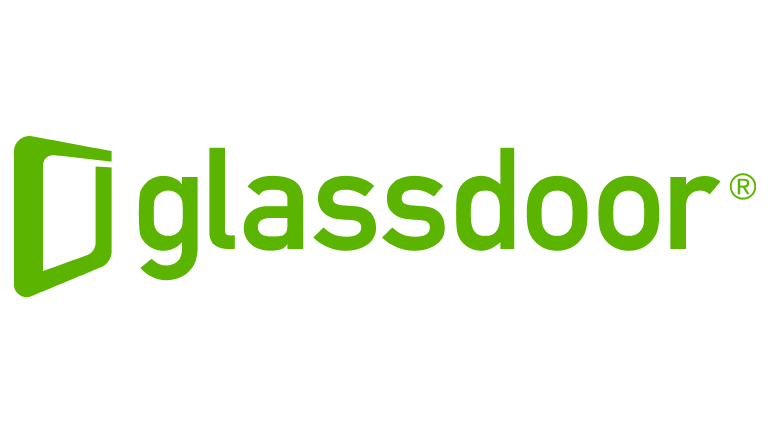
2017–2023: Refinement, Balance, and Brand Confidence
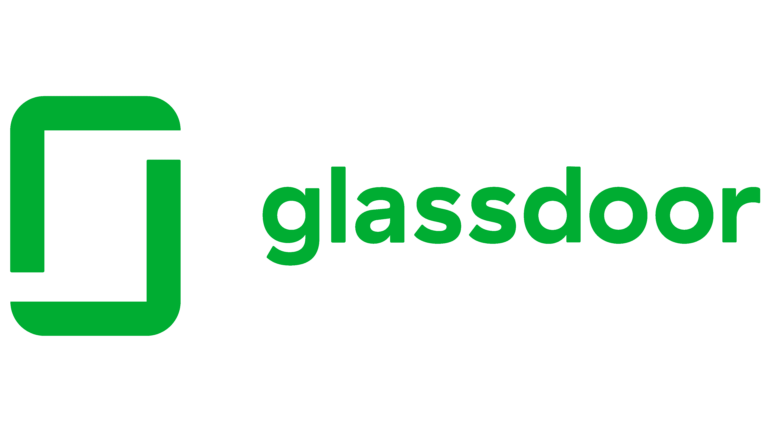
In 2017, Glassdoor refined its identity to reflect its growing authority. The emblem became frontal and symmetrical, now featuring two open corners formed by mirrored elements. This change enhanced balance while preserving the open-frame concept central to the logo meaning.
The wordmark was updated with fuller letterforms, improving readability and visual presence. Green became brighter and more saturated, signaling confidence and scale without abandoning the brand’s established tone.
2023–Present: Typographic Authority and Voice-Centered Identity
The most recent redesign marked a conceptual shift from emblem-driven branding to typographic symbolism. The standalone icon was removed, and the wordmark became the primary identifier. Rendered in all uppercase, the new lettering conveys authority and maturity.
Designed by Giulia Boggio, the custom Glassdoor Sans typeface introduced a distinctive detail: quotation marks framing the wordmark. These marks are not traditional punctuation but stylized lowercase “g” and “d,” referencing the platform’s initials and its core function—employee reviews.
The green darkened, creating a more grounded and professional tone while preserving brand recognition. This iteration reinforces Glassdoor’s position as an established authority in employment transparency.
Typography and Color: Trust Through Restraint
Typography has always played a central role in Glassdoor’s logo heritage. Early lowercase lettering conveyed friendliness and openness, while the current uppercase execution communicates credibility and permanence. Despite these changes, the type remains approachable, avoiding sharp angles or aggressive forms.
The green-and-white palette remains essential to the logo description. Green symbolizes growth and opportunity, while white represents clarity and honesty. Together, they visually reinforce Glassdoor’s mission to illuminate workplace realities and support informed career decisions.
Glassdoor Logo Heritage and Workplace Transparency
The Glassdoor logo history demonstrates how visual identity can reinforce institutional trust without resorting to complexity. By consistently embedding openness into form, color, and typography, Glassdoor built a logo heritage that reflects its mission with precision.
Within the broader context of recruitment and employment platform logo heritage, Glassdoor stands out for translating abstract values—transparency, voice, and access—into tangible visual cues. Its logo meaning evolved with the platform’s influence, but its symbolic foundation remains unchanged: letting people see clearly before they step inside.
FAQ: Glassdoor Logo Meaning and History
What does the Glassdoor logo represent?
The logo represents transparency and access to workplace information, symbolized through open shapes and quotation-inspired typography.
Why is green used in the Glassdoor logo?
Green symbolizes growth, opportunity, and career development, aligning with Glassdoor’s purpose.
Has the Glassdoor logo changed significantly over time?
Yes, the logo evolved from an emblem-based identity to a typographic one, while preserving its transparency symbolism.
What do the quotation marks in the new Glassdoor logo mean?
They reference employee reviews and direct speech, reinforcing the platform’s role as a voice for workers.