GE Logo History: Meaning, Symbolism & Brand Heritage
Few corporate symbols in the world have achieved the level of timeless elegance carried by the GE logo. For more than 125 years, General Electric has kept its visual identity anchored in the same swirling monogram first introduced in the 19th century—a rarity in global branding. While competitors have cycled through redesign after redesign, GE has chosen evolution instead of reinvention, preserving one of the most recognizable emblems in industrial history.
This visual continuity reflects more than nostalgia. It mirrors GE’s own philosophy: a commitment to engineering excellence, trust, and stability. The logo’s script lettering, circular framing, and soft ornamental curls have survived world wars, technological revolutions, and corporate restructuring. Across power grids, aviation breakthroughs, medical devices, and consumer electronics, the GE monogram has remained a constant signature of precision and innovation.
What makes this insignia so enduring? And how did its delicate lines, originally hand-drawn more than a century ago, become a global industrial icon? Here’s the complete story behind the GE logo—its evolution, symbolism, and place in modern brand heritage.
Meaning and History of the GE Logo
A Legacy Rooted in the 19th Century
General Electric was formed in 1892 through the merger of Edison General Electric Company and Thomson-Houston Electric Company. The new brand needed a mark that represented innovation while maintaining a sense of refinement. The answer was a hand-drawn monogram—elegant, fluid, and unmistakably premium.
Rather than adopting a harsh industrial aesthetic, the founders chose a script emblem that signaled reliability and craftsmanship. That decision shaped the company’s identity for more than a century.
Logo Evolution Through the Years
1892 — The First Monogram
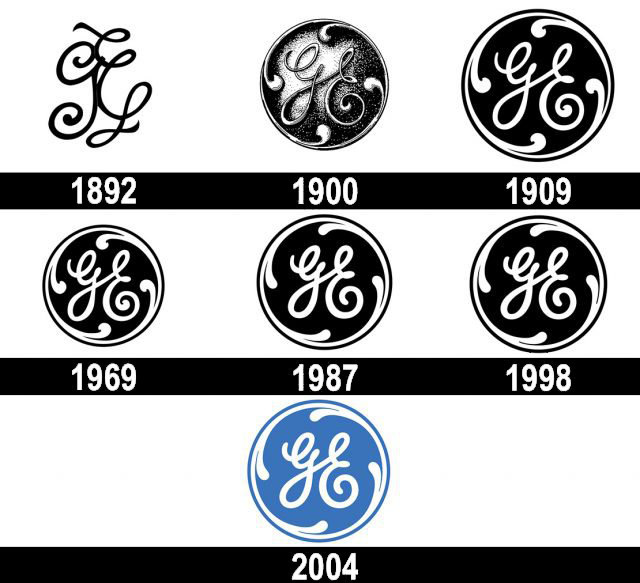
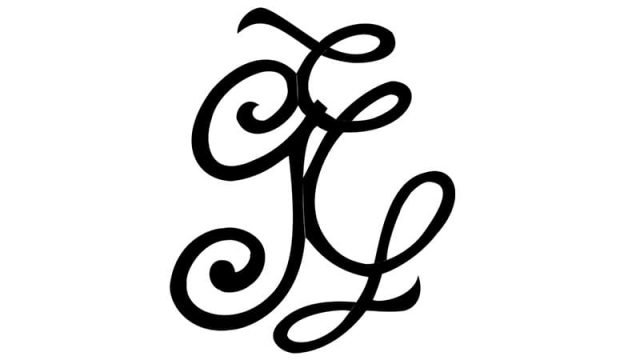
The story begins with a refined black-and-white monogram introduced in 1892. The delicate handwritten “G” and “E” intertwined tightly, creating a compact emblem full of elegant curls and expressive loops. Even at its earliest stage, the logo conveyed craftsmanship and engineering precision—values that defined GE from the very beginning.
1900 — The Circular Medallion
In 1900, the monogram stepped inside a circular frame. Soft decorative flourishes extended inward from the border, creating a sense of motion and cohesion. This version introduced the medallion-style composition that would become a core part of GE’s brand identity for the next century.

1909 — Cleaned and Refined
The 1909 redesign removed gradients and shadows, shifting to a sharp, high-contrast black-and-white look. The simplified lines brought clarity and strength to the emblem. GE embraced a more assertive style, better suited for the industrial growth of the early 20th century.
1969 — Stronger Strokes and Swirling Energy
The monogram thickened in 1969. The “E” gained a pronounced swirling tail that suggested movement and the dynamism of electric power. The badge felt sturdier, more modern, and more confident, reflecting GE’s expanding presence across global markets.
1987 — A More Elegant Balance
Minor refinements in 1987 reduced stroke weight and added breathing room around the letters. This subtle adjustment gave the logo better balance and visual elegance without disturbing its iconic form. It was the kind of quiet evolution that keeps a heritage brand modern.
1998 — Precision and Modern Symmetry
The 1998 iteration introduced refined proportions and carefully shortened curves, giving the monogram a cleaner and more contemporary feel. GE prepared for a new technological era, and the logo was polished to match its forward-looking direction.
2004 – Today — The Iconic GE Blue
A new color changed the logo’s personality entirely. GE replaced the black monogram with a bright, optimistic shade of blue, symbolizing clarity, innovation, and trust. Combined with the classic white lettering, the medallion felt fresher and more approachable while retaining every element of its historic design.
Symbolism Behind the GE Emblem
The swirling curls and circular enclosure were originally inspired by Art Nouveau design trends of the late 1800s. Over time, the circular shape came to symbolize unity, reliability, and continuous technological motion. The monogram itself represents the human touch in an industry defined by machinery and engineering—a reminder that innovation begins with creativity.
Today, the emblem is recognized worldwide as a symbol of trust and quality, standing for both GE’s past and its ongoing commitment to progress.
Font and Color
Although the historic monogram was drawn by hand, GE developed a full corporate type family for modern use. The collection includes GE Sans, GE Serif, and GE Inspira—each designed to complement the flowing aesthetic of the emblem while offering versatility across digital and print platforms.
The GE color palette is anchored by its iconic light blue. This shade conveys clarity, reliability, and technological leadership. Earlier versions of the logo relied on black, gray, and white, but the shift to blue gave GE a more contemporary, global appeal.
A Timeless Industrial Icon
Few corporate logos have sustained their identity as gracefully as GE’s. For more than a century, the monogrammed medallion has united craftsmanship, engineering, and heritage into one unmistakable mark. Its subtle evolution reflects the company’s own journey—from the age of early electricity to modern aviation, energy, and healthcare technologies.
The GE logo remains not just a brand identifier, but a symbol of continuity in a rapidly changing world.
FAQ (General Electric Logo)
What does the GE logo represent?
The GE logo represents the company’s heritage in engineering, innovation, and industrial design. The swirling cursive letters suggest motion and energy, symbolizing GE’s roots in electricity and power generation.
Why has the GE logo changed so little over time?
GE has kept its logo consistent because it reflects stability, trust, and a long-standing industrial legacy. The company prefers refinement over reinvention, preserving the historic monogram that customers have recognized for more than a century.
What font is used in the GE logo?
The GE logo itself is hand-drawn, but the company uses a custom type family for its branding, including GE Sans, GE Serif, and GE Inspira. These fonts complement the fluid, cursive style of the emblem.
Why did GE switch to blue?
The blue version introduced in 2004 was chosen to symbolize modernity, reliability, and a more approachable corporate identity. The lighter palette helped refresh the brand while keeping the traditional monogram intact.
Is the GE logo still based on the original design from the 1890s?
Yes. Despite refinements across the decades, the current GE logo remains structurally faithful to the original monogram created in the late 19th century.