
Fruit of the Loom Logo History: Meaning, Symbolism & Brand Heritage
Few American brands can claim the kind of longevity and cultural presence that Fruit of the Loom has achieved. In an industry defined by trends, seasonal reinvention, and shifting consumer tastes, the brand has remained a constant for more than a century. Founded in the mid-19th century, Fruit of the Loom did not merely survive industrialization, globalization, and the digital age—it adapted to each era while preserving a recognizable identity rooted in simplicity, reliability, and familiarity.
Generations of consumers around the world associate the brand with comfort, durability, and everyday essentials. That trust has been built not only through product quality, but also through one of the most enduring visual identities in American commercial history. The Fruit of the Loom logo heritage is inseparable from the brand’s story, serving as a visual anchor that connects modern consumers to a textile tradition dating back to the earliest days of industrial America.
Meaning and History: The Origin of the Fruit of the Loom Identity
The origin of the Fruit of the Loom brand traces back to 1851, when brothers Robert and Benjamin Knight founded a small textile operation under the name B.B. and R. Knight Corporation. Initially focused on muslin and cotton fabric production in Rhode Island, the business quickly gained a reputation for quality workmanship at a time when the American textile industry was expanding rapidly.
The name “Fruit of the Loom” emerged several years later and carries a deeper semantic meaning than it may appear at first glance. The phrase deliberately echoes the biblical expression “fruit of the womb,” traditionally associated with creation and abundance. In the context of the brand, however, it refers to the full range of products that can emerge from a loom—fabric transformed into wearable essentials. This interpretation ties the brand name directly to craftsmanship, productivity, and variety.
The visual inspiration behind the name is attributed to the daughter of Rufus Skeel, a merchant who partnered with the Knight brothers. Her illustrations of fruit still lifes were used on early product labels and packaging, resonating strongly with customers. This organic connection between name, imagery, and product helped establish a visual identity long before formal branding practices became widespread.
In 1871, Fruit of the Loom became one of the earliest registered trademarks in the United States, receiving trademark number 418. This milestone positioned the brand among the pioneers of American trademark history and laid the foundation for its long-standing logo heritage.
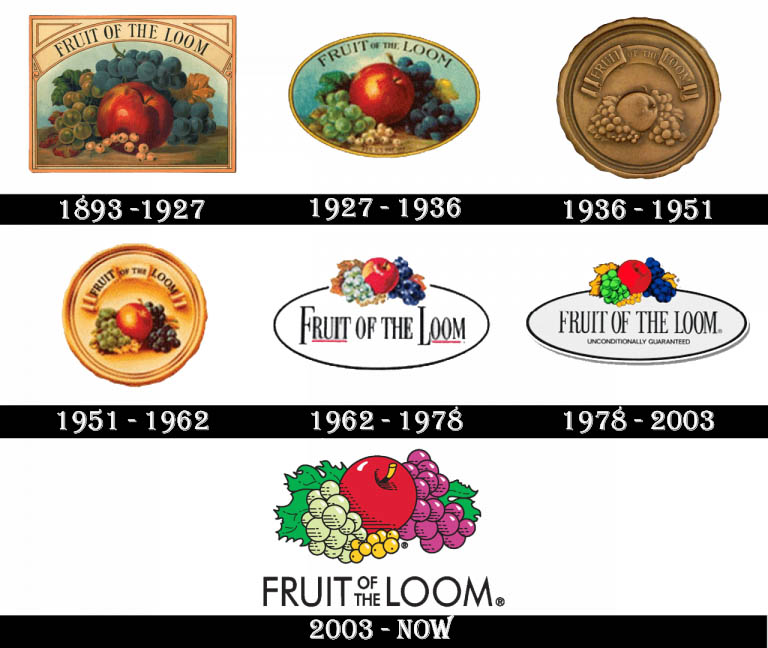
Fruit of the Loom Logo History Timeline
1893 – 1927: The Illustrated Still Life Era
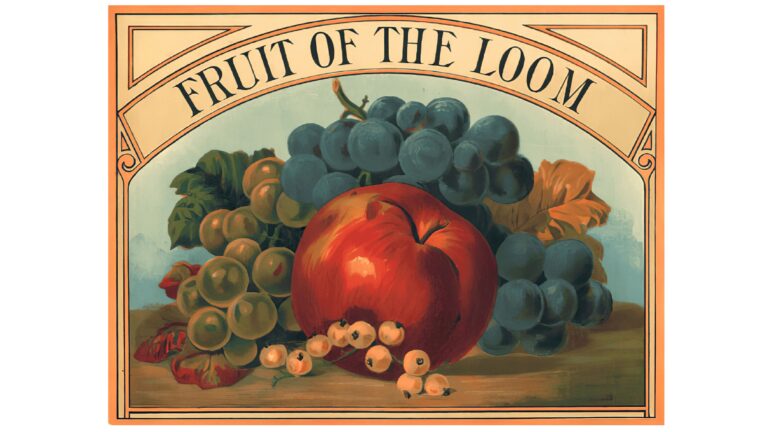
The earliest known Fruit of the Loom logo, introduced in the late 19th century, resembled a traditional still-life painting more than a modern corporate emblem. It featured a realistic depiction of fruit, including apples and clusters of grapes, rendered with painterly detail. The composition was rich in color and depth, set against a vivid blue background that evoked openness and abundance.
This design reflected the branding norms of its time, when logos often served as decorative seals rather than scalable identifiers. While visually striking, the complexity of the illustration made it impractical by modern standards.
1927 – 1936: Refinement and Simplification
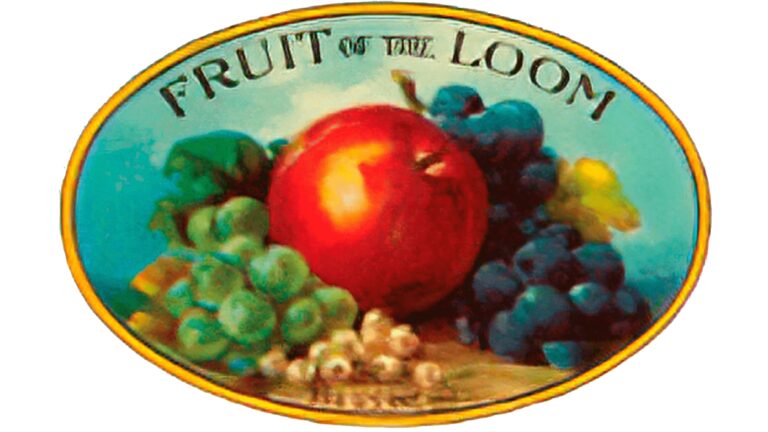
In the late 1920s, the logo transitioned into an elliptical shape, marking the first step toward structural refinement. The fruit imagery remained largely intact, but the surrounding elements were streamlined. The banner was removed, and the brand name appeared more prominently against the background.
This period signaled an early attempt to balance artistic heritage with improved legibility.
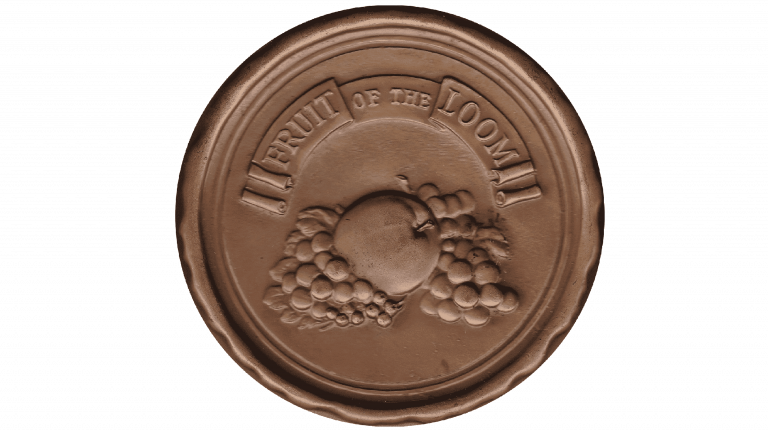
1936 – 1951: The Seal-Inspired Emblem
By the mid-1930s, the Fruit of the Loom logo adopted a seal-like appearance. The background shifted to a gold tone, lending the emblem a sense of authority and premium quality. The fruit illustrations gained dimension, appearing more sculptural and formal.
This version reflected a growing emphasis on brand legitimacy and trust during a time when mass-produced goods were becoming increasingly common.
1951 – 1962: Increased Visibility
The 1951 update retained the established structure but introduced a lighter background, allowing the fruit imagery to stand out more clearly. The changes were subtle, reinforcing the brand’s preference for continuity over reinvention.
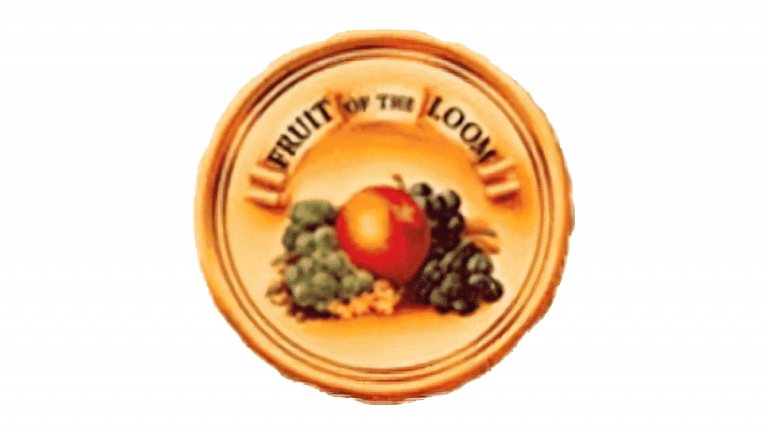
1962 – 1978: Transition Toward Modern Branding
In the early 1960s, the seal was replaced by a white ellipse, creating a cleaner and more contemporary look. The wordmark increased in size, improving legibility and reinforcing brand recognition in retail environments.
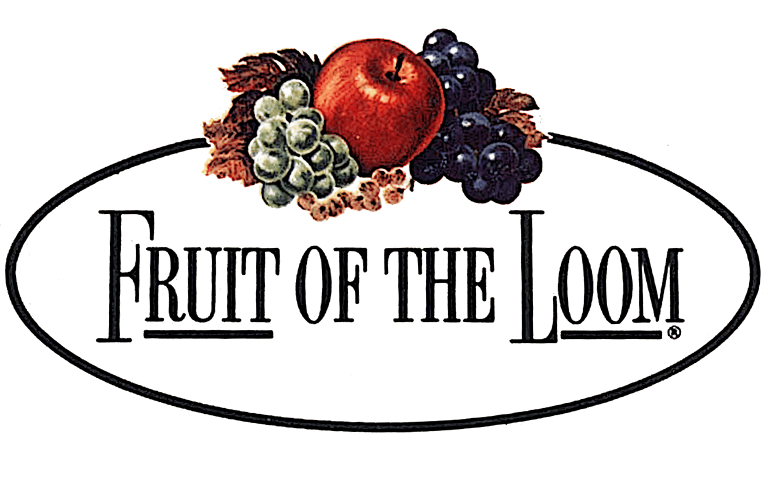
1978 – 2003: Stabilization and Familiarity
This era focused on refinement rather than transformation. Highlights were removed from the fruit, simplifying the illustration while maintaining its recognizable form. The logo during this period became deeply ingrained in consumer memory, particularly through widespread use on apparel tags and packaging.
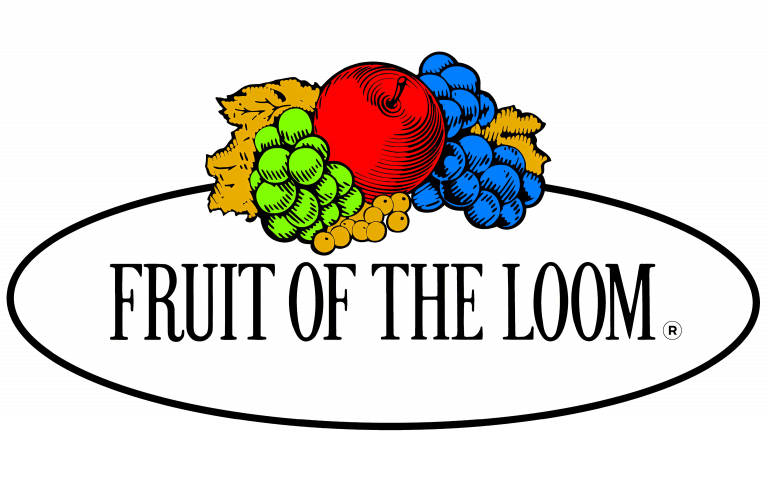
2003 – Today: Modern Simplification
The 2003 redesign marked the most significant update in the Fruit of the Loom logo history. The framing elements were eliminated entirely, leaving the fruit cluster centered on a transparent background. The illustration was flattened and simplified to suit digital applications, while the wordmark adopted a clean, medium-weight sans-serif typeface.
Despite these changes, the core concept remained intact. The fruit imagery continued to symbolize abundance and variety, preserving the brand’s visual continuity.
Logo Symbolism: Abundance, Craft, and Trust
The symbolism of the Fruit of the Loom logo is rooted in its imagery. Fruit has long represented nourishment, growth, and productivity. In the brand’s context, it also signifies the tangible results of skilled labor—the “harvest” of the loom.
The enduring debate surrounding the presence of a cornucopia, often associated with the so-called Mandela effect, further underscores the strength of the logo’s symbolic associations. Although the company maintains that a horn of plenty was never part of the official design, the widespread belief highlights how deeply the logo has embedded itself in collective memory.
Typography and Color Palette
Throughout its logo history, Fruit of the Loom has favored clear, functional typography. The current wordmark uses a geometric sans-serif style that emphasizes legibility and neutrality, ensuring adaptability across labels, packaging, and digital platforms.
The color palette draws directly from the fruit imagery itself. Reds, purples, greens, and yellows communicate variety and vitality, reinforcing the brand’s promise of diverse, dependable products. This restrained yet expressive use of color has become a defining element of the brand’s logo heritage.
Fruit of the Loom Logo Heritage and Brand Legacy
The Fruit of the Loom logo heritage demonstrates the power of consistency. Rather than chasing visual trends, the brand has refined a single idea across generations, allowing familiarity to become its greatest asset. This approach has enabled Fruit of the Loom to remain relevant without sacrificing authenticity.
In a marketplace crowded with short-lived rebrands, the Fruit of the Loom logo stands as a reminder that longevity is often built through trust, restraint, and respect for origin.
FAQ: Fruit of the Loom Logo Meaning and History
What does the Fruit of the Loom logo represent?
The logo represents abundance, craftsmanship, and the variety of products produced through textile manufacturing.
When was the Fruit of the Loom logo first introduced?
The earliest versions of the logo date back to the late 19th century, shortly after the brand registered its trademark.
Has the Fruit of the Loom logo ever included a cornucopia?
According to the company, the logo has never officially featured a cornucopia, despite widespread public belief.
Why has the Fruit of the Loom logo changed so little over time?
The brand prioritized continuity and recognition, refining its visual identity rather than reinventing it.