
Ford Logo History: Meaning, Symbolism & Brand Heritage
Few automotive emblems have achieved the universal recognition of Ford’s blue oval. More than a decorative badge, it is a visual signature that carries the weight of American industrial history, a symbol that has accompanied generations of drivers through innovation, reinvention and global expansion. To understand Ford’s logo is to understand the company itself — a brand built on practicality, ambition and family legacy.
Ford Motor Company officially appeared in 1903, yet its spirit was born much earlier. Henry Ford, driven by relentless curiosity, built his first self-propelled vehicle in 1896: a lightweight quadricycle that revealed his belief that machines could transform everyday life. This invention marked the beginning of a journey that would not only reshape mobility but would also give rise to one of the world’s most enduring corporate identities.
As Ford transitioned from workshop experimentation to mass production, its visual identity needed to grow with it. Across more than a century, the brand refined its emblem from ornate artistry to streamlined modernism, eventually arriving at the timeless blue oval that today stands as one of the strongest logo heritages in the world.
The Birth of a Global Manufacturer
The official founding of Ford Motor Company in Detroit in 1903 marked a turning point in industrial history. Henry Ford’s vision was unapologetically democratic: he wanted to build cars that ordinary people could afford. His early models proved reliable and accessible, and by 1908, the introduction of the Model T changed the market forever. It was a triumph not only of engineering but of production philosophy. Its affordability was made possible by Ford’s groundbreaking moving assembly line, introduced in 1913, which reduced manufacturing time from hours to minutes and became the blueprint for modern mass production.
Even in its earliest years, Ford showed a global ambition uncommon among American automakers. In 1904, the company opened a plant in Ontario, gaining access to the British Empire’s markets. By 1908, Ford had established a Paris sales office, signaling its intention to become an international brand.
Ford’s emphasis on utility and innovation laid the foundation for the brand’s identity — an identity that would eventually be distilled into the graceful lines of its script logo and the calming confidence of its blue color palette.
A Family Legacy and the Refinement of the Brand
Leadership remained a family affair as Henry Ford’s son, Edsel, took over in 1919. Edsel brought a refined aesthetic sensibility to Ford’s design philosophy. Where his father’s focus was mechanical, Edsel believed automobiles should also be beautiful. His influence led to the introduction of the Model A in 1928, a car that blended reliability with visual sophistication.
The purchase of Lincoln in 1922 pushed Ford into the luxury market, while the development of the flathead V8 engine in 1932 reinforced its engineering prominence. By 1938, with the launch of the Mercury line, Ford had positioned itself across all segments of the automotive market: entry-level, mid-range and luxury.
After Edsel’s passing, the company entered a new era under Henry Ford II in 1945. His leadership brought modern management and a succession of iconic vehicles: the first F-Series truck in 1948, the Thunderbird in 1954 and the Mustang in 1964 — a car that became an instant cultural phenomenon. At the same time, Ford became a pioneer in automotive safety, introducing crash testing as early as 1954.
Even as Ford expanded across continents and through generations, the blue oval remained at the heart of its identity, representing the brand’s ability to evolve while remaining unmistakably itself.
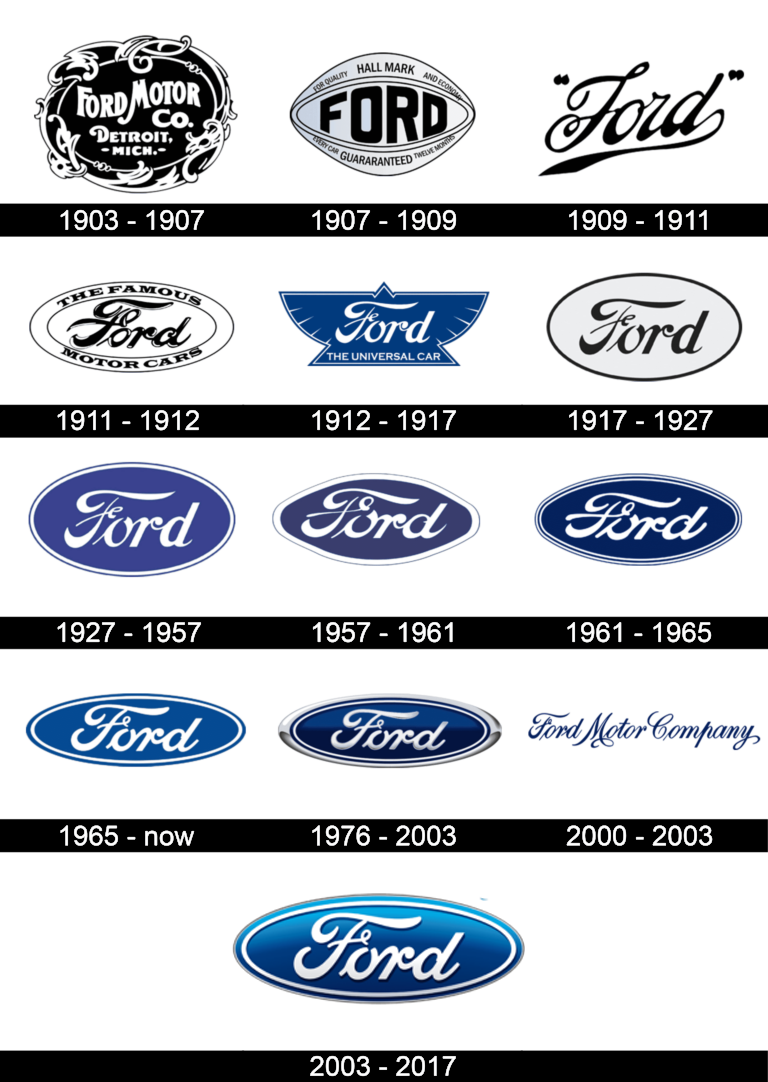
Ford Logo Evolution: A Complete Timeline of an American Icon
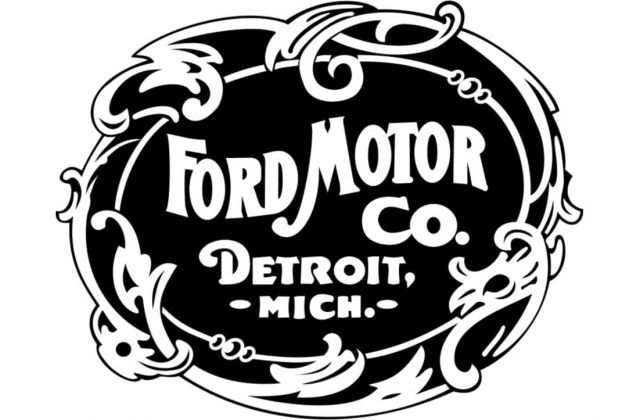
1903–1907: The Ornate Victorian Crest
Ford’s first emblem resembled the design sensibilities of the late nineteenth century. It was a richly ornamented black badge, framed by delicate vine-like decorations and swirling flourishes. The typography curved elegantly across the composition, accompanied by “Detroit, Michigan” in a bold, traditional typeface. This emblem conveyed craftsmanship, but its intricate style ultimately felt out of step with the emerging world of industrial mass production. It was a beginning rooted in heritage rather than modernity.
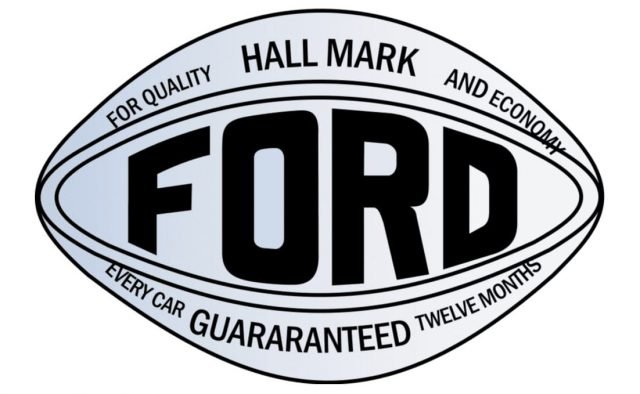
1907–1909: The Industrial Rhombus
Ford abandoned ornamentation in favor of a bold and modern reinterpretation. The new emblem took the form of a rhombus with softly rounded corners, centered around a strong “Ford” inscription. Rendered in black and metallic gray, it signaled engineering precision and a forward-looking identity. It was modern for its time, confident in tone, and marked Ford’s first significant step toward a streamlined brand presence.
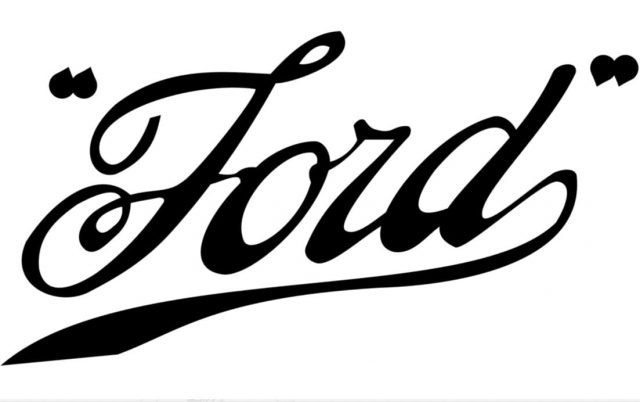
1909–1911: The Birth of the FordScript
A defining moment in Ford’s visual history came in 1909 with the appearance of the FordScript — a typeform inspired directly by Henry Ford’s handwriting. The script introduced elegance and personality to the brand, establishing a signature as distinctive as the vehicles themselves. The original version featured an elongated tail on the “D,” a detail that later disappeared as the script was refined. This handwritten identity would become the soul of Ford’s logo heritage.
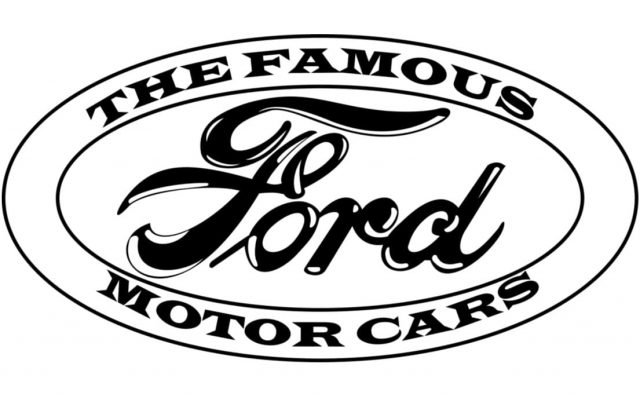
1911–1912: The Double Oval Structure
Ford introduced the oval for the first time in 1911, placing the script inside a horizontally stretched frame bordered by a double outline. Around the perimeter appeared the phrase “The Famous Motor Cars,” emphasizing Ford’s growing reputation. The oval provided structure and clarity, helping the brand achieve better visibility and consistency as its global reach expanded.
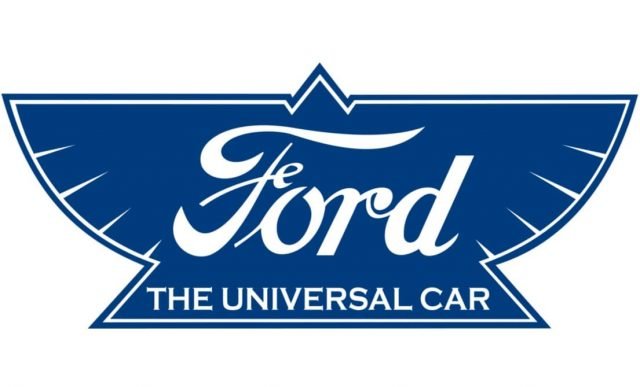
1912–1917: The Winged Blue Badge
In a striking departure from all previous designs, the 1912 emblem adopted a wing-shaped silhouette. Rendered in a bright shade of blue, with the script in white and the tagline “The Universal Car,” this version introduced the blue color that would eventually become inseparable from Ford’s identity. Though short-lived, the winged badge stands as one of the most distinctive experiments in the company’s visual history.
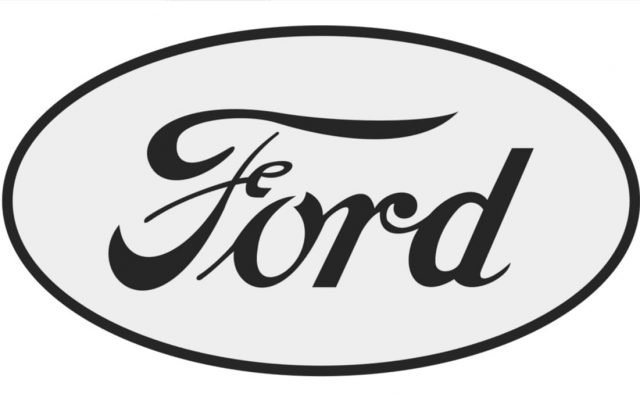
1917–1927: The Minimalist White Oval
Ford returned to a quieter visual language in 1917, refining the oval into a clean white frame with the FordScript at its center. The design abandoned flourishes and taglines, presenting a crisp and elegant symbol suited to the automotive expansion of the 1920s. It remained in use for a decade and set the stylistic foundation for the modern emblem.
1927–1957: The Blue Oval is Born
In 1927, Ford introduced the version that would evolve into the emblem we know today. The oval was rendered in bold blue, the script in white, and the border in a combination of white and blue lines. This marked the debut of the definitive blue-and-white palette. For the next thirty years, this symbol represented Ford’s global identity, becoming one of the most familiar marks in the automotive world.
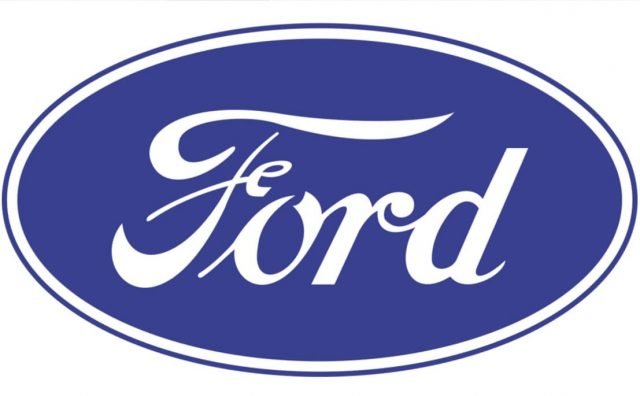
1957–1961: The Sharpened Oval
The late 1950s brought refinements: the oval became more elongated, the script more pronounced, and the blue deepened in tone. The frame adopted a layered appearance that added depth without overwhelming the composition. Though brief in duration, this design reinforced the blue oval as a contemporary industrial symbol.
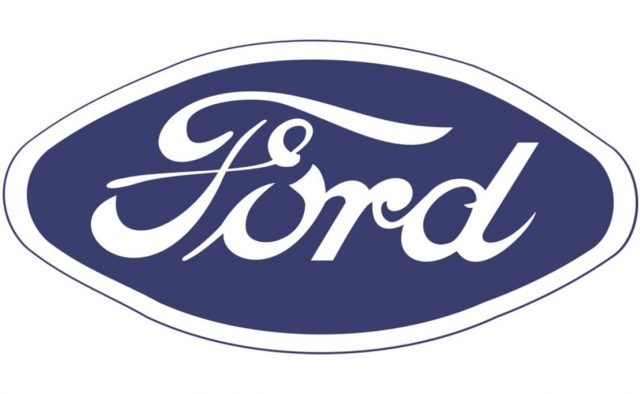
1961–1965: The Elegant White Frame
Ford’s 1961 emblem introduced a smooth white outer frame with a slender blue line running through its center. The background blue intensified, creating a polished and sophisticated look. This version projected trust, professionalism and design maturity, making it one of the most admired iterations in the logo’s history.
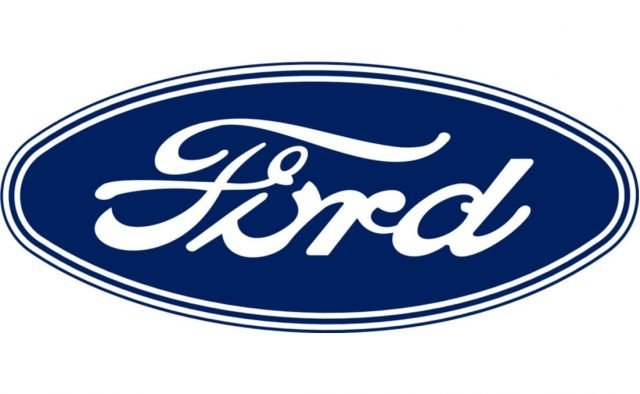
1976–2003: The Three-Dimensional Identity
In 1976, Ford embraced a dimensional aesthetic. The background blue deepened into gradient tones, the outline adopted metallic silver, and the entire emblem took on a glossy, sculpted finish. This version aligned perfectly with the visual trends of the late twentieth century and carried the brand confidently into the digital age.
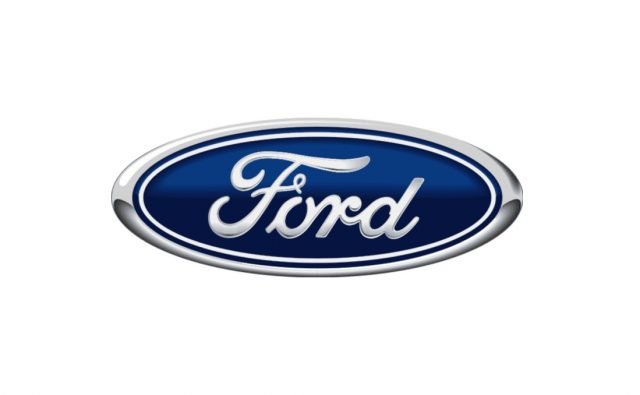
2003–Today: The Refined Contemporary Badge
The most recent iterations of the Ford logo preserve the 1976 structure while refining its gradients, shadows and contours. The emblem has become smoother, cleaner and visually lighter, ensuring that it remains modern while retaining every element of its heritage. Today’s blue oval is instantly recognizable in every corner of the world — a symbol of technological progress grounded in more than a century of trust.
Meaning and Symbolism of the Ford Logo
The beauty of the Ford emblem lies in its simplicity and symbolism. The oval’s symmetry reflects precision and unity, while the deep blue color conveys dependability and confidence — traits that have defined Ford vehicles since the beginning. Silver accents evoke modern engineering and craftsmanship, reinforcing the connection to automotive materials and innovation.
At the heart of the emblem lies the FordScript, the most personal element of the logo. Its flowing curves and handwritten charm are a direct link to Henry Ford himself. It is rare for a multinational corporation to maintain a founder’s handwriting as its primary visual signature, but Ford does so with purpose. It signals lineage, authenticity and a belief that modern progress does not require the abandonment of personal history.
Ford in the Modern Era
Today, Ford remains guided by its founding values while embracing new technologies. Under the leadership of Jim Farley, the company is reshaping its identity with electric models like the F-150 Lightning and reinvigorated classics such as the Bronco. The Ford family still holds forty percent of voting power, an extraordinary continuity in the contemporary corporate landscape. Ford’s global workforce now exceeds 170,000 employees, and its headquarters remain anchored in Dearborn, the place where the story began.
Throughout these transformations, the blue oval has remained the brand’s constant — a symbol of endurance and trust through every era of automotive evolution.

A Century of Identity: How the Blue Oval Became Ford’s Enduring Legacy
The Ford logo is more than a corporate mark; it is the visual heritage of a company that reshaped the modern world. From ornate flourishes and experimental shapes to the enduring serenity of the blue oval, its evolution mirrors Ford’s own journey from workshop innovation to global leadership. It continues to embody reliability, legacy and progress, offering a link between the past and the future. In a landscape of ever-changing brands, Ford’s emblem stands among the few that have not just survived but become iconic, proving that true design longevity arises from clarity, heritage and purpose.
FAQ (Human-Readable)
Why is the Ford logo a blue oval?
The blue oval symbolizes reliability, trust and continuity. Its calming color and balanced structure reflect Ford’s commitment to stability and craftsmanship, qualities that have defined the brand since the early 1900s.
Is the Ford logo based on Henry Ford’s handwriting?
Yes. The FordScript is inspired directly by Henry Ford’s personal signature, refined into a flowing and distinctive typographic mark that has become one of the most recognizable scripts in design history.
When did Ford first use the blue oval?
The blue oval first appeared in 1912 on a wing-shaped badge and became standardized in 1927. Since then, it has been continuously refined but never abandoned.
Who designed the original Ford logo?
The foundational FordScript lettering was created by Childe Harold Wills in 1907, using Henry Ford’s handwriting as its basis. The oval structure was introduced later in 1911.
Why has Ford kept the same logo for so long?
The blue oval carries immense heritage value and global recognition. Its simplicity, emotional familiarity, and connection to Ford’s origin make it one of the strongest and most trusted symbols in the automotive world.
What does the blue color represent?
Ford’s choice of blue reflects loyalty, dependability and strength. Over time, silver accents were added to express modern engineering and precision.