Fiverr Logo History: Meaning, Symbolism & Brand Heritage
In the landscape of online marketplaces, few brands have reshaped global work culture as dramatically as Fiverr. Founded in Tel Aviv in 2010, the platform emerged with a simple promise: make digital services accessible, fast, and affordable. Its name—derived from the original model of offering services for five dollars—was intentionally playful and direct. Yet the brand’s visual identity has always leaned toward clean modernism rather than the whimsical.
The Fiverr logo has evolved alongside the platform itself, maturing from an early typographic wordmark into a polished, web-native identity recognized worldwide. With millions of freelancers and clients using the platform daily, Fiverr’s logo has become synonymous with modern work, digital accessibility, and creative entrepreneurship. In each phase of its development, the logo has reflected the company’s expanding ambition and the necessity of clarity in a crowded digital environment.
Fiverr Meaning and Symbolism
The meaning of the Fiverr logo lies not in ornamental symbolism but in the intentional simplicity of its typography. Fiverr built its business on reducing barriers, streamlining workflows, and making professional services approachable to a global audience. The lowercase construction of the wordmark communicates friendliness, ease of use, and accessibility, while the geometric structure conveys trust and precision.
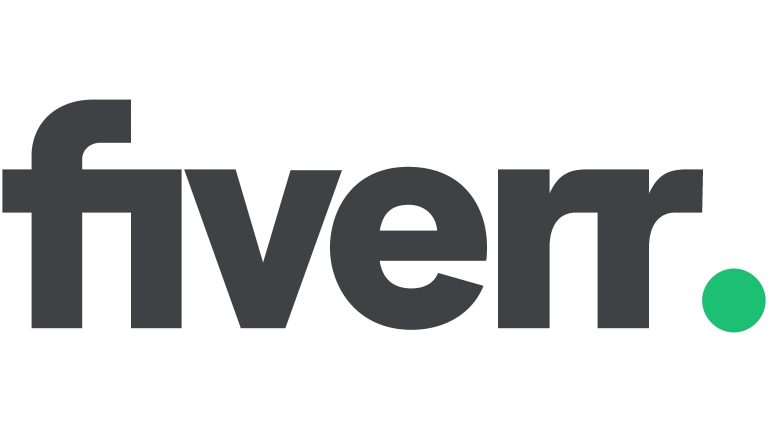
The logo’s most recognizable feature in recent years is the small green dot that appears after the name. Though minimal, it adds a conversational rhythm to the mark, as if indicating action, availability, or interaction—fitting signifiers for a platform built on real-time collaboration.
Moreover, Fiverr mandates the use of a capital F when the brand name appears in written text, even though its logo features a lowercase initial. This creates a balance between the logo’s conversational tone and the brand’s need for formal consistency in communication.
Fiverr Logo History & Evolution Timeline
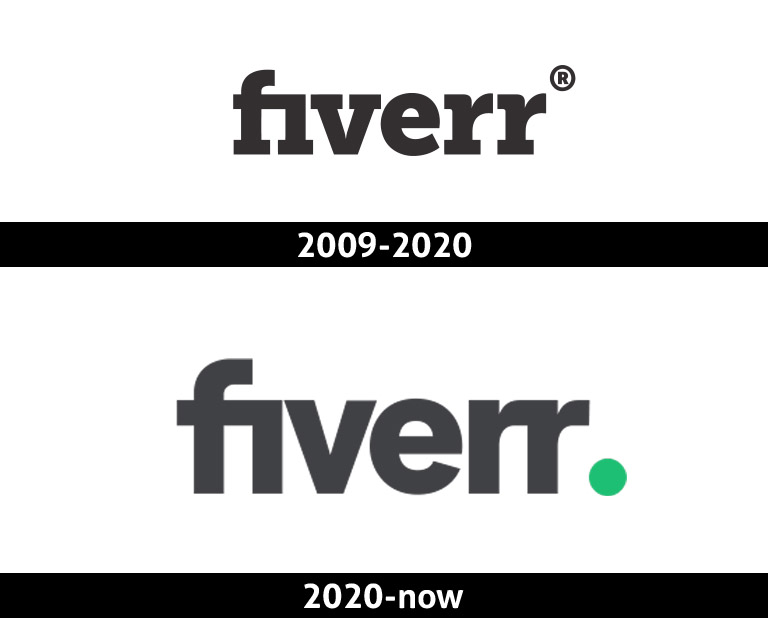
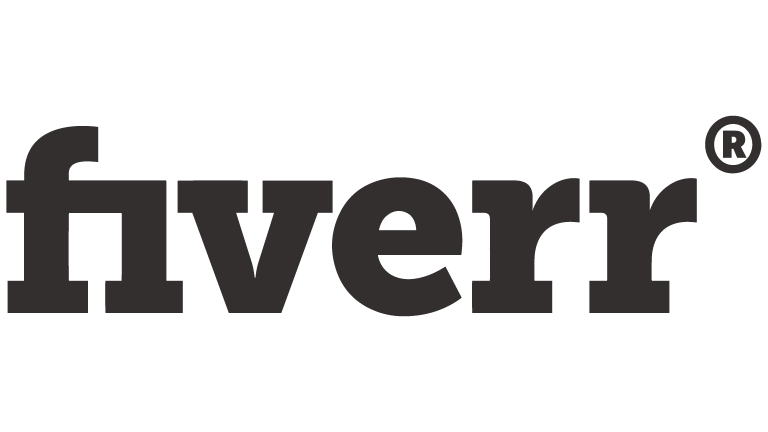
2009–2020: The Original Wordmark
Before Fiverr became one of the world’s leading freelance marketplaces, its visual identity was anchored in a bold, slab-serif wordmark. The letters appeared entirely in lowercase and rendered in a dark gray tone. The heavy structure and geometric serif touches gave the logo a grounded, almost editorial character.
Despite the logo’s blocky traits, the lowercase composition maintained an approachable personality. This early identity aligned with Fiverr’s startup positioning—a young, disruptive service aiming to democratize digital labor. The emphasis on static, heavy typography reflected a desire to appear dependable and structured at a time when online gig platforms were still emerging.
2020–Today: A Refined Sans-Serif Identity
In 2020, Fiverr introduced a significant design update to coincide with its global maturation. The new wordmark adopted a softer sans-serif typeface, reducing the visual weight of the previous slab features. The transition to smooth, rounded geometry created a more streamlined identity suitable for digital screens and responsive interfaces.
The removal of the ® symbol and the introduction of the distinctive green dot marked a shift toward a more contemporary, brand-driven aesthetic. The lighter gray lettering enhanced legibility across digital environments, while the simplified structure allowed the logo to remain effective at small sizes—essential for mobile apps and compact UI elements.
The green circle emblem—often displayed as white lettering inside a saturated green roundel—became a secondary signature. This emblem echoes modern app icon design and provides a compact, instantly recognizable brand stamp.
Design Analysis
The power of the Fiverr logo lies in its precise restraint. As the digital economy accelerated, the company adopted a visual language that communicates usability, neutrality, and modernity. The refined curves of the 2020 typography convey friendliness without sacrificing clarity. The absence of ornament allows the logo to adapt effortlessly across marketing materials, digital ads, and platform interfaces.
Typography plays a central role. Fiverr’s original serif wordmark bore similarities to typefaces such as Brix Slab Black and ChunkFive, though customized to achieve a unique presence. The post-2020 wordmark moved decisively into sans-serif territory, aligning with global tech branding trends and emphasizing digital clarity.
Color likewise defines the brand. Fiverr’s green—bright, energetic, and unmistakable—signals creativity and innovation. The company’s brand guidelines dictate white lettering against a green background for most applications, reinforcing the crisp contrast essential for digital visibility. Black-and-white variants remain in use where simplicity or reduced visual noise is required.
Together, the logo’s components create a cohesive identity: modern, accessible, and distinctly digital. Fiverr’s minimalistic design reflects not only its aesthetic preference but also the nature of its platform—streamlined, efficient, and built for a global community of creators.
The Minimalist Signature of the Freelance Economy
Fiverr’s rise from a bold startup idea to a global marketplace of freelancers is mirrored by the evolution of its logo. What began as a heavy, serifed wordmark has become one of the most succinct digital identities in the modern tech ecosystem. The 2020 redesign refined the brand’s image, positioning Fiverr not just as a platform for affordable tasks but as a serious player in professional digital services.
The lowercase typography, softened shapes, and distinctive green color make the logo instantly legible and universally recognizable. As the freelance economy continues to expand and remote work becomes more deeply woven into global culture, the Fiverr logo stands as a clean, confident signature of this new era of digital collaboration. Its minimalist clarity ensures that, like the platform itself, it will remain adaptable and relevant for years to come.
FAQ: Fiverr Logo & Brand Identity
Why does the Fiverr logo use a lowercase “f” but the brand uses an uppercase F in writing?
Fiverr’s brand guidelines specify that the company name must be written with a capital F, even though the logo uses lowercase lettering. The logo expresses a casual visual tone, while written usage maintains formality.
What does the green dot in the Fiverr logo represent?
The green dot adds a subtle sense of activity, presence, and dynamism. It visually punctuates the wordmark and enhances recognition across digital environments.
What font does the Fiverr logo use?
The early logo used a customized slab-serif style resembling Brix Slab Black. The current logo uses a custom sans-serif typeface with smooth, modern geometry.
Why are Fiverr’s official colors green and white?
The brand uses white lettering on a green background for strong contrast and immediate visibility. The green conveys creativity, energy, and digital friendliness.
When was the most recent Fiverr logo introduced?
The latest version of the Fiverr logo debuted in 2020, aligning with the platform’s expansion and modernization.