Detroit Pistons Logo History: Meaning, Symbolism & Brand Heritage
Few NBA franchises reflect their industrial roots as directly and consistently as the Detroit Pistons. Since their founding in 1941, the team’s visual identity has evolved alongside both professional basketball and the city it represents. While the Detroit Pistons logo has undergone numerous redesigns over the decades, its core idea has remained remarkably stable: basketball as identity, motion as attitude, and industry as cultural backbone.
From its early days in Fort Wayne to its modern presence in Detroit, the Pistons’ logo history mirrors the franchise’s journey from a regional team to a globally recognized NBA brand. Much like the disciplined consistency explored in NBA logo history or the long-term visual coherence found across American sports logo heritage, the Pistons’ emblem demonstrates how continuity can strengthen emotional connection across generations.
Rather than chasing trends, the Detroit Pistons have repeatedly returned to familiar visual ground, reinforcing their logo heritage through refinement rather than reinvention. This approach has allowed the club’s identity to remain instantly recognizable while still adapting to new eras of basketball, branding, and media.
Meaning and History: The Origin of the Detroit Pistons Identity
The Pistons were originally established in 1941 as the Fort Wayne Zollner Pistons, a name directly tied to the Zollner Corporation, a manufacturer of automotive pistons. From the very beginning, the franchise embraced industrial symbolism, aligning its identity with mechanical strength, durability, and craftsmanship.
This industrial origin shaped the earliest Detroit Pistons logo meaning. Long before sleek NBA branding became the norm, the team leaned into caricature and metaphor, using imagery drawn from factory culture and automotive labor. As the franchise relocated to Detroit in 1957, the visual identity shifted toward simplicity and professionalism, but the underlying concept of mechanical power and motion remained embedded in the logo’s DNA.
Over time, the Pistons’ visual language matured into a clean, basketball-centered emblem. The move away from literal industrial figures toward abstract symbolism reflects a broader trend seen across sports logo evolution, where teams gradually refined their marks to ensure scalability, clarity, and long-term relevance.
Detroit Pistons Logo History Timeline
1941–1948: The Industrial Mascot Era
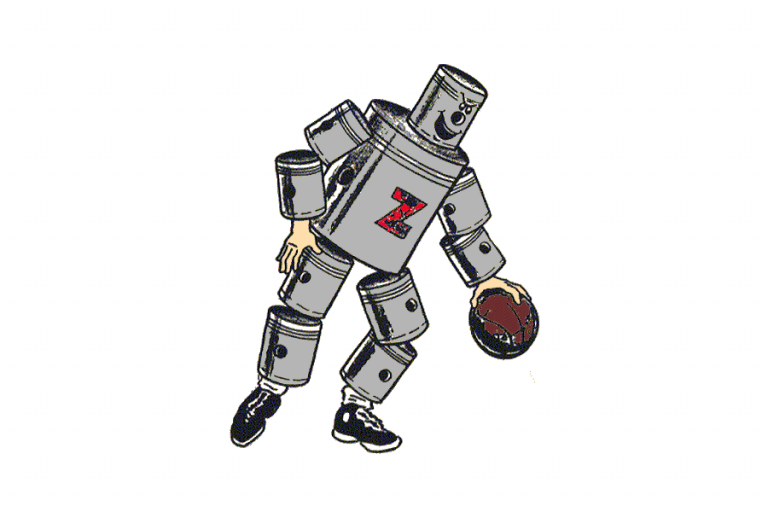
The earliest Detroit Pistons logo dates back to the franchise’s origins as the Fort Wayne Zollner Pistons. This emblem featured a cartoon mechanic figure assembled from automotive parts, holding a basketball and wearing a bold red “Z” on his chest. The absence of typography and framing emphasized character-driven storytelling, directly reflecting the team’s industrial sponsorship and mechanical identity. This logo meaning was rooted in labor, craftsmanship, and post-war American manufacturing culture.
1948–1957: Refined Character and Growing Identity
In 1948, the Pistons refined their visual identity while preserving the mechanic concept. The color palette shifted toward red and white, and the figure became more dynamic and expressive. This redesign softened the industrial harshness of the original logo, aligning the brand more closely with athletic motion and fan engagement. Despite its playful tone, the logo still leaned heavily into the team’s automotive heritage.

1957–1971: Birth of the Basketball Badge
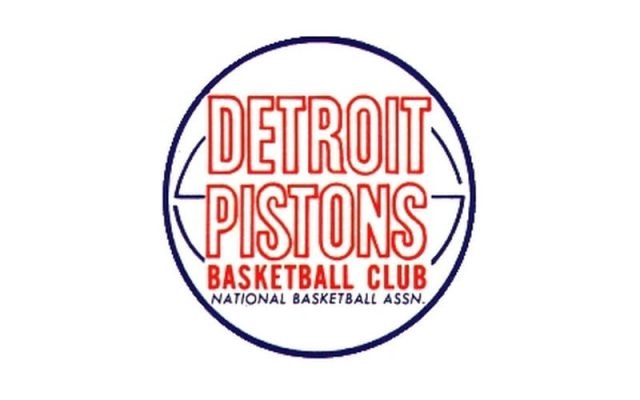
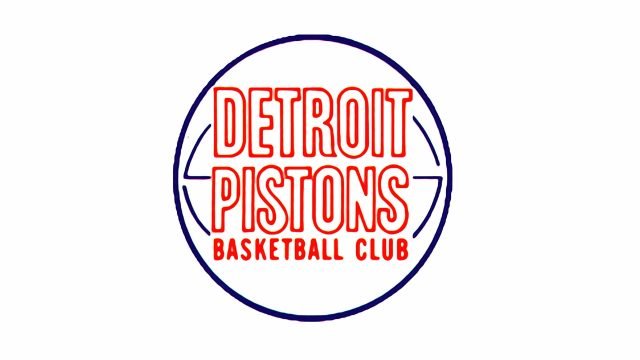
The relocation to Detroit in 1957 marked a pivotal moment in Pistons logo history. The franchise abandoned character illustration entirely and introduced a circular basketball emblem. A white basketball with blue outlines formed the base, overlaid by a clean sans-serif “Detroit Pistons” wordmark. The addition of “Basketball Club” reinforced professionalism and marked the team’s full transition into a modern NBA identity.
1971–1975: Simplification and League Authority
In 1971, the Pistons refined their logo by removing secondary league-related text. This simplification improved visual clarity and shifted focus entirely onto the team name and basketball symbol. The logo heritage during this period reflects a broader NBA-wide movement toward cleaner, more authoritative branding.
1975–1979: Typography and Color Refinement
The 1975 update introduced subtle but meaningful changes. Outlined lettering was replaced with solid letterforms, and the color palette was slightly adjusted with lighter blue tones. The “Basketball Club” text was replaced by “NBA,” reinforcing league affiliation while maintaining the established circular structure. These refinements improved legibility without disrupting brand continuity.

1979–1996: The Classic Basketball Identity
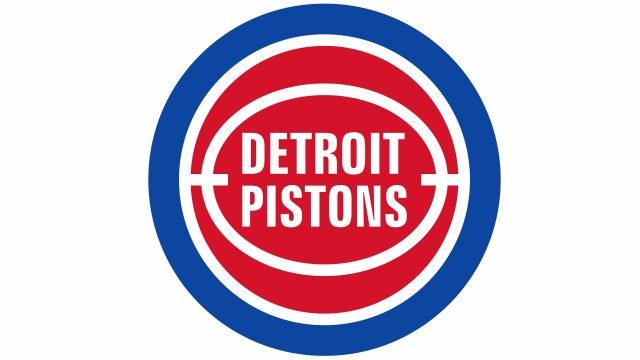
The 1979 redesign became one of the most iconic chapters in Detroit Pistons logo heritage. A bold red basketball enclosed in a thick blue frame formed the centerpiece, with white seams and a modernized sans-serif wordmark. This logo achieved a balance between strength, simplicity, and instant recognition, setting a visual standard that would later inspire future revivals.
1996–2001: Radical Rebrand and Experimental Design
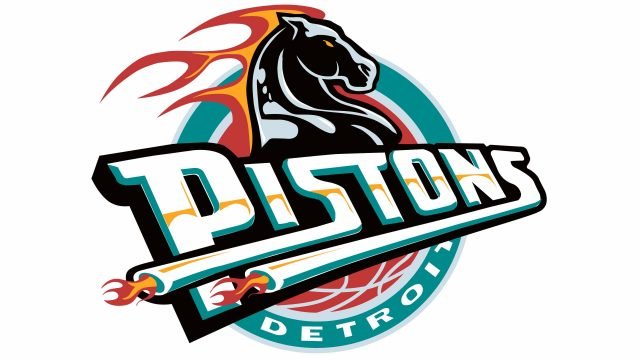
In 1996, the Pistons departed sharply from tradition. The basketball motif was replaced by a black horse positioned above a stylized “Pistons” wordmark with flame-like extensions. The turquoise-heavy color palette reflected late-1990s sports branding trends, prioritizing aggression and spectacle. While visually bold, this era marked a temporary break from the franchise’s established logo symbolism.
2001–2005: Color Correction and Transitional Phase
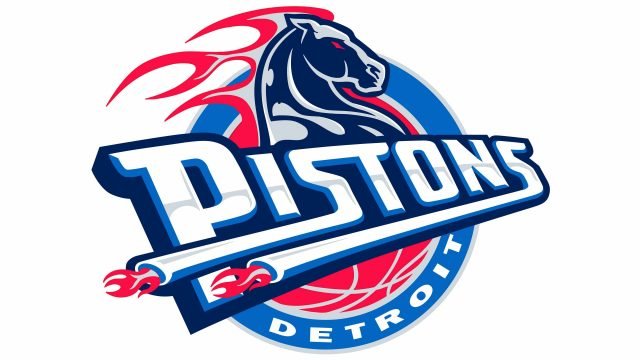
The 2001 revision retained the horse-and-flames composition but restored the traditional red, blue, and white palette. Subtle gray accents softened the typography, signaling an attempt to reconnect with the team’s visual roots while maintaining the existing structure. This period functioned as a transitional phase in Pistons logo history.
2005–2017: Return to Heritage and Basketball Symbolism
In 2005, the Pistons reintroduced the circular basketball badge, reaffirming their logo heritage. The red basketball featured expanded white seams, while the arched “Pistons” wordmark gained prominence. This redesign successfully merged nostalgia with contemporary execution, restoring long-term visual consistency.
Detroit Pistons Logo 2017–Today: Modernized Classic for a New Era
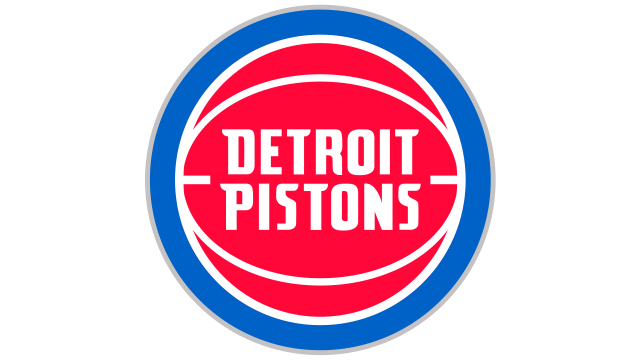
The current Detroit Pistons logo, unveiled in 2017, is a refined reinterpretation of the 1979 classic. Updated typography features smoother, sharper sans-serif forms, enhancing clarity across digital and broadcast platforms. Introduced alongside the move to Little Caesars Arena, this logo symbolizes renewal while honoring the franchise’s origin and visual legacy.
Logo Symbolism: Industry, Motion, and Identity
At its core, the Detroit Pistons logo symbolism revolves around motion and power. The basketball represents the sport itself, while the circular shape suggests continuity, unity, and momentum. Red conveys intensity and competitive fire, blue communicates stability and confidence, and white provides clarity and balance.
The absence of mascots or characters in modern versions reinforces a timeless, authoritative presence. Unlike franchises that rely heavily on figurative imagery, the Pistons have leaned into abstraction, allowing their logo meaning to transcend specific eras or trends. This approach aligns closely with broader logo symbolism principles seen across enduring sports brands.
The Enduring Strength of the Detroit Pistons Logo Heritage
The Detroit Pistons logo history illustrates the value of restraint and continuity in sports branding. While the franchise experimented briefly with radical redesigns, its most successful visual chapters emerged when it embraced its core symbols rather than abandoning them.
By repeatedly returning to the basketball-centric emblem, the Pistons have reinforced a sense of authenticity and legacy. Their logo heritage stands as a case study in how evolution, when guided by respect for origin and identity, can strengthen rather than dilute a brand. For those exploring NBA brand heritage or the broader landscape of sports logo history, the Pistons remain a compelling example of balance between tradition and progress.
FAQ: Detroit Pistons Logo Meaning and History
What does the Detroit Pistons logo represent?
The logo represents basketball, motion, and industrial strength, reflecting both the sport and the franchise’s automotive roots.
Why did the Detroit Pistons change their logo so often?
Most redesigns were refinements rather than complete overhauls, aimed at modernizing the logo while preserving its core identity.
When was the current Detroit Pistons logo introduced?
The current logo debuted in 2017, coinciding with the team’s move to Little Caesars Arena.
What colors define the Detroit Pistons logo?
The primary colors are red, blue, and white, symbolizing energy, stability, and clarity.