ConocoPhillips Logo History: Meaning, Symbolism & Brand Heritage
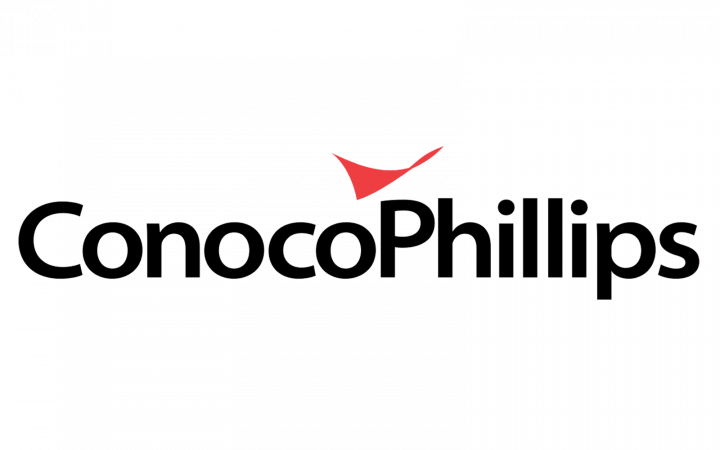
In the energy sector, visual identity often leans toward conservatism, prioritizing trust and authority over expressive design. ConocoPhillips follows this tradition, yet introduces a subtle visual twist that distinguishes it from competitors. Its logo appears restrained at first glance, but the red geometric accent above the wordmark injects motion and intent, turning a purely typographic identity into a recognizable brand signature.
Within the broader context of energy company logo history, ConocoPhillips occupies a space similar to ExxonMobil logo and Chevron logo, where clarity and consistency outweigh frequent reinvention. The logo meaning is tightly linked to corporate structure, legacy, and the unification of two historic oil companies under a single visual system.
Meaning and History: The Origin of the ConocoPhillips Identity
ConocoPhillips was formed in 2002 through the merger of Conoco Inc. and Phillips Petroleum Company, creating one of the largest independent energy companies in the world. Although the corporate entity is relatively young, its roots stretch deep into the early history of the American oil industry.
Conoco traces its origin to 1875, when Isaac E. Blake founded the Continental Oil and Transportation Company, initially focusing on kerosene and petroleum products. Phillips Petroleum, established in 1917 by brothers L.E. and Frank Phillips in Bartlesville, Oklahoma, earned a reputation for technical innovation and operational efficiency.
The 2002 merger required a visual identity capable of honoring both legacies while signaling a unified future. The resulting logo did not attempt to merge historic symbols directly. Instead, it adopted a modern, restrained wordmark supported by a single red graphic element, allowing the logo heritage of both predecessor companies to coexist within a contemporary framework.
Logo Symbolism: Structure, Movement, and Corporate Balance
The ConocoPhillips logo symbolism relies on minimal elements used with precision. The wordmark is set in a clean sans-serif typeface, predominantly lowercase, with the initial letters “C” and “P” capitalized. This typographic choice visually separates the two legacy names, reinforcing the merger narrative without explicit division.
The red geometric shape above the wordmark is the defining symbolic feature. Though abstract, it serves multiple purposes within the logo meaning. It introduces movement, suggesting progress and forward momentum, while its angular form subtly marks the transition between “Conoco” and “Phillips.” The red color itself conveys energy, strength, and industrial power, long associated with the oil and gas sector.
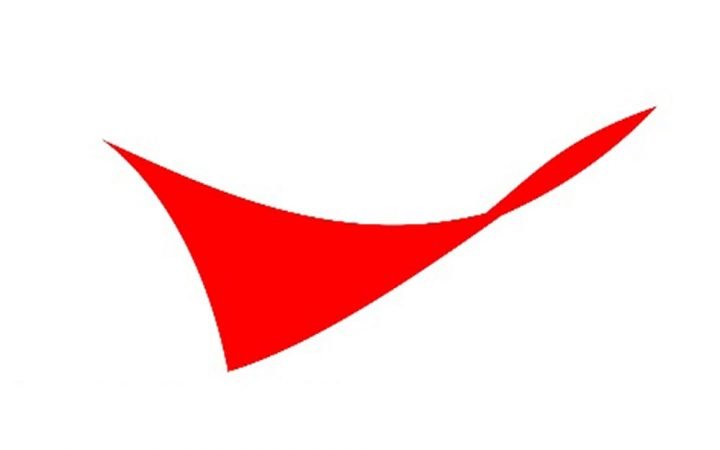
Unlike logos that rely on pictorial references to fuel, drilling, or geography, ConocoPhillips embraces abstraction, signaling a modern, globally oriented corporation rather than a regionally defined oil producer.
ConocoPhillips Logo History Timeline
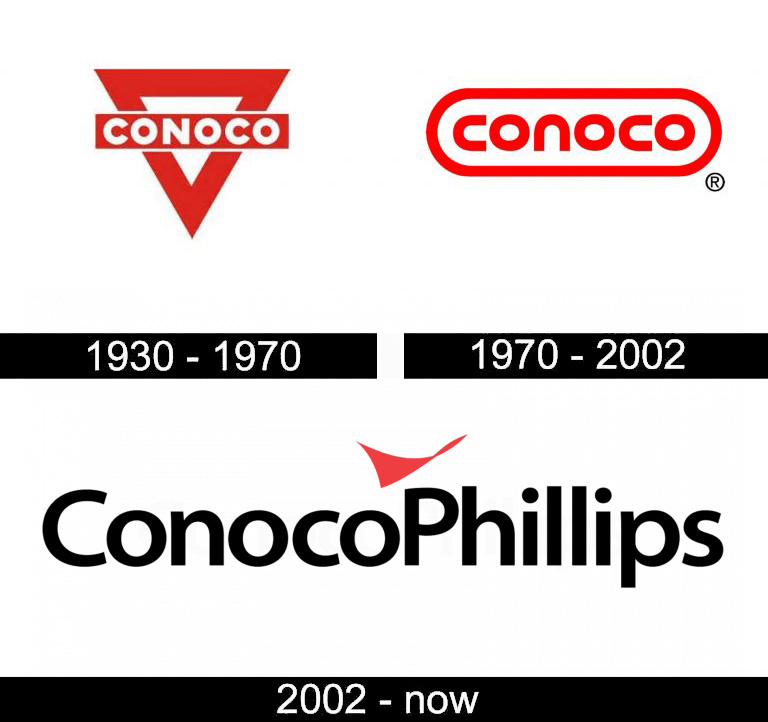
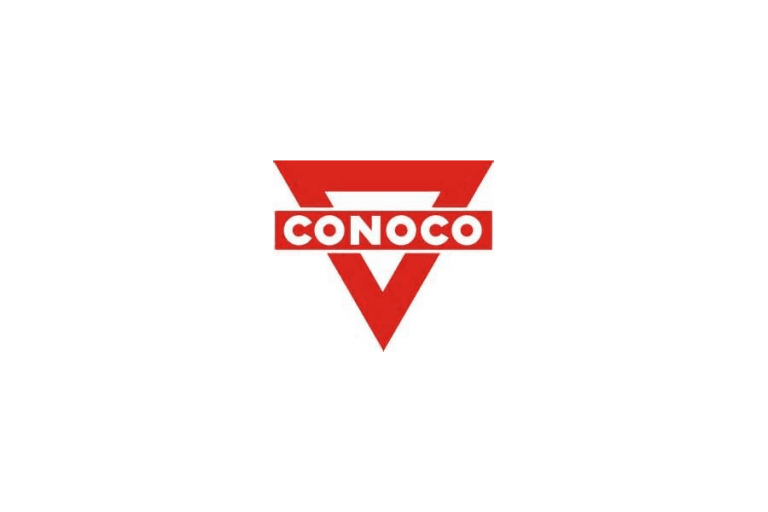
1930: Continental Oil Red Bar-and-Triangle Emblem
Following the acquisition of Continental Oil assets by Marland Oil Company, the red bar-and-triangle logo previously used by Marland was adopted. This emblem became associated with Continental Oil Company and appeared widely in advertising materials. It served as the company’s primary visual identifier from 1930 through 1970, establishing red as a core brand color long before the ConocoPhillips name existed.
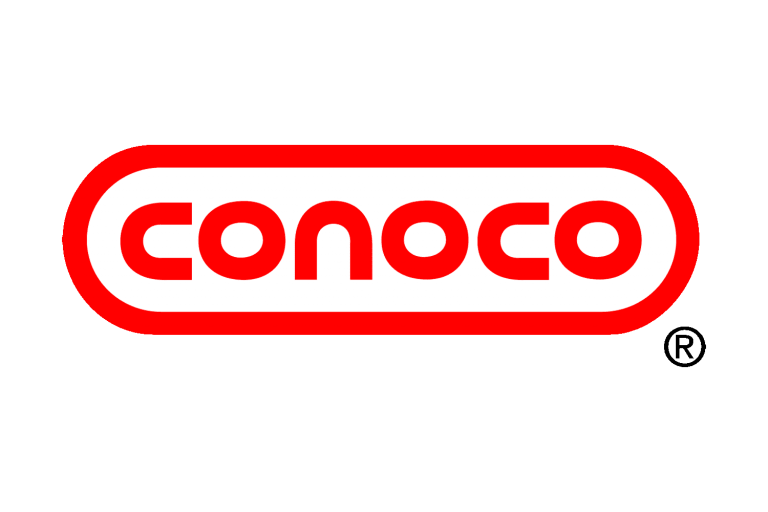
1970: Conoco Capsule Logo Introduction
In 1970, Conoco introduced a new logo centered around a red capsule shape. Inside the elongated ellipsoid, the word “Conoco” appeared in a bold sans-serif typeface. A distinctive typographic detail made the “n” identical in form to a rotated “c,” creating a visual rhythm and internal symmetry. This logo marked a shift toward modern corporate branding while retaining strong color recognition.
2002: ConocoPhillips Unified Corporate Logo
With the merger of Conoco Inc. and Phillips Petroleum Company in August 2002, a new corporate identity was introduced. The ConocoPhillips logo featured a restrained sans-serif wordmark with a red geometric accent placed above it.
The design emphasized unity and balance. Capitalized “C” and “P” visually anchored the two legacy names, while the red shape functioned as both a separator and a unifying element. This logo remains in use today, representing the consolidated identity of the merged company.
ConocoPhillips Logo Heritage and Energy Industry Authority
The ConocoPhillips logo history demonstrates how restraint can be a powerful branding tool. Rather than layering historical symbols or complex imagery, the company distilled its identity into typography and a single geometric accent. This approach respects legacy while projecting stability and confidence in a global energy market.
The logo meaning reflects balance, continuity, and controlled progress, qualities essential for an independent exploration and production company operating across continents. Within energy logo heritage, ConocoPhillips stands as an example of how simplicity, when applied with intent, creates lasting recognition.
FAQ: ConocoPhillips Logo Meaning and History
What does the ConocoPhillips logo represent?
The logo represents the unification of two historic energy companies and emphasizes balance, structure, and forward movement.
Why is there a red shape above the ConocoPhillips wordmark?
The red geometric shape adds dynamism and visually separates the “Conoco” and “Phillips” elements of the name.
When was the ConocoPhillips logo introduced?
The current logo was introduced in 2002 following the merger of Conoco Inc. and Phillips Petroleum Company.
Is ConocoPhillips an independent energy company?
Yes, ConocoPhillips operates as one of the world’s largest independent exploration and production companies.