Cocomelon Logo History: Meaning, Symbolism & Brand Heritage
In the ecosystem of digital children’s entertainment, few brands have achieved the global penetration of Cocomelon. What began as a modest YouTube experiment in the mid-2000s has evolved into one of the most influential preschool media brands in the world, shaping how millions of toddlers first engage with music, rhythm, language, and everyday routines. Alongside its educational content, Cocomelon developed a visual identity that is instantly recognizable, emotionally reassuring, and perfectly tuned to its young audience.
The Cocomelon logo history is closely tied to the channel’s evolution, name changes, and growing understanding of early childhood psychology. Unlike logos aimed at adults, where symbolism is often subtle or abstract, Cocomelon’s visual language is deliberately literal, friendly, and vibrant. Its logo meaning and symbolism are designed to communicate safety, joy, and familiarity within seconds—an essential requirement in children’s media branding. This makes Cocomelon a modern but highly instructive case of logo heritage built for a digital-first generation.
Meaning and History: The Origin of the Cocomelon Logo
The channel now known as Cocomelon was launched in 2006 under the name ThatsMEonTV. At the time, it was created by a small independent team as a hobby project, producing simple animated videos for young children. The early focus was not branding, but storytelling through familiar shapes, colors, and characters that toddlers could easily process.
As the channel’s content matured and its audience expanded, the importance of a cohesive and child-friendly identity became increasingly clear. The logo origin followed the same logic as the videos themselves: visual warmth, clarity, and repetition. Every redesign coincided with a strategic shift in the channel’s positioning, from experimental content to structured early learning, and eventually to a global preschool brand.
What unites all versions of the logo is the deliberate use of bright colors, rounded forms, and anthropomorphic elements—features proven to attract and retain the attention of very young viewers.
Cocomelon Logo History Timeline
2006–2013: ThatsMEonTV and Playful Experimentation
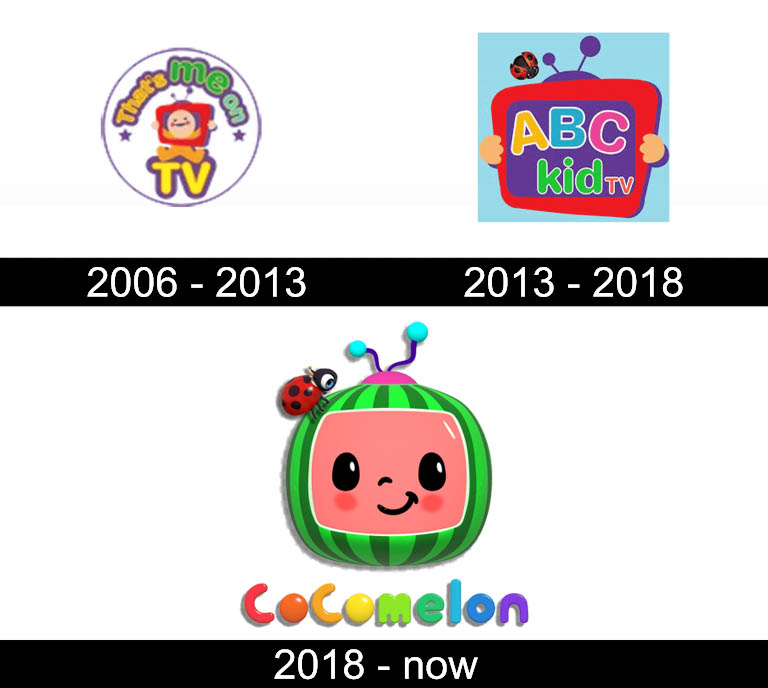
The first logo appeared when the channel was still called ThatsMEonTV. It featured a cartoon alien-like child sitting on oversized letters spelling “TV.” The character’s face was framed by a television-shaped outline, reinforcing the idea of screen-based entertainment.
The logotype arched above the illustration in a rounded sans-serif style, rendered in yellow-green and blue with a purple outline. The entire badge was enclosed in a thin circular frame. While visually busy, this logo reflected the experimental phase of the channel and its exploratory approach to children’s animation.

2013–2018: ABCkidTV and Educational Focus
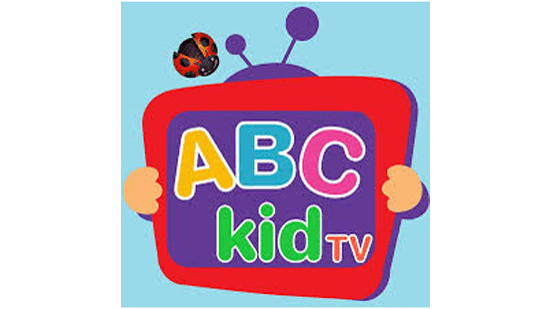
In 2013, the channel was renamed ABCkidTV, marking a clearer emphasis on early learning. The logo was refined but retained several elements from its predecessor. A purple television with a red frame became the centerpiece, placed on a sky-blue background.
The TV featured antennas and cartoon hands, reinforcing anthropomorphism. A three-dimensional ladybug appeared in the upper corner, introducing a recurring friendly detail that would later become iconic. The logotype was written directly on the TV screen in bold rounded letters, each character in a different bright color.
This version leaned heavily into educational symbolism, positioning the channel as both entertaining and instructive.
2018–Today: Cocomelon and Global Recognition
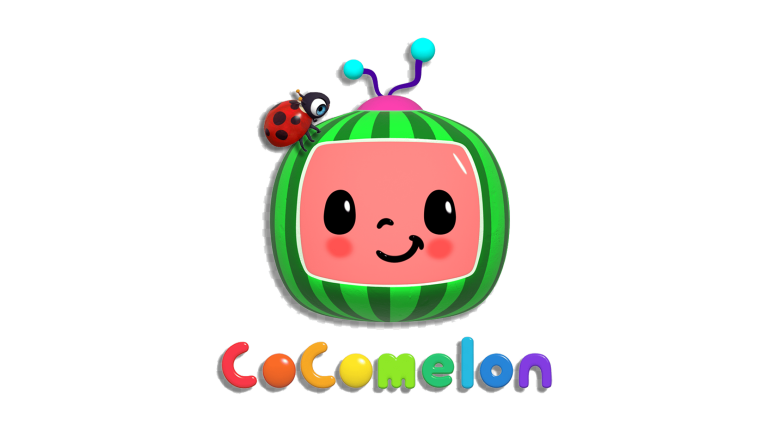
The most significant transformation occurred in 2018, when the channel adopted the name Cocomelon. The logo was simplified and strengthened into a single emblem with no accompanying wordmark. The television was reimagined as a square watermelon, complete with green rind, dark stripes, and a smiling pink face.
The antennas remained, now extending from the watermelon itself, and the ladybug settled onto the top corner, becoming a permanent mascot-like detail. By removing text entirely, the logo achieved universal legibility, transcending language barriers and becoming instantly recognizable to children worldwide.
Logo Symbolism: Comfort, Familiarity, and Joy
The symbolism of the Cocomelon logo is rooted in early childhood perception. The watermelon shape is associated with sweetness, playfulness, and familiarity, while the smiling face conveys friendliness and emotional safety. The television outline subtly references screen-based learning without overwhelming the design.
The ladybug adds a sense of gentleness and curiosity, often associated with nature and harmless exploration. Antennas reinforce the idea of broadcasting and communication, linking the logo to its origins as a YouTube channel.
Together, these elements create a symbol that feels more like a character than a logo—an essential trait for brands aimed at toddlers.
Typography and Color in the Cocomelon Logo
Typography played a significant role in the earlier versions of the logo, relying on rounded sans-serif letters with exaggerated curves and thick strokes. These shapes are easier for young children to recognize and visually process.
In the current logo, typography has been removed entirely, signaling a shift toward pure iconography. This decision reflects confidence in brand recognition and allows the logo to function globally without localization.
Color remains central to the brand identity. Bright greens, pinks, blues, and purples dominate the palette, stimulating attention while maintaining a cheerful tone. The high saturation levels are intentional, optimized for visibility on digital screens.
Cocomelon Logo Heritage and Digital Branding
Despite being a relatively young brand, Cocomelon has established a strong logo heritage through consistency and psychological awareness. Each redesign refined the same core ideas rather than replacing them, allowing the audience to grow alongside the brand without losing familiarity.
The current logo’s simplicity makes it highly adaptable across platforms, from YouTube thumbnails and mobile apps to merchandise and streaming services. In children’s media, where trust and recognition are paramount, this continuity is crucial.
A Logo Designed for the Youngest Audience
The Cocomelon logo history demonstrates how effective branding for children differs fundamentally from adult-oriented design. Instead of abstraction or trend-driven minimalism, Cocomelon relies on clarity, warmth, and repetition.
By transforming a television into a smiling watermelon and gradually removing unnecessary complexity, the brand created an emblem that feels safe, joyful, and instantly friendly. Its logo meaning aligns perfectly with its mission: to educate, entertain, and comfort young viewers around the world. In the context of modern logo heritage, Cocomelon stands as a benchmark for digital-first children’s branding done right.
FAQ: Cocomelon Logo Meaning, Symbolism, and History
What does the Cocomelon logo represent?
It represents joy, safety, and early learning through friendly shapes and bright colors.
Why is the Cocomelon logo a watermelon?
The watermelon symbolizes sweetness, fun, and approachability for young children.
When was the Cocomelon logo introduced?
The current watermelon logo was introduced in 2018.
Did Cocomelon have other names before?
Yes, the channel was previously known as ThatsMEonTV and ABCkidTV.
Why does the Cocomelon logo have no text?
Removing text makes the logo universally recognizable for children worldwide.
What is the ladybug in the logo for?
The ladybug adds a gentle, friendly detail associated with curiosity and nature.