
Cleveland Cavaliers Logo History: Meaning, Symbolism & Brand Heritage
Founded in 1970, the Cleveland Cavaliers are one of the most complex and symbolically rich franchises in American basketball. The team’s name was chosen through a fan contest, a decision that immediately rooted the brand in local identity and civic pride. “Cavaliers,” often shortened to “Cavs,” evokes imagery of courage, loyalty, and battle-ready determination. Over time, the team also embraced the Musketeer archetype, a theme that would eventually become central to its visual identity.
While the Cavaliers’ on-court history has been marked by long rebuilding periods and dramatic resurgences, their visual identity tells an equally layered story. The Cleveland Cavaliers logo heritage reflects decades of experimentation, cultural shifts, and branding recalibration, moving from illustrative mascots to abstract wordmarks and, ultimately, to a refined heraldic emblem that communicates tradition, resilience, and competitive authority.
Within the broader landscape of NBA branding, the Cavaliers stand out as a franchise that repeatedly redefined its visual language in search of alignment between performance, symbolism, and regional character. Each logo era captures a specific moment in the team’s evolution, making the Cavaliers one of the most visually dynamic teams in league history.
Meaning and History: The Origins of the Cavaliers Identity
The identity of the Cleveland Cavaliers has always been anchored in symbolism rather than abstraction. Unlike franchises built around animals or geographic references, the Cavaliers embraced a human archetype associated with bravery, honor, and combat. This conceptual foundation allowed the team’s logo to explore themes of medieval warfare, nobility, and strength without becoming literal or cartoonish.
Throughout its history, the Cavaliers’ visual identity oscillated between two primary directions. One emphasized modern basketball iconography, such as hoops, balls, and wordmarks. The other leaned heavily into the Musketeer and sword imagery, reinforcing the team’s name and historical symbolism. The tension between these approaches shaped decades of logo evolution and ultimately led to a more disciplined and heritage-driven design philosophy.
Cleveland Cavaliers Logo History Timeline

1970–1983: The Original Musketeer Emblem
The original Cleveland Cavaliers logo debuted in 1970 and remained in use for more than a decade. The emblem featured a stylized musketeer figure enclosed within a circular badge. A yellow basketball occupied the center of the composition, reinforcing the sport while visually anchoring the illustration.
Rendered in burgundy and yellow, the color palette symbolized energy, ambition, and competitive spirit. While detailed and expressive, the logo reflected the illustrative trends of its era, prioritizing character and narrative over scalability and versatility. This first badge firmly established the Musketeer theme that would later resurface in more refined forms.
1983–1994: Minimalism and the “Cavs” Wordmark
In the early 1980s, the Cavaliers shifted toward a more modern and minimalist identity. The 1983 logo abandoned character imagery entirely in favor of a stylized “Cavs” wordmark. The letter “V” was cleverly transformed into a basketball hoop, with a ball positioned above it, suggesting motion and scoring.
The color palette moved to bright orange with subtle gray accents, while the typography adopted a bold serif style. Although clean and contemporary, the logo felt transitional rather than definitive. It represented an attempt to modernize the brand but lacked the symbolic depth that had defined the Cavaliers’ original identity.

1994–2003: Experimental Modernism
The 1994 redesign introduced a darker, more assertive aesthetic. A basketball hoop and ball were placed within a black rectangular frame, accompanied by a modern wordmark rendered in black and blue. The expanded color palette incorporated black, blue, white, and orange, signaling strength, authority, and institutional maturity.
This era marked the Cavaliers’ most experimental phase, as the team distanced itself from Musketeer symbolism entirely. While visually bold, the logo lacked a strong narrative connection to the team’s name, making it feel conceptually detached despite its modern appeal.

2003–2010: The Return of the Sword
In 2003, the Cavaliers decisively returned to heritage symbolism. The new logo introduced a diagonally placed wordmark intersected by a rapier, accompanied by a dark red basketball with blue accents. The composition blended motion, elegance, and aggression, creating one of the most distinctive Cavaliers logos to date.
The custom sans-serif typography featured sharp angles and elongated letterforms, reinforcing a sense of precision and confidence. This redesign reestablished the Musketeer narrative in a contemporary visual language, aligning symbolism with competitive ambition.
2010–2017: Refinement and Depth
The 2010 update refined the existing design rather than replacing it. Yellow accents were introduced, letter contours were cleaned up, and the basketball adopted a deeper, more purplish tone. These adjustments added visual richness and a sense of luxury to the emblem.
The rapier became more prominent through increased contrast, reinforcing the logo’s central symbol. This period coincided with the franchise’s most successful competitive era, culminating in sustained relevance and global recognition.
2017–2022: The Heraldic Shield
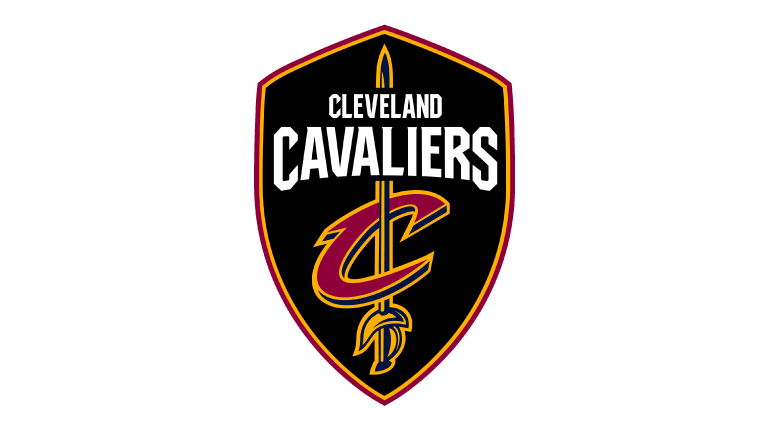
A major redesign arrived in 2017, introducing a shield-based emblem that reimagined the Cavaliers’ identity through a modern heraldic lens. The black shield, outlined in burgundy and gold, featured a bold white wordmark at the top. A vertical rapier intertwined with a stylized “C” occupied the center of the badge.
This logo achieved a refined balance between tradition and modern professionalism. Every element, from typography to color hierarchy, was carefully calibrated to communicate stability, legacy, and expertise. It marked a clear shift toward long-term brand consistency.
2022–Today: Simplification and Maturity
The most recent Cavaliers logo update, introduced in 2022, focused on refinement rather than reinvention. The vertical sword was removed entirely, simplifying the composition and reducing visual noise. The two-line wordmark shifted from white to gold, creating a smoother and more elegant contrast against the black background.
This iteration reflects brand maturity. By stripping away excess elements, the Cavaliers embraced clarity and restraint, reinforcing their identity through typography and color rather than symbolism alone.
Logo Symbolism: Musketeers, Swords, and Authority
The symbolism of the Cleveland Cavaliers logo is deeply tied to the Musketeer archetype. Swords represent honor, readiness, and disciplined aggression, while shields suggest defense, resilience, and unity. Together, these elements convey a team prepared for battle yet grounded in tradition.
The recurring use of burgundy, gold, navy, and black reinforces this narrative. Burgundy signals heritage and passion, gold suggests achievement and excellence, navy conveys stability, and black adds authority. This symbolic consistency has allowed the Cavaliers to evolve visually without abandoning their core identity.
Typography and Visual Language
Cleveland’s logo typography has evolved from serif wordmarks to highly customized sans-serif letterforms. In recent decades, the team has prioritized bespoke typography, where each letter carries distinct characteristics. The exaggerated forms of the initial “C” and terminal “S” give the wordmark a commanding presence without sacrificing legibility.
This typographic discipline plays a crucial role in maintaining brand cohesion, especially as illustrative elements have been reduced in recent designs.
Cleveland Cavaliers Logo Heritage and Brand Continuity
The Cleveland Cavaliers logo heritage illustrates the importance of alignment between name, symbolism, and visual execution. After years of experimentation, the franchise ultimately found strength in its original concept, refining it rather than replacing it.
By embracing heritage-driven design and controlled evolution, the Cavaliers established a visual identity that reflects resilience, ambition, and long-term credibility. Today, their logo stands not just as a team mark, but as a symbol of perseverance within the ever-changing landscape of professional sports branding.
FAQ: Cleveland Cavaliers Logo Meaning and History
What does the Cleveland Cavaliers logo represent?
The logo represents courage, discipline, and competitive readiness, drawing on Musketeer symbolism and heraldic design.
Why are swords and shields used in Cavaliers logos?
These elements reinforce the team’s name and evoke themes of honor, defense, and resilience.
Has the Cavaliers logo changed often?
Yes. The Cavaliers have undergone several major redesigns, reflecting shifts in branding philosophy and competitive identity.
What colors define the Cleveland Cavaliers brand?
Wine, gold, navy blue, and black are the official team colors, each carrying symbolic meaning related to heritage and authority.