Captain Morgan Logo History: Meaning, Symbolism & Brand Heritage
Few spirits brands have managed to turn storytelling into a global identity as successfully as Captain Morgan. Founded in the mid-20th century but rooted in far older maritime legends, the brand transformed the image of rum from a regional spirit into a worldwide symbol of adventure, charisma, and bold character. Today, Captain Morgan stands among the most recognizable alcohol brands on the planet, instantly identifiable through its pirate mascot and theatrical visual language.
Within the broader world of spirits branding, Captain Morgan’s identity occupies a unique position. While many competitors rely on heritage cues tied to distilleries or geography, Captain Morgan built recognition through personality. This approach mirrors the narrative-driven consistency seen in the Johnnie Walker logo history and the character-centered branding behind the Bacardi logo heritage, where myth and identity work hand in hand. The Captain Morgan logo heritage reflects how illustration, typography, and legend can combine into a long-lasting commercial icon.
Meaning and History: The Origin of the Captain Morgan Identity
The Captain Morgan brand was officially established in 1944, when Canadian spirits company Seagram acquired a rum recipe developed by distillery owner Samuel Bronfman. Bronfman had been experimenting with rum blends in Jamaica, refining a formula that balanced smoothness with intensity. The decision to brand the product under a distinct name marked a turning point, separating it from generic rum offerings.
The name “Captain Morgan” was inspired by Sir Henry Morgan, a Welsh privateer who later became Governor of Jamaica. This historical figure provided the perfect foundation for a brand identity built on confidence, rebellion, and authority. By linking the product to a larger-than-life persona, the brand embedded storytelling directly into its logo meaning.
In 2001, ownership of Captain Morgan transferred to Diageo, one of the world’s largest spirits producers. Under Diageo’s stewardship, the brand expanded globally, reaching annual production volumes of tens of millions of bottles. Despite this scale, Captain Morgan retained its core identity, with production processes still closely tied to Jamaica, where high-quality sugarcane distillate remains central to the brand’s profile.
Captain Morgan Logo History Timeline
Early 1980s – Today: The Birth of an Iconic Mascot
Unlike many heritage brands whose logos evolved gradually, the Captain Morgan logo crystallized around a single defining element: its mascot. The now-iconic pirate illustration was created in the early 1980s by American commercial artist Don Maitz. From its introduction, the character became inseparable from the brand.
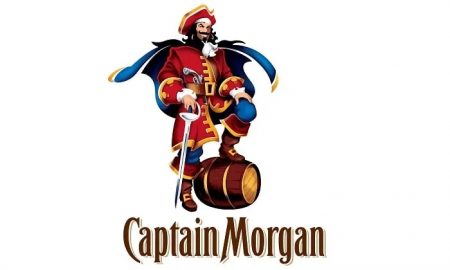
The logo presents Captain Morgan standing confidently with one foot placed on a barrel, sword at his side, projecting dominance and charm. This pose communicates leadership, control, and theatrical bravado, reinforcing the brand’s narrative identity. The illustration functions not merely as decoration, but as a storytelling device that turns the logo into a character.
Over the decades, the logo remained remarkably stable. In 2017, a packaging redesign modernized the overall look, refining details and updating proportions. The pirate figure remained central, though the barrel gained visible branding, reinforcing product recognition. These changes enhanced clarity without disrupting the established visual hierarchy.
Logo Symbolism: Character, Confidence, and Authority
The symbolism of the Captain Morgan logo is rooted in its mascot-driven approach. The pirate represents freedom, boldness, and command, qualities the brand associates with its rum. Unlike abstract emblems, the logo communicates instantly through narrative imagery.
The captain’s posture conveys authority and celebration simultaneously, blending strength with approachability. This balance allows the brand to appeal to a broad audience while maintaining a distinctive personality. The logo meaning is therefore inseparable from the character itself, making Captain Morgan one of the most successful mascot logos in the spirits industry.
Typography and Color Palette
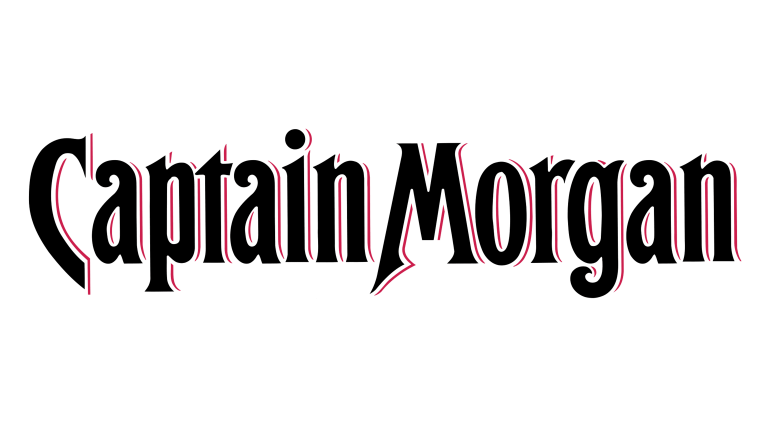
The Captain Morgan wordmark is set in a bold, custom typeface with subtle gothic influences. Tall, narrow letterforms and sharp terminals evoke tradition and craftsmanship, while diagonal cuts add energy and movement. The typography complements the illustrated mascot without overpowering it, maintaining a clear visual hierarchy.
Color plays a crucial role in reinforcing the brand’s identity. Deep reds, browns, golds, and blacks dominate the palette, echoing the natural tones of aged rum and wooden barrels. These hues suggest warmth, richness, and intensity, while the blue and yellow accents in the captain’s attire add contrast and visual interest.
Together, typography and color create a cohesive system that supports the brand’s narrative while remaining adaptable across packaging and marketing materials.
Captain Morgan Logo Heritage and Brand Legacy
The Captain Morgan logo heritage demonstrates the enduring power of character-led branding. By committing to a single visual narrative and refining it over time, the brand achieved recognition that transcends product categories and markets. The logo does not merely identify the rum; it tells a story that consumers instantly recognize.
This strategy aligns with patterns observed across spirits brand logo history, where the most successful identities rely on consistency and personality rather than frequent reinvention. As Captain Morgan continues to expand under Diageo’s global portfolio, its logo remains a cornerstone of its success.
For readers exploring how storytelling shapes lasting alcohol brand identities, further insight can be found within the broader beverage logo heritage archive and the expanding collection of global spirits brand logo history case studies.
FAQ: Captain Morgan Logo Meaning and History
What does the Captain Morgan logo represent?
The logo represents confidence, adventure, and authority, embodied through the pirate mascot inspired by Sir Henry Morgan.
Who created the Captain Morgan mascot?
The iconic pirate illustration was created in the early 1980s by artist Don Maitz.
Has the Captain Morgan logo changed over time?
The core logo has remained consistent for decades, with refinements introduced in 2017 to modernize packaging while preserving the mascot.
Why is Captain Morgan associated with pirates?
The brand is named after Sir Henry Morgan, a Welsh privateer and former Governor of Jamaica, whose legend inspired the brand’s identity.